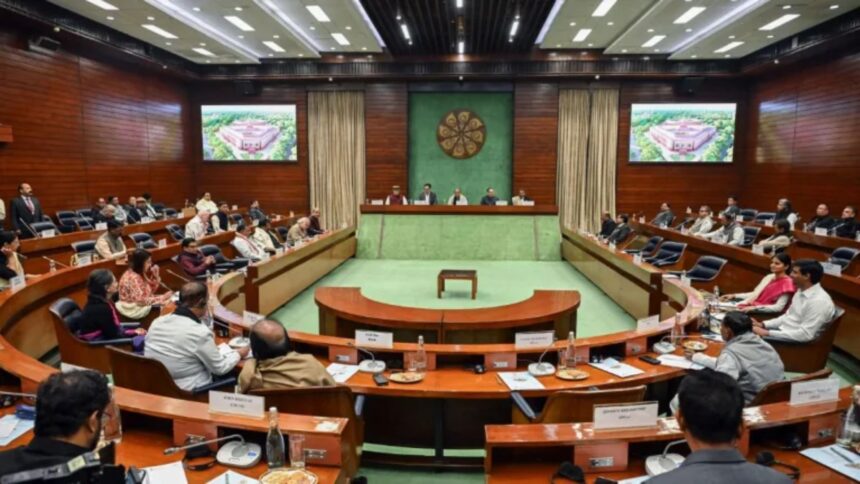
India’s Parliament has convened for the start of its crucial Budget Session, marking the beginning of an intensive legislative and political phase that will define the country’s economic direction for the coming year. The session opened with the customary address by the President to a joint sitting of both Houses, formally launching weeks of debate, scrutiny, and decision-making around fiscal policy, governance priorities, and proposed legislation. With the presentation of the Union Budget and the Economic Survey scheduled in the days ahead, the session is expected to draw sharp attention from political parties, industry, markets, and citizens alike.
President’s address and the roadmap for the Budget Session
The Budget Session commenced with President Droupadi Murmu addressing members of the Lok Sabha and the Rajya Sabha in a joint sitting. The address, a constitutional requirement at the start of the first parliamentary session each year, outlined the government’s achievements, priorities, and vision across sectors such as the economy, social welfare, infrastructure, governance, and national security. It served as a broad policy statement, laying the groundwork for the debates that will unfold over the coming weeks.
Following the President’s address, Parliament will take up the Motion of Thanks, a key parliamentary exercise during which members discuss and critique the government’s agenda as presented in the speech. This debate traditionally allows both the ruling coalition and the opposition to articulate their positions on the government’s performance and future plans, often setting the tone for the rest of the session. Amendments to the Motion of Thanks are frequently used by opposition parties to raise contentious issues and challenge policy claims.
One of the most anticipated milestones of the session is the tabling of the Economic Survey, scheduled for January 29. Prepared by the finance ministry, the survey provides a detailed assessment of India’s economic performance over the past year and outlines prospects for growth, inflation, employment, and fiscal stability. It acts as an analytical foundation for the Union Budget, offering insights into challenges and opportunities facing the economy. Economists, policymakers, and investors closely study the survey for signals about government thinking and policy direction.
The presentation of the Union Budget for the financial year 2026–27 by Finance Minister Nirmala Sitharaman is scheduled for February 1. The Budget will be unveiled on a Sunday, an unusual but not unprecedented move, requiring special parliamentary arrangements. The finance minister’s speech will outline the government’s revenue and expenditure plans, taxation proposals, fiscal deficit targets, and allocations for key sectors such as infrastructure, defence, health, education, and social welfare.
Structurally, the Budget Session is divided into two phases. The first phase will run from late January to mid-February, focusing largely on the presentation of the Budget, the Economic Survey, and initial debates. Parliament will then adjourn for a recess, during which departmental standing committees will examine the demands for grants of various ministries in detail. The second phase will begin in March, when Parliament reconvenes to discuss committee reports, pass the Budget, and take up legislative business. In total, the session is scheduled to span several weeks with around thirty sittings, making it one of the longest and most significant sessions of the parliamentary calendar.
Political dynamics, legislative agenda, and expectations from the session
While the Budget Session is primarily centred on financial matters, it is also a major political arena where broader issues of governance and accountability come to the fore. Opposition parties are expected to use the session to question the government on economic management, unemployment, price rise, social welfare delivery, and federal relations. The President’s address itself has already drawn reactions from opposition benches, signalling that the session may see robust and sometimes confrontational debates.
Several legislative proposals are likely to be discussed or introduced during the session, alongside the financial business. These may include Bills related to economic reforms, governance mechanisms, and sector-specific regulations. The government has indicated its intent to push forward with measures aligned to its long-term development vision, while the opposition is expected to scrutinise these proposals closely, raising concerns over implementation, inclusivity, and impact.
Ahead of the session, all-party meetings were held to build consensus on smooth functioning of Parliament. Despite these efforts, disruptions and heated exchanges are not uncommon during the Budget Session, given its political significance. Issues such as employment schemes, rural development, welfare guarantees, and electoral processes are expected to feature prominently in debates. Opposition leaders have already signalled their intent to press the government on what they see as unmet promises and policy gaps.
From an economic standpoint, expectations from the Union Budget are particularly high this year. With global economic uncertainty, geopolitical tensions, and domestic challenges such as inflationary pressures and job creation, stakeholders are keen to see how the government balances growth with fiscal discipline. Industry bodies are looking for incentives to boost manufacturing, exports, and innovation, while farmers and rural constituencies expect continued support through subsidies and development programmes. The middle class and salaried taxpayers will watch closely for any changes in income tax slabs or relief measures.
The Budget Session also has implications beyond immediate policy outcomes. It reflects the broader political climate and the government’s confidence in navigating parliamentary scrutiny. For the ruling coalition, it is an opportunity to showcase achievements and articulate a forward-looking agenda. For the opposition, it is a platform to mobilise public opinion, highlight grievances, and shape the narrative ahead of future electoral contests.
Markets traditionally react sharply to Budget announcements, and the proceedings of the session are closely monitored by investors, both domestic and international. Signals on public spending, infrastructure investment, borrowing levels, and reform intent can influence market sentiment and economic forecasts. As such, the debates and decisions taken during the session extend their impact far beyond the walls of Parliament.
The opening of the Budget Session with the President’s address thus marks the beginning of a critical phase in India’s democratic and economic process. Over the coming weeks, Parliament will serve as the central forum where competing visions for the country’s future are debated, contested, and, ultimately, translated into policy. With the Union Budget and key legislative discussions ahead, the session is set to play a decisive role in shaping India’s economic and political trajectory in the year to come.