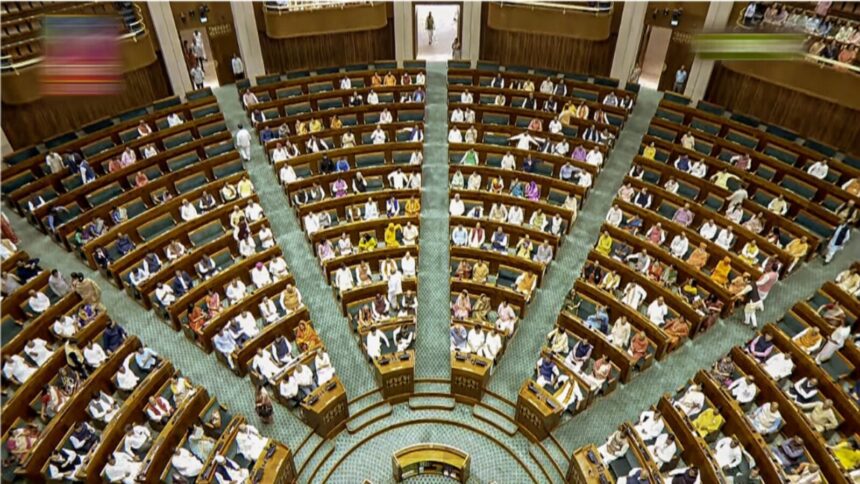
India’s Parliament will continue functioning until April 2, with key legislative business lined up, including discussions on amendments to the insolvency framework. Kiren Rijiju confirmed that despite initial proposals, there will be no sittings over the weekend, and March 31 will remain a holiday on account of Mahavir Jayanti. The announcement comes amid ongoing deliberations in the Lok Sabha on the Insolvency and Bankruptcy Code (Amendment) Bill.
The decision ensures that parliamentary proceedings continue as scheduled, even as speculation had emerged about a possible early adjournment due to upcoming Assembly elections in several states.
Parliament Schedule Finalised Amid Legislative Priorities
The second phase of the Budget session will proceed without interruption on working days, maintaining the legislative calendar planned earlier. Kiren Rijiju informed the House that government business would take precedence, including on Fridays, which are traditionally reserved for private members’ business.
Although there had been discussions about extending sittings to weekends to accommodate legislative workload, the government ultimately decided against it. As a result, Parliament will remain closed on March 28 and March 29, providing a brief pause in proceedings.
Additionally, March 31 will be observed as a holiday due to Mahavir Jayanti, further shaping the schedule of the ongoing session. Despite these breaks, the government remains committed to completing its legislative agenda within the stipulated timeframe.
The Business Advisory Committee has already allocated significant time for debates, including seven hours dedicated to the Central Armed Police Forces (General Administration) Bill, 2026. This reflects the importance of legislative scrutiny and detailed discussion in the functioning of Parliament.
The continuation of the session until April 2 signals the government’s intent to ensure that key bills and policy measures are thoroughly debated and processed.
Insolvency Code Amendment Takes Centre Stage
A major highlight of the current session is the discussion on the amendments to the Insolvency and Bankruptcy Code (IBC). The proposed changes aim to improve the efficiency of the insolvency resolution process and address existing challenges.
During the debate, BJP MP Anurag Thakur highlighted the achievements of the IBC since its introduction in 2016. He noted that the code has significantly improved recovery rates compared to earlier mechanisms such as the SARFAESI Act and Debt Recovery Tribunals.
According to Thakur, the IBC has facilitated the recovery of over ₹4 lakh crore through the resolution of bankrupt companies over the past decade. He emphasised that the recovery rate under the IBC stands at around 50%, compared to approximately 20% under the SARFAESI Act and just 10% under previous systems.
The code has also contributed to a shift in the debtor-creditor relationship, making promoters more accountable and cautious. The fear of insolvency proceedings has encouraged better financial discipline among companies.
The amendment bill, introduced in August 2025, proposes several changes aimed at streamlining the insolvency process. These include measures to reduce delays in admitting cases, promote out-of-court settlements, and address cross-border insolvency issues.
The bill was referred to a select committee, which submitted its report in December 2025. The recommendations are now being considered as part of the ongoing debate.
Impact of Amendments on Economy and Business Environment
The proposed amendments to the IBC are expected to have a significant impact on India’s economic and business landscape. By improving the efficiency of insolvency proceedings, the government aims to strengthen investor confidence and enhance the ease of doing business.
One of the key objectives is to reduce the time taken for resolving insolvency cases, which has been a major concern for stakeholders. Delays in the process can lead to value erosion and reduced recovery for creditors.
The amendments also focus on promoting out-of-court settlements, which can provide faster and more cost-effective solutions for resolving financial distress. This approach aligns with global best practices and can help reduce the burden on judicial institutions.
Another important aspect is the inclusion of provisions for cross-border insolvency, which will facilitate the resolution of cases involving international assets and stakeholders. As businesses increasingly operate across borders, such provisions are becoming essential.
The government’s emphasis on refining the IBC reflects its broader commitment to economic reforms and financial stability. By addressing existing gaps and challenges, the amendments aim to make the insolvency framework more robust and effective.
Political Context and Session Significance
The continuation of the Budget session comes against the backdrop of upcoming Assembly elections in multiple states and one Union Territory. There had been speculation that Parliament might adjourn early to accommodate political activities.
However, the government’s decision to continue the session as planned underscores the importance of legislative responsibilities. By prioritising parliamentary business, it aims to ensure that governance and policy-making processes remain uninterrupted.
The session also provides an opportunity for members to raise important issues, debate key policies, and contribute to the legislative process. The discussions on the IBC amendments highlight the role of Parliament in shaping economic policy.
At the same time, the structured schedule, including designated holidays and breaks, reflects the need to balance legislative work with other commitments.
The announcement that Parliament will function until April 2, along with the ongoing debate on the Insolvency and Bankruptcy Code amendments, highlights a crucial phase in India’s legislative calendar. With key reforms under discussion and a structured schedule in place, the session is expected to play a significant role in shaping the country’s economic and policy framework.
As debates continue, the focus will remain on ensuring that the proposed amendments address existing challenges and contribute to a more efficient and transparent insolvency system. The outcome of these discussions will have lasting implications for businesses, investors, and the broader economy.