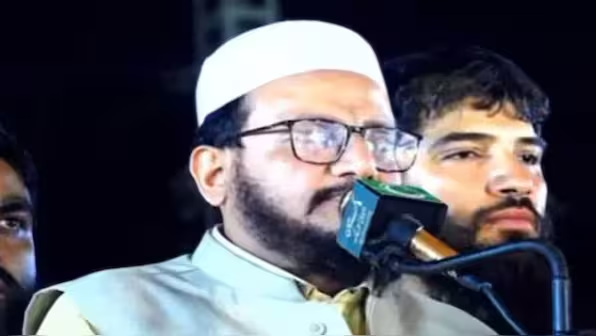
In a chilling display of open support for terrorism, top Pakistani politicians have been seen sharing the stage with internationally sanctioned terrorists at public rallies — revealing once again Pakistan’s disturbing nexus between state and terror groups. On May 28, Lashkar-e-Taiba (LeT) commander Saifullah Kasuri, a wanted figure for orchestrating the Pahalgam terror attack that killed 26 Indians, was seen addressing a large crowd in Kasoor, Punjab, alongside Pakistan’s Food Minister Malik Rasheed Ahmad Khan and Punjab Assembly Speaker Malik Muhammad Ahmad Khan. This blatant political endorsement of terrorism not only exposes Islamabad’s duplicity but also raises serious questions about the country’s commitment to fighting extremism.
Despite being listed as a terrorist organization by the United Nations since 2005 and designated by the US in 2001, LeT continues to operate freely in Pakistan. At the rally, Kasuri brazenly glorified his role in the Pahalgam attack and announced plans to construct facilities in the name of slain terrorist Mudassir, who was killed in Indian airstrikes. In a provocative tone, Kasuri responded to Indian Prime Minister Narendra Modi’s stance against terrorism, claiming militants fear no bullets and instead thrive on martyrdom.
Terrorist Talha Saeed’s Provocation and Government Endorsement
Also present at the rally was Talha Saeed, son of 26/11 mastermind Hafiz Saeed and a UN-designated terrorist himself. He is currently listed 32nd on India’s most wanted list and has been involved in recruitment and financing activities for LeT. In his speech, Talha delivered overt threats to India, declaring jihad and praising those who wage war in the name of religion. Shockingly, Pakistani ministers did not just attend the rally but extended explicit support, with one minister stating that Saeed and Kasuri represent the voice of 240 million Pakistanis.
Recurring Pattern of State Support to Extremists
This incident is not isolated. Over the years, Hafiz Saeed himself has led numerous rallies with state backing. In 2018 and 2019, ministers in Pakistan’s government shared platforms with him, signaling institutional support. Similarly, Jaish-e-Mohammed chief Masood Azhar made a high-profile appearance in 2014 in Muzaffarabad, inciting violence against India. Pakistan’s attempt to downplay such events only deepens concerns that extremist ideologies are not only tolerated but embraced by parts of its political establishment.
The repeated pattern of state-backed platforms for UN-sanctioned terrorists reveals how deeply embedded extremist elements are in Pakistan’s political and societal fabric, undermining any global efforts to combat terrorism in the region.