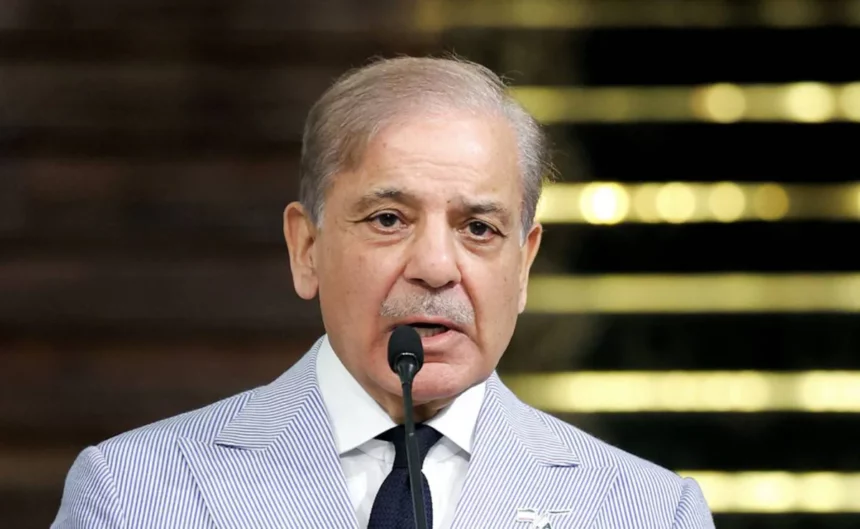
In an escalation of tensions between India and Pakistan, Prime Minister Shehbaz Sharif and Army chief General Asim Munir have issued strong warnings to New Delhi over the suspension of the Indus Waters Treaty (IWT). Their remarks come in the wake of India placing the 1960 treaty “in abeyance” following the deadly Pahalgam terror attack in April, which killed 26 civilians. The heated rhetoric has sparked renewed concerns about water security, cross-border hostility, and the risk of military confrontation between the two nuclear-armed neighbours.
Sharif Vows to Protect Pakistan’s Water Rights
Addressing a ceremony in Islamabad on Tuesday, Prime Minister Shehbaz Sharif declared that Pakistan would not allow India to “snatch even one drop” of water belonging to his country. His comments follow India’s April 23 decision to suspend the Indus Waters Treaty, a move that Pakistan has repeatedly characterised as an act of war if implemented.
“I want to tell the enemy today that if you threaten to hold our water, then keep this in mind that you cannot snatch even one drop of Pakistan,” Sharif said, as reported by the Press Trust of India (PTI). He further warned that any such attempt by India would result in a firm and humiliating response. “You will be again taught such a lesson that you will be left holding your ears,” he added, using a colloquial phrase signalling a public reprimand.
Sharif’s statement closely follows similar remarks from Pakistan People’s Party chairman and former foreign minister Bilawal Bhutto-Zardari, who likened the suspension of the treaty to an attack on the Indus Valley Civilisation. Bhutto warned that Pakistan would not hesitate to go to war if India forced the issue.
The Indus Waters Treaty, brokered by the World Bank in 1960, governs the sharing of waters from the Indus River system between India and Pakistan. While the agreement has survived wars and military crises, India’s latest decision came after the Pahalgam terror attack on April 22, which New Delhi attributed to Pakistan-based militants.
Asim Munir’s Dam Warning and India’s Response
While Sharif’s words targeted the political and diplomatic front, Pakistan Army chief General Asim Munir struck a more militaristic tone during a speech to the Pakistani diaspora in Tampa, Florida. According to the Dawn newspaper, Munir declared that Pakistan would destroy any dam India attempted to build that could restrict the flow of water to Pakistan.
“We will wait for India to build a dam, and when they do so, we will destroy it,” Munir reportedly said. He asserted that the Indus River was “not the Indians’ family property” and warned that Pakistan had the resources to counter any Indian designs to alter its water supply.
Munir’s rhetoric added to an already tense situation, especially given the nuclear capabilities of both nations. His comments prompted a sharp rebuttal from India’s Ministry of External Affairs (MEA), which accused Pakistan of engaging in “nuclear sabre-rattling” and questioned the integrity of its nuclear command and control systems.
The MEA said Munir’s remarks reinforced “well-held doubts” about Pakistan’s military being “hand-in-glove” with terrorist groups and warned that India would not succumb to any form of nuclear blackmail. “Nuclear sabre-rattling is Pakistan’s stock-in-trade,” the ministry said in a statement, emphasising that New Delhi would take all necessary measures to safeguard national security.
In a pointed message to Washington, the MEA also noted that it was regrettable for such remarks to be made from the soil of a “friendly third country,” implying concern over the venue of Munir’s statements.
Operation Sindoor and Ongoing Hostilities
The war of words is taking place against the backdrop of recent military actions. On May 7, India launched “Operation Sindoor,” striking terror infrastructure in Pakistan and Pakistan-occupied Kashmir in retaliation for the Pahalgam terror attack. The operation involved cross-border drone and missile strikes targeting militant facilities believed to be linked to the April 22 assault.
The exchange of fire led to four days of intense hostilities, including heavy drone and missile engagements across the Line of Control. Both nations eventually agreed on May 10 to halt the military escalation, but tensions have remained high.
Adding to the public drama, Indian actor-turned-politician Mithun Chakraborty waded into the dispute with an inflammatory and unusual statement. Responding to Bhutto’s warning, Chakraborty said India could retaliate with a barrage of BrahMos missiles. He also made a bizarre remark about building a dam for all 1.4 billion Indians to relieve themselves in, before unleashing the contents toward Pakistan — a comment that drew attention on social media for its provocative tone.
Chakraborty clarified that his comments were directed solely at Pakistan’s leadership and military establishment, not at ordinary Pakistani citizens, whom he described as peace-loving people who did not want war.
This latest series of threats and counter-threats over the Indus Waters Treaty underscores the fragility of India-Pakistan relations and the potential for water disputes to exacerbate existing security tensions. With both political leaders and military chiefs in Pakistan taking an aggressive stance, and India signalling it will not tolerate either terrorist attacks or nuclear blackmail, the diplomatic temperature in South Asia continues to rise.