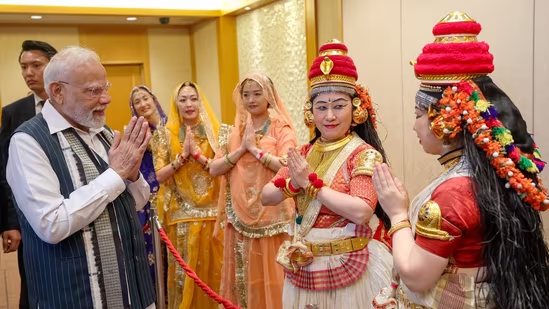
Prime Minister Narendra Modi’s two-day visit to Japan began with a deeply emotional and culturally rich gesture as Japanese women, dressed in vibrant Rajasthani attire, extended a traditional Indian-style welcome. The rare and moving scene unfolded in Tokyo, where the Indian leader was greeted with folded hands and warm smiles, accompanied by the iconic phrase “Padharo Maare Des,” meaning “Welcome to my land.” The welcome, rooted in the colorful traditions of Rajasthan, highlighted the cultural bridges between India and Japan and underlined the enduring friendship between the two nations.
The reception went beyond formality, as the performers sang, danced, and celebrated India’s heritage through classical and folk expressions that resonated thousands of miles away from the subcontinent. The prime minister, visibly touched by the display of affection and respect, acknowledged the performers warmly, creating a moment that symbolized India’s cultural diplomacy and the strength of people-to-people connections between the two countries.
A Cultural Welcome Blending Rajasthan and India’s Classical Arts
The welcome ceremony that greeted Prime Minister Modi was unique, not just because of the setting but because of the devotion and respect displayed by Japanese citizens for Indian traditions. The group of Japanese women, adorned in vibrant lehengas and dupattas representing Rajasthan’s cultural richness, folded their hands in the traditional Indian gesture of namaskar and sang out “Padharo Maare Des.” This phrase, deeply rooted in Rajasthani folk culture, has for generations symbolized hospitality and openness, welcoming visitors with warmth and joy. For Prime Minister Modi, hearing it in Japan carried an additional resonance—it was a reminder of how Indian traditions transcend borders and inspire admiration in other parts of the world.
To further elevate the welcome, one of the women performed the beloved folk song ‘Vaari Jaavu Re,’ a soulful melody often sung to convey devotion and affection. The rendition of this song by a Japanese artist delighted the prime minister, who applauded enthusiastically, acknowledging the depth of cultural respect that had been extended.
But the welcome was not limited to Rajasthan alone. Another group of Japanese performers showcased India’s classical dance traditions, bringing together forms from different parts of the country in one spectacular presentation. Mohiniyattam from Kerala, Kathak from North India, Bharatnatyam from Tamil Nadu, and Odissi from Odisha were performed with precision, grace, and visible devotion. Each dance form has centuries of history, representing not only regional traditions but also India’s larger spiritual and artistic ethos.
One Japanese artist who performed Mohiniyattam shared her joy, saying that though the dance is traditionally a solo art form, for this occasion it was adapted into a group performance to honor Prime Minister Modi. She explained that she had over 25 years of experience in Mohiniyattam, and performing for the Indian leader was one of the greatest honors of her career. Her words captured the emotional investment that these performers had in presenting Indian culture authentically.
Another Japanese performer, who took part in the Kathak recital, described the opportunity as being “like a gold medal,” emphasizing how significant it was to share her passion for Indian art in front of the leader of the country that had given birth to it. Such testimonies highlighted not just the performers’ skill but also their deep reverence for Indian traditions.
The moment represented the culmination of decades of cultural exchanges between India and Japan. Over the years, Japanese enthusiasts have embraced yoga, Ayurveda, Indian classical dance, and music, creating vibrant communities dedicated to preserving these traditions. For Prime Minister Modi, who has consistently emphasized the role of India’s soft power in building international ties, the welcome was not only heartwarming but also a validation of cultural diplomacy’s impact.
Diplomacy, Community, and the India–Japan Partnership
While the cultural reception was a symbolic beginning, Prime Minister Modi’s visit to Japan was also centered on diplomacy and strategic engagement. The Indian leader arrived in Tokyo at the invitation of Japanese Prime Minister Shigeru Ishiba to attend the 15th India-Japan Annual Summit, a dialogue that has become one of the pillars of the bilateral relationship.
In his departure message earlier in the day, Prime Minister Modi emphasized that the visit would focus on strengthening the Special Strategic and Global Partnership between India and Japan. Established more than a decade ago, this partnership has steadily deepened over the years, expanding across trade, defense, technology, and cultural cooperation. PM Modi underlined that the agenda in Tokyo was not just about bilateral gains but also about contributing to regional and global peace and security.
For India, Japan has emerged as a vital partner in the Indo-Pacific, sharing concerns about regional stability, maritime security, and the challenges posed by global geopolitical tensions. The annual summit provides an opportunity for both nations to align their strategies, enhance economic collaboration, and explore new areas of cooperation in innovation, energy, and infrastructure. Discussions are also expected to touch on Japan’s advanced technology sectors, with reports suggesting progress on agreements like the E10 Shinkansen bullet train deal.
Yet alongside high-level diplomacy, Prime Minister Modi’s engagement with the Indian community in Japan added another dimension to his visit. At a community gathering in Tokyo, the prime minister expressed deep appreciation for the contributions of Indian expatriates, praising their ability to preserve cultural traditions while actively participating in Japanese society. He noted that their success stories, rooted in both Indian values and Japanese discipline, were a source of pride for the entire nation.
In a heartfelt message on X, PM Modi wrote that he was “deeply touched by the warmth and affection of the Indian community in Tokyo.” He emphasized that their dual commitment—to their cultural roots and to their adopted country—was a living example of the synergy that India seeks to foster through its global partnerships.
Such engagements with diaspora communities are a hallmark of PM Modi’s international visits. They not only boost morale among expatriates but also serve as a reminder of how Indians abroad act as cultural ambassadors. In Japan, where the Indian community has been steadily growing, their contributions to fields such as information technology, research, and academia have enhanced the bilateral relationship at a grassroots level.
The symbolism of the welcome ceremony, combined with the strategic importance of the summit, made this visit a blend of emotional and political significance. It showcased how culture, diplomacy, and community engagement can come together to strengthen international bonds in ways that go beyond official agreements.
For Prime Minister Modi, the experience was deeply personal as well. Known for his affinity for traditional arts and his belief in India’s civilizational strength, the performances in Tokyo were not just entertainment but a reaffirmation of the idea that India’s heritage belongs to the world. In acknowledging the efforts of Japanese artists who had dedicated years to mastering Indian dance forms, PM Modi also underscored a principle he has often spoken of—that cultural appreciation and respect are powerful tools in building lasting global friendships.
The prime minister’s visit to Japan thus unfolded as more than a diplomatic exercise. It became a living testament to the cultural bridges that connect nations, the role of communities in sustaining partnerships, and the importance of recognizing art and tradition as essential elements of international relations. By beginning his visit with “Padharo Maare Des,” PM Modi not only received a welcome but also carried with him the spirit of India’s open-hearted hospitality to Japan, reinforcing a partnership built on shared respect and common aspirations.