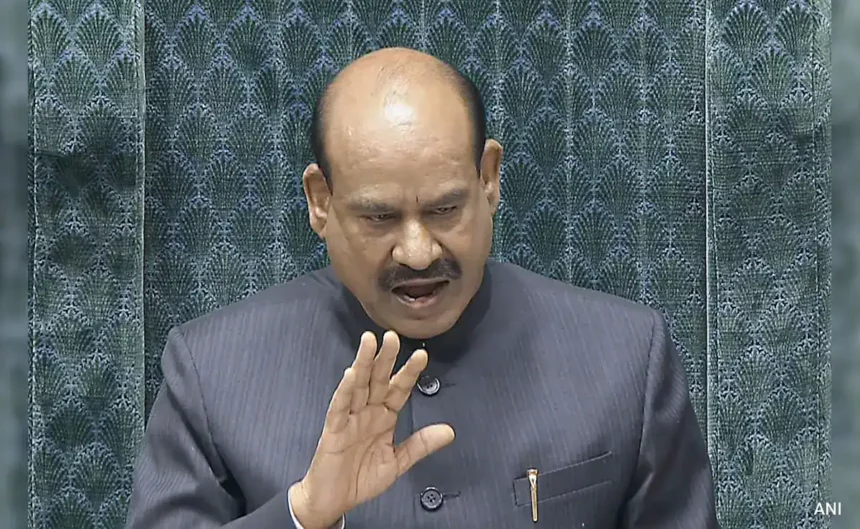
The second day of the second phase of Parliament’s Budget Session witnessed heightened political tensions as the opposition prepared to move key motions against senior constitutional authorities. The Lok Sabha is expected to take up discussions regarding a no-confidence motion against Speaker Om Birla, while opposition parties are also reportedly preparing a similar motion against Gyanesh Kumar. These developments come amid continued disruptions in both Houses of Parliament over the conflict in West Asia and its potential economic impact on India.
The session has become increasingly contentious as opposition parties demand detailed discussions on international developments, particularly the ongoing tensions involving Israel, Iran, and the United States. According to opposition leaders, the conflict could significantly affect India’s energy security and overall economic stability.
On the first day of the second phase of the Budget Session, protests by opposition members led to repeated disruptions in both the Lok Sabha and the Rajya Sabha. Members raised slogans and demanded a comprehensive debate on the geopolitical crisis and its consequences for India’s economy.
Despite the disruptions, the government maintained that it is open to discussion on the issues raised by the opposition. Kiren Rijiju stated that the government was prepared to debate the motion concerning the Lok Sabha Speaker and had already addressed some of the concerns raised by the opposition through statements made by the External Affairs Minister.
Opposition intensifies pressure with motions and criticism of government
Opposition leaders have been increasingly vocal in their criticism of the government’s handling of both domestic and international issues. One of the major developments expected during the current session is the opposition’s proposed motion seeking the removal of Lok Sabha Speaker Om Birla.
Under parliamentary procedures, such a motion requires a simple majority to pass in the Lok Sabha. However, political analysts believe that the motion is unlikely to succeed because the ruling National Democratic Alliance currently holds a strong majority in the House.
The NDA is believed to have the support of more than 290 Members of Parliament, giving it a comfortable numerical advantage over opposition parties. As a result, even if the motion is formally discussed, it is expected to face significant difficulty in securing the required majority.
During the discussion of the motion, parliamentary rules state that the Speaker will not preside over the proceedings. Instead, another presiding officer will conduct the debate. The Speaker, however, retains the right to address the House and present his perspective during the discussion.
At the same time, sources indicate that opposition parties are preparing another motion targeting Chief Election Commissioner Gyanesh Kumar. A draft of the proposal has reportedly been finalized and could be introduced in Parliament next week.
The opposition’s actions reflect a broader strategy aimed at challenging the government and raising questions about the functioning of key institutions. These moves have further intensified the political atmosphere in Parliament during the Budget Session.
Leader of the Opposition in the Lok Sabha Rahul Gandhi also strongly criticized the government while addressing the media and Parliament. He argued that the ongoing conflict in West Asia could have serious economic consequences for India.
According to Rahul Gandhi, rising global crude oil prices and increasing energy costs are already affecting the Indian economy. He claimed that the situation is putting pressure on household budgets and small businesses across the country.
He also alleged that Prime Minister Narendra Modi was avoiding parliamentary debate on the issue. Gandhi stated that the government should address concerns related to rising fuel prices, stock market fluctuations, and broader economic impacts.
Government highlights evacuation efforts and calls for diplomatic solutions
While political tensions dominated parliamentary proceedings, the government focused on outlining its response to the evolving situation in West Asia. External Affairs Minister S. Jaishankar delivered statements in both Houses explaining the government’s position and ongoing efforts to manage the crisis.
Jaishankar emphasized that India supports a peaceful and negotiated solution to the conflict in the region. According to him, dialogue and diplomacy remain the most effective means of resolving tensions between the countries involved.
He also informed Parliament about the steps being taken to safeguard Indian citizens living and working in West Asian countries. Approximately ten million Indians currently reside in Gulf nations, making their safety a major concern for the government.
The minister reported that efforts are underway to assist Indian nationals who wish to return home from the region. As of March 8, nearly 67,000 Indian citizens had crossed international borders as part of evacuation or safety measures coordinated by the government.
Multiple ministries and agencies are working together to monitor the situation and ensure the safe movement of citizens. The Ministry of External Affairs, along with other departments, is coordinating with diplomatic missions to provide assistance where needed.
Jaishankar also highlighted the human cost of the conflict. Two Indian merchant seafarers have lost their lives, while another individual remains missing. Authorities are continuing efforts to gather information and assist affected families.
Earlier, the Directorate General of Shipping had issued advisories to Indian seafarers operating in the region, urging them to follow embassy guidance and avoid unnecessary travel to shore areas.
The minister further noted that the conflict has intensified in several parts of the Gulf region, leading to damage to infrastructure and loss of life. The ongoing military actions between Israel, the United States, and Iran have increased uncertainty and raised concerns about broader regional instability.
Jaishankar also mentioned that communication with Iranian leadership has become difficult due to the evolving security situation. However, diplomatic engagement continues where possible.
He added that Iran’s Foreign Minister had expressed appreciation to India for allowing the Iranian naval vessel IRIS Lavan to dock at Kochi Port.
As the Budget Session continues, Parliament is expected to witness further debates and political confrontations over both domestic issues and international developments affecting India.