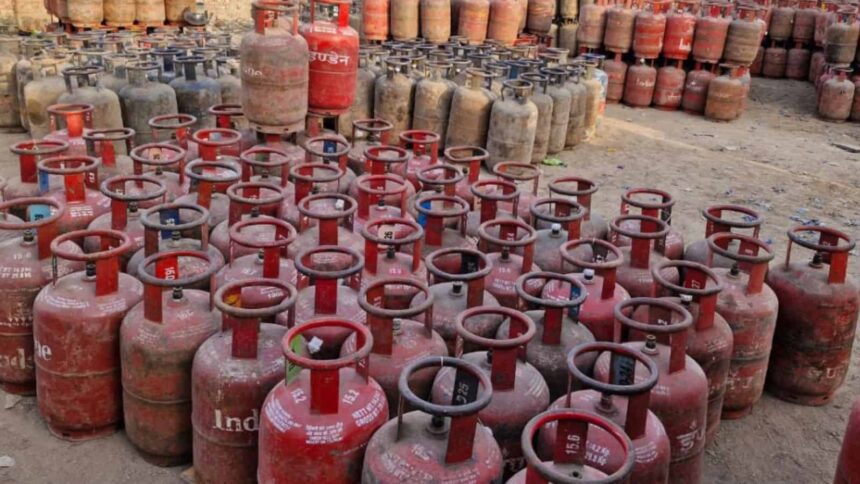
The Government of India has reportedly extended the mandatory waiting period between two LPG cylinder bookings from 21 days to 25 days in an effort to prevent hoarding and curb black marketing. The decision comes at a time when global energy markets are experiencing volatility due to rising crude oil prices linked to geopolitical tensions in West Asia. Officials said the measure aims to ensure that domestic consumers receive uninterrupted access to cooking gas while maintaining stable supply across the country.
According to government sources cited in reports, the move was prompted by unusual booking patterns observed in recent weeks. Authorities noticed that some consumers who previously booked LPG cylinders roughly every fifty-five days had started placing new bookings within just fifteen days. Such trends raised concerns about potential hoarding or misuse of subsidised domestic LPG cylinders.
Officials believe that extending the booking gap will discourage unnecessary early bookings and help maintain a more balanced distribution of LPG cylinders among consumers. The measure is expected to reduce the possibility of stockpiling cylinders for resale in the black market, which can create artificial shortages and price distortions.
The decision also reflects broader government efforts to maintain stability in the domestic energy supply chain. In addition to extending the booking period, authorities have directed refineries to increase LPG production in order to meet rising demand and maintain adequate supply for households.
Government officials emphasized that domestic consumers will remain the top priority in the distribution of LPG cylinders. Ensuring that households across the country continue to receive cooking gas without disruption remains a key objective for policymakers.
Government directs refineries to increase LPG output amid growing demand
As part of the effort to strengthen supply, the government has instructed oil refineries to expand LPG production. Officials have been asked to ensure that domestic consumption requirements are met before other priorities.
This directive comes at a time when energy markets are under pressure due to geopolitical developments in West Asia. The ongoing conflict involving Iran has pushed global oil prices significantly higher, raising concerns about the impact on energy supplies and fuel costs worldwide.
Reports indicated that crude oil prices surged to around 120 dollars per barrel as tensions in the region intensified. Such price spikes can affect global fuel markets and create uncertainty for energy-importing countries.
Despite these developments, government sources stated that India is taking proactive steps to secure sufficient LPG supplies. Authorities are also exploring opportunities to expand import partnerships with additional supplier countries.
Several nations, including Algeria, Australia, Canada, and Norway, have reportedly approached India with offers to supply LPG.
Diversifying import sources is considered an important strategy for maintaining energy security. By expanding the number of supplier countries, India can reduce the risks associated with supply disruptions in any particular region.
Officials indicated that the government is actively evaluating these potential partnerships as part of its broader energy strategy. Increasing LPG imports from multiple countries could help stabilize supply and reduce the likelihood of shortages.
At the same time, domestic production remains a key focus. Expanding refinery output ensures that the country can meet household demand even during periods of global energy uncertainty.
Government reassures public about petrol, diesel and aviation fuel supplies
Alongside measures related to LPG supply, the government has also addressed public concerns about potential shortages of petrol and diesel. Rising crude oil prices and geopolitical tensions have prompted speculation that fuel prices could increase sharply in the coming weeks.
However, officials have sought to reassure citizens that there is currently no shortage of petrol or diesel across the country. According to government sources, India has sufficient fuel stocks to meet domestic demand.
They also stated that fuel prices are unlikely to increase unless crude oil prices exceed approximately 130 dollars per barrel. At present, authorities expect oil prices to remain closer to the 100 dollar per barrel range in the near term.
Officials emphasized that the government and oil companies are closely monitoring global developments and will take appropriate measures if market conditions change.
In addition to petrol and diesel, authorities also addressed concerns about aviation fuel supplies. Aviation Turbine Fuel, commonly referred to as ATF, is essential for airline operations and is often sensitive to fluctuations in crude oil prices.
Government sources said there is no reason for concern regarding ATF availability. India is not only a producer of aviation fuel but also an exporter of the product, giving the country a relatively strong position in terms of supply.
The government also highlighted its efforts to secure crude oil from alternative routes as geopolitical tensions continue to affect traditional supply channels. One of the major concerns in the current situation is the disruption of shipping routes through the Strait of Hormuz.
The strait is one of the most important global oil transit routes, and any blockage or disruption can affect international energy markets. Reports indicate that the ongoing conflict involving United States, Israel, and Iran has led to significant disruptions in the region.
To reduce potential risks, India has accelerated efforts to source crude oil from alternative routes and suppliers. These measures are intended to ensure that the country continues to receive adequate supplies even if traditional shipping lanes remain affected.
Officials stressed that India’s diversified energy procurement strategy places it in a relatively strong position compared to many other countries during periods of geopolitical instability.
By extending the LPG booking gap, increasing refinery output, and expanding international supply partnerships, the government aims to maintain stability in domestic energy markets while protecting consumers from sudden shortages or price spikes.