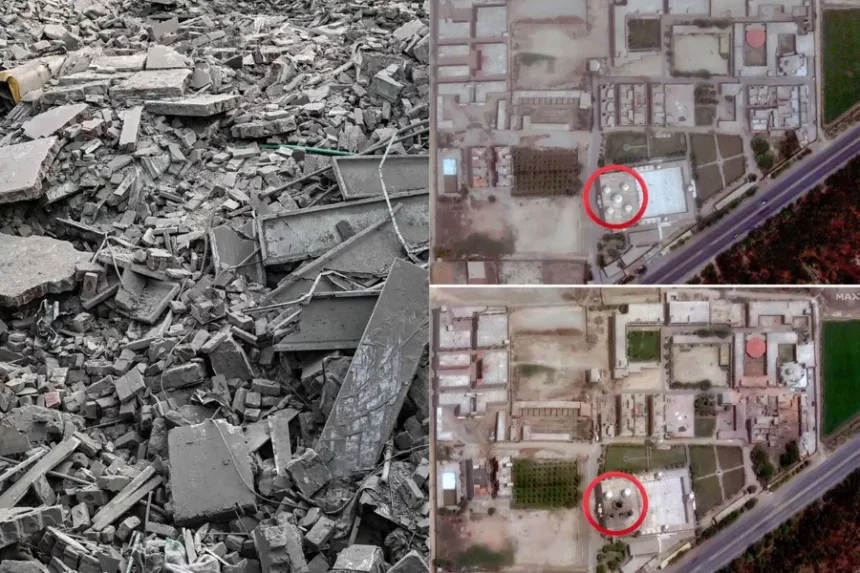
India’s Operation Sindoor, which involved precision strikes on terrorist infrastructure in Pakistan and Pakistan-occupied Kashmir, has escalated tensions in the region. Following the mission, satellite images from Maxar Technologies have surfaced, showing the extent of the damage at key terrorist sites, particularly in Bahawalpur and Muridke in Pakistan. The airstrikes, launched early on Wednesday morning, were a direct response to the deadly Pahalgam terror attack on April 22 that claimed the lives of 26 individuals.
Precision Strikes Target Terrorist Infrastructure
The strikes, executed by India’s armed forces, targeted nine locations across Pakistan and Pakistan-occupied Kashmir, including known terrorist training camps and launchpads. The military action was described as focused and proportional, with the goal of neutralizing those responsible for the Pahalgam attack. Satellite images shared later revealed the extent of the destruction, especially at the Markaz Subhan Allah in Bahawalpur, where the missile strikes caused significant damage. The weapons used included Scalp deep-strike cruise missiles, the Hammer smart weapon system, and M777 howitzers firing Excalibur munitions, all deployed with precision to avoid civilian casualties.
In a statement released by the Ministry of Defence, the operation was characterized as non-escalatory and measured, emphasizing that no Pakistani military targets were hit. The operation lasted for approximately 30 minutes, from 1:04 am to 1:30 am. Despite Pakistan’s denials of the strikes’ impact, India maintained that its actions were based on credible intelligence and aimed at eliminating terrorist infrastructure actively used to plan and execute attacks.
Pakistan Responds with Threats and Diplomatic Offers
In response to the airstrikes, Pakistan’s Prime Minister Shehbaz Sharif strongly condemned the operation, asserting that Pakistan had the right to retaliate against what he called an “imposed war” by India. He further added that the Pakistani armed forces were fully prepared to handle the situation. On the other hand, Pakistan’s Defence Minister Khawaja Asif took a slightly different tone, offering to de-escalate tensions if India backed down and chose a peaceful path.
While Pakistan’s official stance has been to assert its right to defend itself, India remains firm in its position that the strikes were a legitimate response to Pakistan’s failure to curb terrorism emanating from territories under its control. The operation and the subsequent statements from both countries highlight the precarious nature of the ongoing conflict in the region, with both nations weighing military actions and diplomatic negotiations.