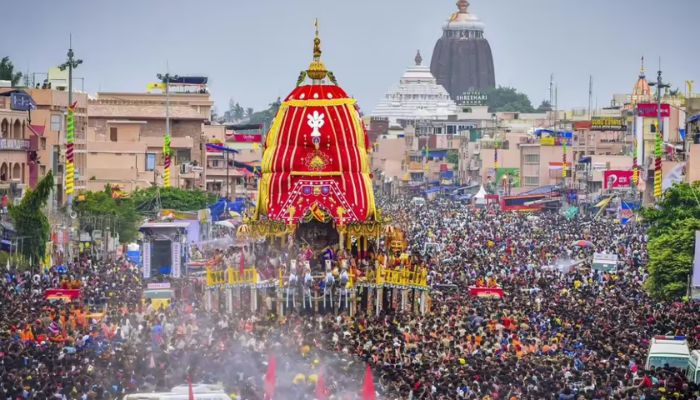
Chief Minister Mohan Charan Majhi has come under intense scrutiny following the tragic stampede during the Rath Yatra festival in Puri that resulted in three deaths. Under pressure from the opposition and public outcry, Mohan Charan Majhi announced a series of significant measures aimed at improving the administration and infrastructure of the temple town, including the upgrading of Puri from a municipality to a municipal corporation. This move aims to address longstanding challenges related to crowd management and urban amenities, signaling a fresh approach toward handling the demands of millions of devotees and residents alike.
Upgrading Puri for Better Civic Management
The Rath Yatra incident brought to light the inadequacies in the existing civic administration, particularly regarding the municipality’s capacity to manage the scale of the festival and the everyday needs of a rapidly growing urban area. Recognizing these challenges, Chief Minister Majhi emphasized the urgent need for reform, stating that the current Puri Municipality falls short of meeting the aspirations of the town’s residents and the vast influx of pilgrims.
To address these gaps, the Odisha government has initiated the process to convert Puri municipality into a municipal corporation by merging seven to eight surrounding gram panchayats. This expansion is intended to bring enhanced governance, better resource allocation, and improved infrastructure to the temple town, which is home to over six lakh residents and attracts devotees from all over India and abroad.
Mohan Charan Majhi’s administration believes this upgradation will allow for more efficient management of urban services such as sanitation, traffic control, water supply, and public safety — critical aspects for a city that hosts one of Hinduism’s most significant religious events annually.
Cultural Promotion and Tourism Development
In addition to administrative reforms, Chief Minister Mohan Charan Majhi announced plans to establish a Shri Jagannath Museum, Library, and Culture Research Centre in Puri. This initiative is aimed at promoting the rich heritage of Jagannath culture, which has been historically underrepresented in terms of public awareness and tourism development.
Mohan Charan Majhi pointed out that for over seventy years, no significant efforts were made to popularize the spiritual and historical importance of Puri on a national or global platform. The government’s renewed focus on cultural preservation and tourism aims to position Puri as a premier pilgrimage destination and a major tourist hub, thereby boosting the local economy and fostering pride among its residents.
Addressing the Stampede and Rath Yatra Management Concerns
The recent stampede outside the Gundicha Temple during the Rath Yatra drew sharp criticism towards the state government for its crowd control and event management. The delay in pulling the chariots of Lord Jagannath further compounded public frustration, prompting urgent calls for accountability and reform.
Mohan Charan Majhi’s announcement of civic reforms and administrative upgrades is seen as a direct response to these issues, reflecting the government’s commitment to preventing such tragedies in the future. The government has deployed senior officers to oversee Rath Yatra arrangements, and the entire administration is on high alert to ensure the smooth and safe conduct of the Bahuda Yatra, the concluding procession of the festival.
Director General of Police Y B Khurania urged devotees and visitors to follow all guidelines issued by the administration to maintain order and safety during the festivities. The police have also put in place extensive security and traffic management plans for the upcoming Suna Besha event, which traditionally draws the largest crowds during the Rath Yatra season.
A Fresh Start for Puri’s Civic Administration
The Odisha government’s decision to merge surrounding villages and expand the municipal boundaries to form a municipal corporation marks a critical shift in how Puri will be governed moving forward. This will not only help improve infrastructure but is expected to streamline decision-making and accountability within the civic administration.
By taking these steps, the government aims to balance the dual priorities of preserving Puri’s religious sanctity and catering to the urban needs of its residents and visitors. The move also signals a recognition that Puri’s importance as a pilgrimage site demands a governance structure capable of handling large-scale events while ensuring sustainable urban growth.