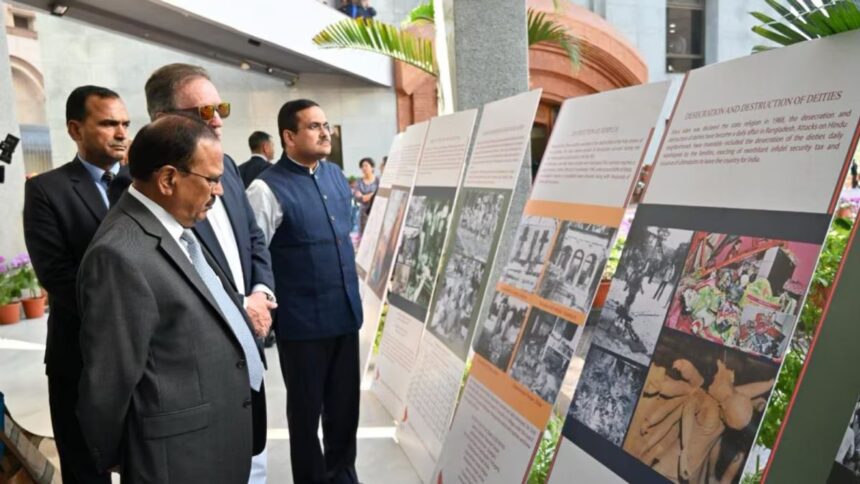
India’s National Security Advisor (NSA) Ajit Doval attended an exhibition and panel discussion in New Delhi that focused on the ongoing persecution of religious and ethnic minorities in Bangladesh. The event, titled “The Never Ending Persecution of Minorities in Bangladesh,” was hosted by the Vivekananda International Foundation (VIF) and brought together diplomats, experts, and journalists to discuss the systemic discrimination and violence faced by minorities in Bangladesh.
According to a statement by the VIF, the event aimed to shed light on the human rights crisis affecting Hindus, Buddhists, Christians, and Ahmadiyya Muslims in Bangladesh. The panel discussion featured prominent speakers, including Ambassador Satish Chandra, former Deputy National Security Advisor and Vice Chairman of VIF; Ambassador Veena Sikri, former High Commissioner to Bangladesh; Francois Gautier, correspondent for Valeurs Actuelles; and Anirban Ganguly, Chairperson and Trustee of the Syama Prasad Mookerjee Research Foundation. The discussion was chaired by Arvind Gupta, Director of VIF.
The exhibition, curated by the Foundation Against Continuing Terrorism (FACT), presented compelling visual documentation of human rights violations, forced displacements, and targeted attacks on religious minorities in Bangladesh. The speakers examined the socio-political landscape that has led to increasing marginalization and threats to minority communities in the country. They also delved into the broader international and regional implications of these developments, particularly in the context of India’s security concerns.
NSA Ajit Doval’s presence at the event underscored India’s deep concern over the plight of Bangladeshi minorities and the urgent need for global attention to the issue. His attendance also signaled India’s commitment to advocating for human rights and regional stability, as well as its strategic interest in developments within Bangladesh.
The discussions highlighted that Bangladesh has witnessed growing religious intolerance and instances of violence against minorities, raising serious concerns about the protection of fundamental rights. The speakers pointed out how the socio-political environment has contributed to increasing discrimination, with incidents of land grabbing, attacks on temples and religious institutions, and forced conversions frequently reported. The role of extremist elements in targeting minorities and the lack of adequate government intervention were also key points of discussion.
The exhibition aimed to raise awareness and encourage discourse on the urgent need for action to protect minority communities in Bangladesh. The VIF reiterated its commitment to fostering meaningful discussions on human rights, regional security, and the need for diplomatic interventions to address the crisis.
Meanwhile, Bangladesh has continued efforts to strengthen ties with India, with a focus on maintaining a cooperative and respectful relationship. Bangladesh’s Foreign Affairs Adviser Md Touhid Hossain responded to recent remarks by India’s External Affairs Minister S Jaishankar, who noted that there have been anti-India sentiments expressed in Bangladesh. Hossain emphasized Bangladesh’s stance on maintaining strong bilateral relations based on mutual respect and reciprocal interests, reaffirming that there was no ambiguity in Bangladesh’s commitment to a positive and constructive engagement with India.
The discussions at the VIF event come at a crucial time when India and Bangladesh are navigating diplomatic complexities while addressing key concerns related to security, minority rights, and regional cooperation. The issue of minority persecution in Bangladesh remains a sensitive and pressing challenge, with calls for stronger international engagement to ensure the protection of vulnerable communities.