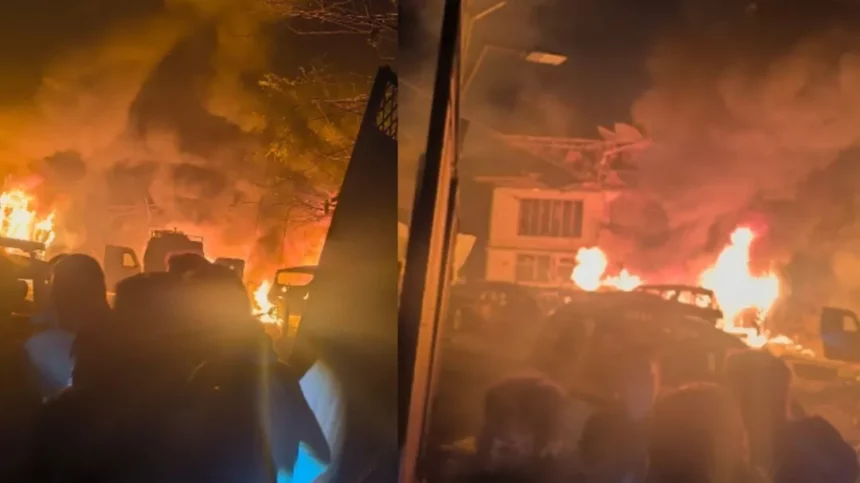
In a tragic and alarming incident in Jammu and Kashmir, an accidental explosion at Nowgam Police Station claimed the lives of at least nine people and injured 24 others during a police inspection late on the night of November 14–15. The blast occurred when police officials and forensic experts were examining explosives stored at the police station premises, which were connected to a ‘white-collar’ terror module in Faridabad, Haryana. The devastating incident has sent shockwaves across the region, raised concerns over handling of recovered explosives, and triggered a wide-scale investigation into the circumstances surrounding the explosion. Emergency services were immediately deployed, and authorities have heightened security and restricted access to the area as the probe continues.
Casualties, Damage, and Immediate Response
The Nowgam Police Station explosion has resulted in significant human and infrastructural loss. Initial reports indicated that the casualties primarily comprised police personnel and forensic experts who were present at the station for an inspection of explosives seized during previous anti-terror operations. At least nine individuals were confirmed dead, while 24 others, including 21 police officials and three civilians, sustained injuries of varying severity and were admitted to hospitals in Srinagar. Five of the injured remain in critical condition, raising concerns that the death toll may further rise as authorities continue to provide medical care.
The blast not only led to loss of life but also caused extensive property damage. Vehicles parked within the police station compound were destroyed, and the fire resulting from the explosion quickly engulfed parts of the premises. Fire tenders were rushed to the scene to contain the blaze, while traffic and access to surrounding roads were immediately blocked to ensure the safety of nearby residents and personnel. Security and patrolling around the Nowgam area were heightened following the incident to prevent secondary incidents and to maintain law and order. Officials indicated that they would hold a press briefing to provide further updates on the casualties, the explosion’s cause, and ongoing investigation procedures.
Eyewitnesses and local residents described the incident as a loud and shocking explosion that rattled the entire neighborhood. The blast’s intensity indicated the volatile nature of the stored explosives, highlighting the risks associated with handling large quantities of ammonium nitrate and other bomb-making materials within urban police facilities. Authorities are treating the incident with utmost seriousness, reviewing procedural lapses, and assessing protocols for safe storage and inspection of seized explosives to prevent similar tragedies in the future.
Link to Faridabad ‘White-Collar’ Terror Module and Ongoing Investigation
Investigators quickly identified that the explosives involved in the Nowgam blast were connected to a massive seizure in Faridabad, Haryana. Approximately 2,900 kilograms of ammonium nitrate and other bomb-making materials were recovered from rented properties in Dhauj and Fatehpur Taga villages on the outskirts of Faridabad. The raid was part of an operation targeting a so-called ‘white-collar’ terror module allegedly associated with Jaish-e-Mohammed, and the materials were being transported to Jammu and Kashmir for further investigation and forensic analysis.
The Faridabad operation traced back to Dr. Muzammil Shakil, a 35-year-old physician from Pulwama, J&K, who also taught at Al-Falah Medical College. Dr. Shakil was arrested approximately two weeks ago after radical posters appeared across the Kashmir Valley, prompting a wider investigation into potential terror networks operating in both Haryana and Jammu and Kashmir. During interrogations, authorities connected Shakil to an alleged Jaish-e-Mohammed module in Faridabad, leading to the seizure of large quantities of explosive material. The explosives were subsequently transferred to Nowgam Police Station for further forensic examination, highlighting the high-risk nature of their handling.
Security experts have emphasized that the transfer and storage of such a large volume of explosive material within a populated police station significantly increases the potential danger to personnel and civilians alike. The Nowgam blast has therefore raised critical questions about procedural safeguards, risk assessments, and protocols for managing high-risk materials. Officials are reviewing every step in the chain—from seizure to storage and inspection—to determine whether negligence or procedural lapses contributed to the accidental detonation.
The Jammu and Kashmir Police, along with forensic teams and central agencies, are conducting a detailed investigation into the incident. They are also working to identify the deceased, as preliminary reports indicated that the victims were yet to be fully identified at the time of reporting. The investigation will not only focus on the immediate cause of the blast but also examine systemic issues surrounding the management of seized explosives, potential security breaches, and the risk posed by other active modules connected to the Faridabad network.
Analysts suggest that the Nowgam blast underscores the complex and evolving nature of terrorism networks in India, particularly those that attempt to operate in a low-profile, “white-collar” fashion. These networks often leverage individuals with professional backgrounds to facilitate logistics, conceal activities, and manage materials discreetly, making it challenging for law enforcement agencies to anticipate and intercept such operations. The incident highlights the need for stringent oversight and enhanced safety protocols when handling materials associated with such high-risk modules.
The Nowgam police explosion also marks a tragic reminder of the dangers faced by law enforcement personnel and forensic teams who work on the frontlines of counter-terrorism. While the public is often aware of the operational risks during raids or active conflict situations, incidents like these illustrate that even routine forensic examinations of recovered explosives carry significant hazards. The disaster has prompted calls from experts for enhanced training, better protective infrastructure, and the establishment of specialized facilities for explosive material analysis that are removed from urban centers.
Authorities continue to monitor the condition of the injured and provide updates to ensure transparency. Investigators are also liaising with central agencies, including the National Investigation Agency (NIA), to determine whether the explosives at Nowgam were linked to any broader terror plots beyond the Faridabad module. Initial findings suggest that the materials were part of a planned operation, but no imminent threat was detected at the time of the inspection.
The tragic incident has sparked national attention and prompted discussions on how intelligence sharing, operational protocols, and law enforcement procedures can be improved to prevent similar accidents in the future. Experts argue that incidents like these, while accidental, often reveal underlying vulnerabilities in systems that manage high-risk materials, emphasizing the need for continuous evaluation and reform.