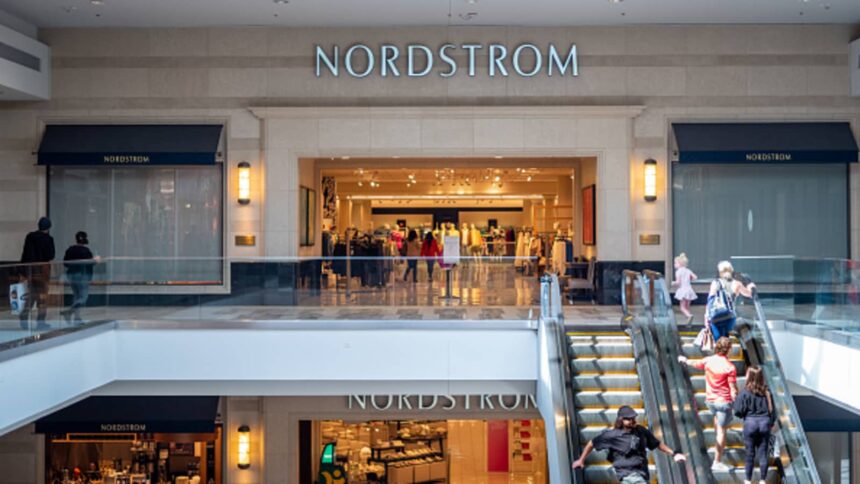
Nordstrom, the Seattle-based department store chain, raised its sales outlook for the full year after reporting better-than-expected holiday shopping performance. Despite a cautious forecast earlier in the year, the company experienced stronger-than-anticipated results from both in-store and online sales during the holiday season. As a result, Nordstrom revised its full-year revenue growth expectations to 1.5% to 2.5%, up from its prior estimate of flat to a 1% increase.
The company’s revised forecast comes after a nine-week holiday period ending on January 4, in which it saw net sales grow by 4.9%. Comparable sales, which exclude the effects of new store openings and closures, increased by 5.8%. Sales at Nordstrom’s main store banner rose by 3.7%, while Nordstrom Rack, its off-price banner, saw a more significant increase, with net sales up by 7.4% and comparable sales up by 4.3%.
CEO Erik Nordstrom attributed the better-than-expected holiday sales to the company’s efforts to stay competitive in a challenging retail environment, particularly in terms of promotions and product offerings. This positive shift in sales came after the company had lowered its expectations in late November, when it observed a noticeable decline in sales trends toward the end of October.
Although the company raised its sales forecast, it stuck to its previous profit guidance. Nordstrom’s forecast for the full year still expects adjusted earnings to be between $1.75 and $2.05 per share. Despite the upward revision in sales expectations, the company emphasized that the increase in revenue was influenced by the effects of one fewer fiscal week, which it factored into its outlook.
In addition to the stronger-than-expected holiday sales performance, Nordstrom’s revised guidance provides insights into the overall health of the U.S. consumer and retail sector. The company’s holiday results align with broader trends seen in U.S. retail spending, which rose by 3.8% year-over-year from November 1 through December 24, excluding automotive sales, according to Mastercard SpendingPulse. Online spending, too, saw a significant boost, rising nearly 9% from November 1 to December 31, reaching a total of $241.4 billion, as reported by Adobe Analytics.
As the holiday season provided some promising numbers for retailers, Nordstrom’s update comes at a crucial time for the retail industry. With competitors like Walmart, Best Buy, and Macy’s also preparing to release their earnings reports in late February, the performance of key retailers during the holiday shopping season will be closely scrutinized for broader economic trends.
Nordstrom’s update also comes amid significant changes within the company, as the Nordstrom family prepares to take the company private. In late December, Nordstrom announced a $6.25 billion buyout deal with the founding family and Mexican department store El Puerto de Liverpool. The buyout transaction, which has already been approved by the company’s board of directors, is expected to close in the first half of 2025. The move to go private could mark a new chapter in the company’s history as it looks to navigate the future of retail in a rapidly changing market.
Despite the promising holiday season performance and the optimistic outlook, Nordstrom’s stock ended the day at $24.01, which represents a 4% drop from its 52-week high. The company is scheduled to report its full fourth-quarter and full-year results on March 4, which will provide further insights into its financial performance for the year.