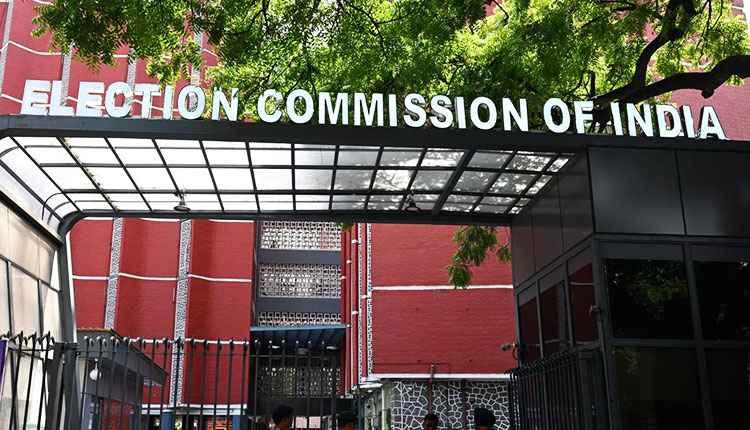
The Election Commission of India (ECI) on Thursday confirmed that no requests were received from defeated candidates seeking verification of burnt memory or microcontroller data of electronic voting machines (EVMs) used in the recently concluded Bihar Assembly elections. The announcement also applies to the eight assembly bypolls held alongside the second phase of polling on November 11, 2025. This development highlights that none of the runners-up in any constituency exercised their right to request post-counting scrutiny of EVMs within the prescribed window.
The ECI clarified that the post-counting verification mechanism, introduced in revised Standard Operating Procedures (SOPs) issued on June 17, 2025, following Supreme Court directions, allows candidates who finish immediately behind the winner—either in second or third position—to seek checks of the microcontroller or burnt memory of EVMs. Candidates are required to submit their requests within seven days of the announcement of results. However, in the case of the Bihar polls, which concluded with results declared on November 14, no such applications were filed in any constituency, either for the main assembly elections or for the bypolls.
Verification Mechanism and SOP Guidelines
The ECI underscored that the verification process is a technical scrutiny mechanism available to candidates who wish to ensure the integrity of EVMs after counting. According to the June SOPs, district election authorities are mandated to acknowledge and process any valid request for verification, which is then conducted in the presence of the candidate or their authorised representative. The procedure includes examination of the EVM’s burnt memory and microcontroller data to confirm that votes were recorded accurately.
This mechanism was designed to instil confidence among candidates and the public in the electoral process by allowing technical validation of the voting machines. Despite this opportunity, the ECI noted that no candidate, whether finishing second or third in their constituency, submitted any request within the seven-day window. The same lack of filings was observed in the eight assembly bypolls conducted simultaneously with the main polls, further affirming that no scrutiny of EVMs was sought anywhere in the state.
Closing of the Window for Post-Counting Requests
With the deadline now expired, the ECI has officially closed the window for any filings related to EVM verification for both the 2025 Bihar Assembly elections and the associated bypolls. The Commission reiterated that the verification mechanism remains in place for candidates in future elections, ensuring a transparent process for technical scrutiny when requested within the stipulated period.
Election officials emphasised that the absence of requests in Bihar should not be interpreted as a lapse in the system but rather reflects candidates’ decision not to seek technical verification. The ECI stressed that the process continues to be available and accessible to candidates under the SOPs, and any requests made within deadlines in upcoming elections will be processed in accordance with the prescribed guidelines.
By ensuring a clear and structured verification protocol, the ECI aims to maintain public trust in the electoral process while balancing the need for efficiency and accuracy. The Bihar election scenario, with no candidates filing for EVM scrutiny, underscores the smooth functioning of the electoral process and the confidence of participants in the integrity of the machines used.
The Commission confirmed that the EVM verification procedure continues to be a cornerstone of post-election transparency and is integral to upholding the credibility of elections in India. The SOPs serve as a guideline for district election authorities to ensure timely, fair, and technically sound scrutiny of EVMs whenever requested by eligible candidates.
As the Bihar Assembly elections of 2025 and the eight simultaneous bypolls conclude without any verification requests, the ECI has formally closed the chapter on this post-counting process, while reaffirming its commitment to provide the mechanism in all future polls where candidates opt to exercise this right.