The killing of a young Hindu garment worker in Bangladesh has intensified global concern after officials confirmed that no evidence supports the allegation of blasphemy that triggered the mob violence, underscoring how misinformation and communal tension can spiral into lethal vigilantism amid a volatile political climate.
The victim, *Dipu Chandra Das*, was attacked and killed in Bhaluka, in the Mymensingh region, during a period of unrest marked by protests and heightened communal anxieties. Shocking images and videos circulated online, drawing condemnation from human rights advocates and prompting urgent calls for accountability. Authorities have since stated that they found no proof that Das made any remarks or posts that hurt religious sentiments, a finding that has sharpened questions about how rumours spread, why crowds mobilised so rapidly, and what safeguards failed when law and order collapsed.
Events in bhaluka and official findings on the blasphemy claim
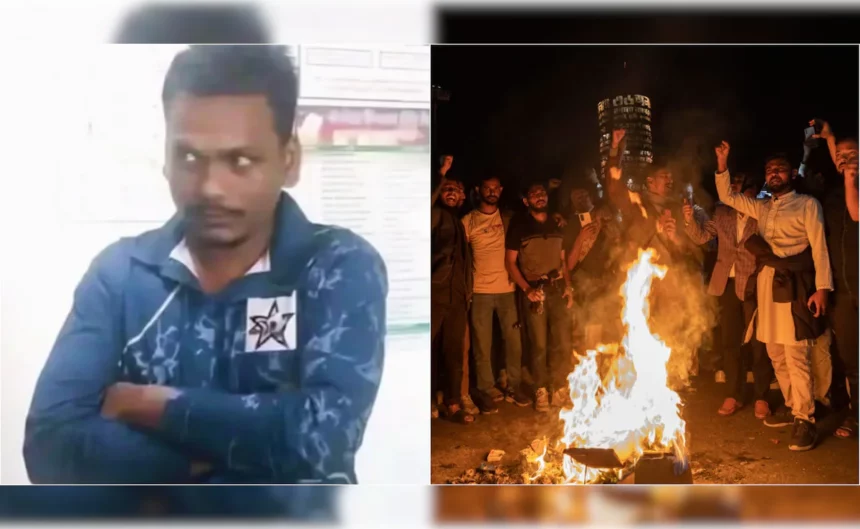
According to officials familiar with the investigation, Dipu Chandra Das was seized by a crowd after allegations circulated that he had insulted religion. Witness accounts describe a chaotic scene in which the victim was restrained, assaulted, and ultimately killed, after which his body was set on fire in full public view. The brutality of the episode, unfolding before a large gathering, became emblematic of mob rule overtaking legal process, with bystanders unable or unwilling to intervene as violence escalated.
In the aftermath, investigators focused on verifying the central claim that had incited the attack. A senior officer of the *Rapid Action Battalion* stated that a thorough review of available evidence revealed no indication that Das had posted anything blasphemous on social media or made statements that could be construed as insulting religious beliefs. The officer added that inquiries among residents of the area and fellow workers at the garment factory where Das was employed yielded the same conclusion: no one could point to a specific remark, post, or act that substantiated the allegation.
This confirmation has been pivotal. It establishes that the lynching was driven not by a verified offence but by hearsay that rapidly morphed into collective violence. Investigators have indicated that the absence of evidence is not merely a technicality; it goes to the heart of the case, demonstrating how false claims can catalyse irreversible harm when amplified by fear and communal polarisation.
The location of the killing, Bhaluka in the *Mymensingh* region, has witnessed tension during periods of unrest before, but the scale and savagery of this incident marked a grim escalation. Local officials have acknowledged that crowd control measures were overwhelmed, allowing the situation to spiral beyond immediate containment. As videos spread, the incident reverberated across borders, intensifying scrutiny of Bangladesh’s ability to protect minorities during moments of instability.
Authorities have begun detaining suspects linked to the attack, with investigators examining who initiated the rumour, how it spread so quickly, and whether there were organised elements that exploited the situation. The focus, officials say, is not only on punishing perpetrators but also on understanding the mechanisms that allowed a false accusation to metastasise into public execution.
Wider unrest, minority safety, and regional implications
The killing occurred amid a broader atmosphere of unrest that has strained social cohesion and heightened fears among minority communities. Human rights observers argue that such episodes reveal structural vulnerabilities—where inflammatory claims can outpace verification, and where trust in institutions falters at precisely the moments it is most needed. For Bangladesh’s Hindu minority, the episode has reinforced anxieties about safety, especially when religious identity becomes a lightning rod during political turbulence.
The incident has also carried diplomatic and regional resonance. India’s external affairs establishment has urged Bangladesh to ensure justice and accountability, emphasising the need for swift legal action against those responsible. The call reflects a broader expectation that neighbouring states will protect minority rights and prevent mob violence, particularly when allegations hinge on unverified claims. Security around diplomatic missions has been tightened amid protests and heightened public attention, a measure reflecting the sensitivity of the issue.
Within Bangladesh, officials acknowledge the challenge of restoring confidence. Law enforcement leaders have stressed that blasphemy allegations must be treated with utmost caution, requiring rigorous verification before any action is contemplated. The confirmation that no evidence existed in this case has intensified demands for clearer protocols, stronger community policing, and rapid response mechanisms to counter misinformation before it triggers violence.
Civil society groups argue that accountability must extend beyond individual attackers to include those who disseminated the initial claim. They point to the role of rumours, social media amplification, and the absence of timely counter-narratives in accelerating the crowd’s mobilisation. In their view, preventing future tragedies requires a multi-pronged approach: legal consequences for incitement, education on digital literacy, and visible state action that reassures minorities their rights will be defended.
The political context has further complicated the response. Critics contend that periods of transition or instability can embolden extremist elements, creating openings for vigilantism. They warn that without consistent enforcement of the rule of law, isolated incidents risk becoming patterns. Supporters of stronger policing argue that decisive intervention—grounded in evidence and due process—is essential to deter mobs and reassert institutional authority.
For the family of Dipu Chandra Das, the official finding that no blasphemy occurred offers scant solace against an irreversible loss. Yet it does sharpen the moral clarity of the case, transforming it from a contested allegation into a stark example of how unfounded claims can end a life. As investigations proceed, attention remains fixed on whether justice will be delivered swiftly and transparently, and whether reforms will follow to prevent a recurrence.
The episode continues to reverberate across South Asia, feeding debates about minority protection, misinformation, and the responsibilities of the state during unrest. With officials confirming that the central accusation was baseless, the focus has shifted decisively to accountability—who spread the rumour, who participated in the violence, and how institutions can act faster next time to ensure that no one else is killed on the strength of a lie.