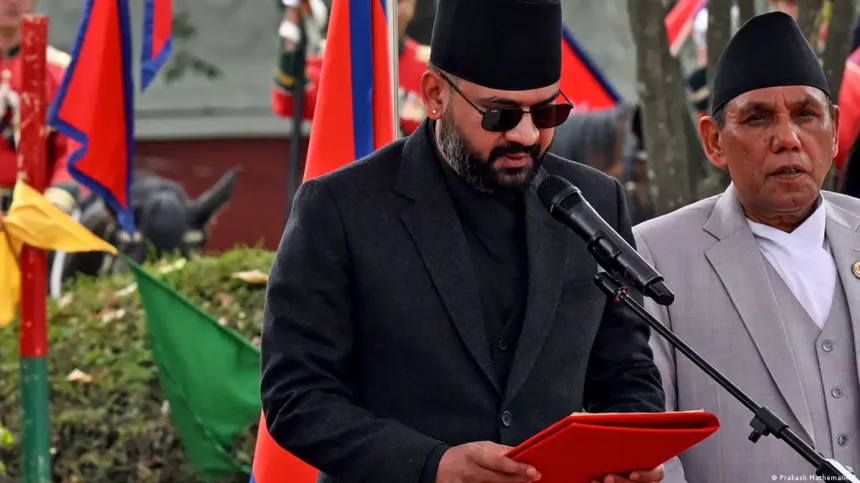
Nepal swears in Balendra Shah as prime minister after landslide victory, marking major political shift driven by youth anger and reform demands.
In a historic political development, Balendra Shah, popularly known as Balen, has been sworn in as the new Prime Minister of Nepal following a sweeping electoral victory. The 35-year-old leader’s rise from the underground rap scene to the highest executive office signals a dramatic transformation in the country’s political landscape.
Shah’s ascent comes in the wake of widespread public dissatisfaction with traditional political elites, corruption, and economic stagnation. His victory represents not just a change in leadership but a generational shift driven by young voters demanding accountability and reform.
The swearing-in ceremony marks the beginning of a new chapter in Nepal’s political journey, as expectations run high for meaningful governance and systemic change.
From Rap Icon to Political Leader
Balendra Shah first gained prominence as a rapper known for his sharp lyrics addressing corruption, inequality, and social injustice. His music resonated strongly with Nepal’s youth, who saw in him a voice that articulated their frustrations and aspirations.
Born in Kathmandu, Shah pursued engineering studies before entering the music scene. His breakthrough came in 2013 when he won a major rap battle, quickly becoming a prominent figure in Nepal’s underground music culture.
Songs like “Balidan” highlighted systemic issues within the country, criticising governance failures and economic disparity. His artistic identity, marked by bold messaging and distinctive style, helped him build a strong connection with younger audiences.
Shah’s transition from music to politics began in 2022, when he contested and won the Kathmandu mayoral election as an independent candidate. His victory was seen as a sign of changing political preferences, with voters opting for non-traditional candidates.
As mayor, Shah implemented initiatives aimed at urban improvement, including efforts to manage traffic congestion, preserve cultural heritage, and address illegal constructions. While some measures received praise, others drew criticism for their aggressive execution.
His tenure laid the groundwork for his national political ambitions, positioning him as a reform-oriented leader willing to challenge established norms.
Landslide Victory and Rise of New Political Force
Shah’s political momentum culminated in the general elections, where he led the Rastriya Swatantra Party to a decisive victory. The party’s success disrupted Nepal’s traditional political order, which had long been dominated by established parties.
The elections were held against the backdrop of significant unrest, including youth-led protests that highlighted issues such as corruption, unemployment, and restrictions on freedoms. These protests created a political environment ripe for change.
Shah’s campaign strategy was unconventional. He largely avoided traditional media engagements, instead communicating directly with voters through social media platforms. His messaging focused on anti-corruption measures, judicial reforms, and job creation.
One of the most notable outcomes of the election was Shah’s victory over K P Sharma Oli in a key constituency, signalling a shift in voter sentiment away from long-standing political figures.
The Rastriya Swatantra Party’s performance reflects a broader trend of political realignment, with voters increasingly favouring new entrants over established parties.
Youth Support and Symbol of Change
Shah’s rise has been closely linked to Nepal’s youth, who played a significant role in his electoral success. His music, activism, and political messaging resonated with a generation seeking transparency, opportunity, and representation.
During protests in the previous year, Shah’s songs became anthems for demonstrators, reinforcing his image as a symbol of resistance and hope. His ability to connect with young voters has been a key factor in his political journey.
For many supporters, Shah represents a break from the past and a chance to rebuild trust in governance. His leadership is seen as an opportunity to address long-standing issues and implement meaningful reforms.
However, the expectations are immense. Delivering on campaign promises will require navigating complex political and economic challenges, as well as building institutional capacity within a relatively new party.
Challenges Ahead for the New Government
Despite the optimism surrounding Shah’s leadership, significant challenges lie ahead. Nepal continues to face economic difficulties, including unemployment and slow growth, which require urgent attention.
The country is also dealing with the aftermath of political unrest and the need for institutional reforms. Addressing corruption, strengthening governance, and improving public services will be critical priorities.
On the international front, geopolitical dynamics, including conflicts in regions where many Nepali workers are employed, add another layer of complexity. Ensuring the safety and welfare of citizens abroad remains an important concern.
Shah’s government will also need to address recommendations from investigations into past political unrest, including calls for accountability and justice.
Critics have raised concerns about the experience and preparedness of the Rastriya Swatantra Party to handle governance at the national level. Balancing reform ambitions with practical governance will be a key test for the new administration.
Controversies and Criticism
Shah’s journey has not been without controversy. During his tenure as mayor, some actions, particularly those involving enforcement measures against street vendors, drew criticism from rights groups.
Organisations like Human Rights Watch have highlighted concerns about heavy-handed approaches, urging a more balanced and rights-based governance style.
Additionally, Shah’s social media activity has occasionally sparked debate, with critics questioning his communication style and decision-making approach.
These controversies underscore the complexities of transitioning from activism and local governance to national leadership, where scrutiny is significantly higher.
A New Era in Nepal’s Politics
Balendra Shah’s swearing-in as prime minister represents a defining moment in Nepal’s political history. His rise reflects a broader shift towards new leadership and changing voter expectations.
The success of his government will depend on its ability to translate promises into tangible outcomes. For many citizens, this moment represents hope for a more transparent, accountable, and inclusive political system.
As Nepal embarks on this new phase, the focus will remain on governance, stability, and progress. Shah’s leadership will be closely watched, both domestically and internationally, as he seeks to navigate the challenges and opportunities ahead.