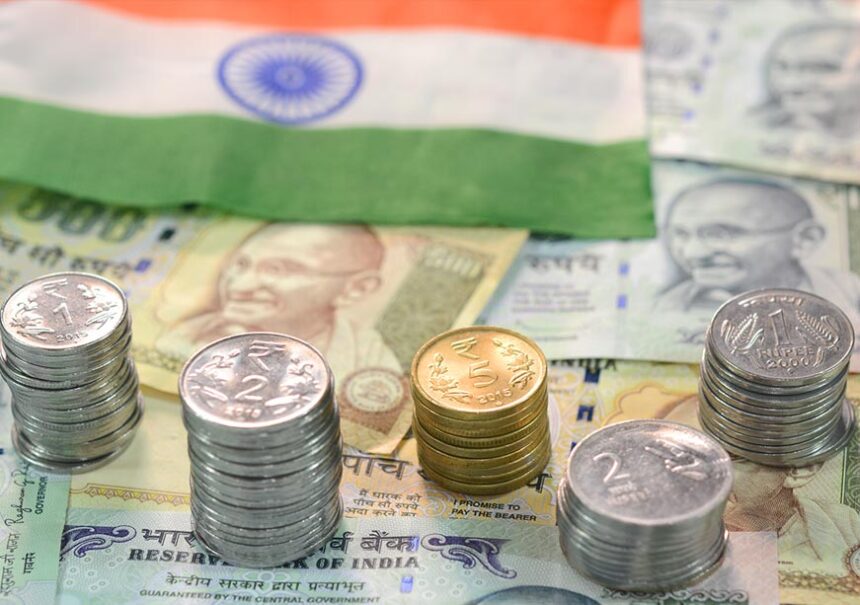
India’s economic trajectory has been shaped by a unique structural dualism, where a modern, capital-intensive sector coexists with traditional, labour-intensive industries. This duality has defined the country’s growth story and continues to influence its economic future. Despite this, India has emerged as one of the fastest-growing major economies, with projections indicating a sustained growth rate of 6.7% in the upcoming fiscal years, well above the global average. However, underlying this growth is the challenge of balancing the rapidly advancing sectors with those lagging behind, particularly in agriculture and the informal economy.
The Dual Structure: A Paradox of Growth
India’s strong economic performance can largely be attributed to a thriving services sector and an expanding manufacturing base, underpinned by key government reforms. Initiatives such as the Pradhan Mantri Gati Shakti National Master Plan, efforts to simplify regulatory systems, and schemes like Startup India and Make in India have played pivotal roles in enabling this growth. These reforms have fueled the modern sectors and created a more dynamic environment for businesses and entrepreneurs.
Despite these advances, India’s economy remains divided between the modern, more productive sectors and traditional sectors that employ a vast proportion of the workforce. Agriculture, which employs nearly 46% of the workforce, still contributes only 15% to the country’s GDP. The informal sector, which accounts for 86% of total employment, further exacerbates the structural dualism, as it remains underdeveloped and largely disconnected from the modern economy.
India’s traditional sectors, especially agriculture, remain hindered by low productivity, fragmented land holdings, and technological backwardness. While the modern sectors, such as services and manufacturing, have witnessed remarkable productivity increases, agriculture’s stagnation continues to reinforce income disparities. This results in a skewed distribution of wealth, which is often concentrated in the top 1% of the population, further complicating efforts toward inclusive growth.
The Struggle for Inclusive Growth
In theory, economic development should foster a structural shift where labour transitions from low-productivity sectors like agriculture to more productive ones like manufacturing and services. However, India’s dualistic structure contradicts this expectation. Despite the modern sectors’ rapid growth, the stagnation of traditional sectors, particularly agriculture, hampers the movement of labour into higher-value industries. Structural inertia, coupled with poor access to credit and inefficient resource allocation, perpetuates rural poverty and weakens productivity.
Furthermore, around 90% of India’s workforce is employed in the informal sector, where limited access to capital and technology stifles innovation and prevents productivity improvements. This entrenched informality also increases employment vulnerability, particularly in times of economic uncertainty. These factors limit India’s ability to fully transition to a more productive and modern economy.
Addressing the Dualism: A Path to Reconciliation
To overcome these structural imbalances and achieve more inclusive growth, India needs to focus on bridging the gap between its modern and traditional sectors. Several key strategies could help in this process:
Progressive Taxation and Redistribution: Effective taxation policies can mobilize resources for public investments in key areas such as health, education, and infrastructure. Initiatives like the Ayushman Bharat and PM Awas Yojana are steps toward redistributing wealth and improving access to essential services, which can help reduce inequality and foster more balanced growth.
Labour-Intensive Industrialization and Digital Skills Development: India should focus on promoting industries that have high employment elasticity, which can absorb large numbers of workers from traditional sectors. Vocational training and digital skills programs, such as the Pradhan Mantri Kaushal Vikas Yojana (PMKVY), are essential to help workers transition from agriculture to higher-value sectors like manufacturing and services.
Enhanced Access to Credit and Financial Inclusion: Expanding affordable credit access to small and medium-sized enterprises (SMEs), especially in rural areas, is critical for fostering innovation and increasing formalization in the economy. Government programs like the Pradhan Mantri Jan Dhan Yojana (PMJY) and Mudra Yojana have made significant strides in providing financial inclusion, which can help formalize the informal sector and promote economic development.
Agricultural Modernization and Rural Development: India must invest in modernizing its agricultural sector, enhancing rural infrastructure, and strengthening market linkages. Initiatives like the Digital Agriculture Mission 2021 and Rashtriya Krishi Vikas Yojana (RKVY) can help increase agricultural productivity, alleviate rural poverty, and reduce migration pressures on urban areas.
India’s growth story is a testament to its resilience and ambition, but the dualism in its economy remains a formidable challenge. With strong growth projections for the coming years, India has the potential to dominate the global economic stage. However, to ensure that the benefits of growth are shared equitably, the country must tackle its structural imbalances through inclusive policies and comprehensive reforms. By strengthening existing government initiatives and embracing new strategies, India can build a more resilient and inclusive economy, paving the way for a future where economic opportunities are available to all segments of society.