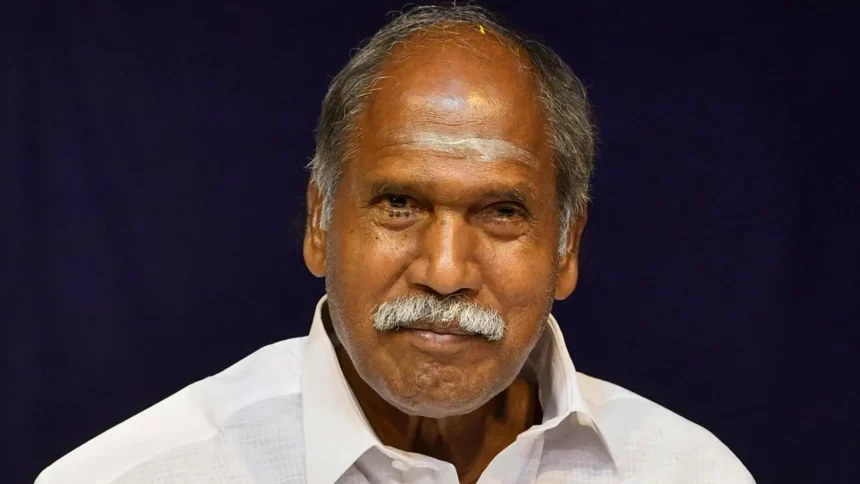
In a major political development, N. Rangasamy is set to take oath again as the Chief Minister of Puducherry on May 13, marking the formation of a new government in the Union Territory. The swearing-in ceremony is expected to formalize a coalition-led administration, with the Bharatiya Janata Party playing a key role in the power-sharing arrangement. The development comes at a crucial moment in Puducherry politics, where coalition stability and alliance arithmetic continue to shape governance outcomes in the Union Territory.
The return of Rangasamy to the Chief Minister’s post reflects continuity in leadership and the reaffirmation of existing political alliances that have been central to government formation in recent years. The new administration is expected to function with the support of coalition partners, including the Bharatiya Janata Party, which is reportedly set to secure representation in the cabinet through the allocation of two ministerial positions.
BJP to Secure Key Ministerial Roles in New Cabinet
One of the most significant aspects of the new government formation is the reported inclusion of the BJP in the cabinet with two ministerial posts. This move indicates the continuation of a structured power-sharing arrangement between regional leadership under Rangasamy and the national-level influence of the BJP.
The inclusion of BJP ministers is expected to strengthen coordination between the Union Territory administration and the central government. Political observers believe this arrangement will also ensure smoother implementation of central welfare schemes and infrastructure projects in Puducherry.
At the same time, the decision reflects the importance of coalition politics in the Union Territory, where no single party often secures overwhelming dominance, making alliances essential for stable governance.
Coalition Politics Shapes Government Formation
Puducherry’s political landscape has long been characterized by coalition-based governance, and the latest development reinforces this trend. The formation of the new government under N. Rangasamy highlights the continued relevance of alliance politics, where regional parties and national parties work together to maintain administrative stability.
In this context, the role of coalition partners becomes crucial not only during elections but also in post-election government formation and policy implementation. The current arrangement demonstrates how political stability in the Union Territory is often dependent on negotiated power-sharing formulas rather than single-party dominance.
The coalition structure is expected to ensure a balance between regional aspirations and national policy priorities, allowing the government to function with broader political backing.
Continuity in Leadership Under N. Rangasamy
The swearing-in of N. Rangasamy as Chief Minister once again signals continuity in leadership and governance style. Known for his administrative experience and political longevity, Rangasamy has played a central role in Puducherry politics for several years.
His return to office is expected to bring stability to the Union Territory administration, particularly at a time when governance continuity is considered important for ongoing development projects and welfare schemes.
Supporters of the new government argue that Rangasamy’s leadership provides consistency in decision-making and ensures that ongoing policy initiatives are not disrupted by political transitions.
Significance of the New Government Formation
The formation of the new government under N. Rangasamy carries multiple political and administrative implications for Puducherry. Firstly, it marks a continuation of leadership that is already familiar with the governance structure of the Union Territory. Secondly, it confirms the strength of coalition politics in determining government formation.
The key significance of the event can be summarized in three major points. It ensures continuity of governance under an experienced leader, it formalizes coalition participation in the executive structure, and it sets the direction for administrative priorities in the coming term.
The presence of coalition partners in the cabinet is also expected to influence policy decisions, budget allocations, and development strategies in the Union Territory.
Administrative Expectations from the New Cabinet
With the new government set to take oath, administrative expectations are high regarding governance efficiency and policy implementation. The coalition is expected to focus on infrastructure development, employment generation, welfare delivery, and strengthening public services.
The inclusion of BJP representatives in the cabinet is also likely to bring alignment with central government schemes, potentially improving funding access and execution efficiency for major projects in Puducherry.
At the same time, the administration will need to manage coalition dynamics carefully to ensure smooth functioning of the government without internal conflicts affecting decision-making.
Political Stability and Future Challenges
While the formation of the new government signals stability, political analysts note that coalition governments often face challenges related to coordination and policy consensus. The success of the administration will depend on how effectively coalition partners manage differences and maintain unity in governance.
Puducherry’s history of coalition politics suggests that while alliances provide numerical strength, they also require continuous negotiation and cooperation to sustain long-term stability.
The government under N. Rangasamy will therefore need to balance regional priorities with coalition expectations to ensure smooth governance.
Swearing-In Ceremony and Public Expectations
The swearing-in ceremony scheduled for May 13 is expected to be a significant political event in Puducherry, marking the formal beginning of a new administrative phase. The event will symbolize the transition into a new government structure supported by coalition partners.
Public expectations are centered around development-focused governance, improved public services, and economic growth. Citizens and stakeholders will be closely watching the new cabinet’s composition and early policy decisions.
The presence of coalition representatives in key ministerial roles is also expected to influence how governance priorities are set and implemented in the coming months.
The return of N. Rangasamy as Chief Minister of Puducherry marks an important moment in the Union Territory’s political landscape. With the support of coalition partners, including the Bharatiya Janata Party, the new government is set to take shape with a power-sharing arrangement that reflects the realities of coalition politics.
As the swearing-in ceremony takes place on May 13, Puducherry is expected to enter a new phase of governance defined by political collaboration, administrative continuity, and shared responsibility among alliance partners. The success of the new government will depend on its ability to maintain stability while delivering on development and governance commitments.