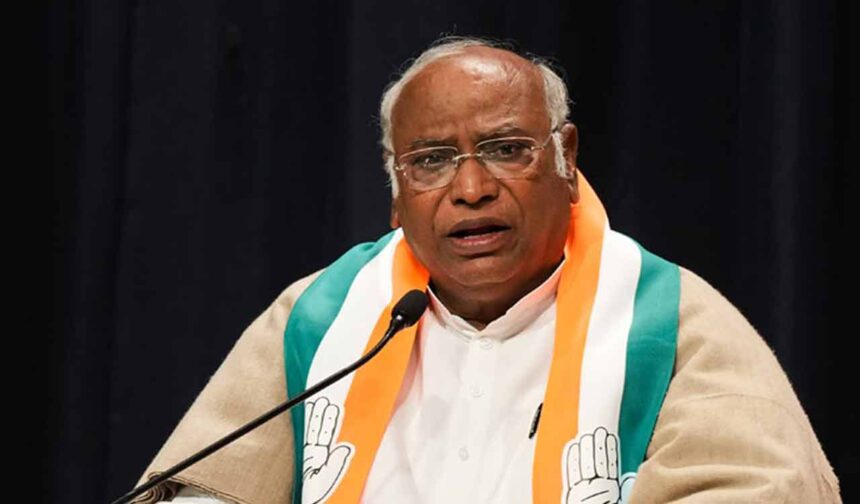
In the wake of the devastating Red Fort blast in Delhi that claimed twelve lives and injured many more, Congress President Mallikarjun Kharge has sharply criticized the BJP-led central government for failing to prevent terror attacks despite having multiple law enforcement and intelligence agencies under its control. Mallikarjun Kharge emphasized the need for a thorough investigation into the deadly explosion and called for exemplary punishment for those found guilty. Speaking in Bengaluru, he asserted that no leniency should be shown to anyone involved in the attack and indicated that this issue would be raised during the forthcoming Parliament session beginning on December 1. His remarks underscored both the gravity of the incident and the perceived lapses in governmental oversight that allowed such a high-profile attack to occur in the nation’s capital.
Parliamentary Action and Calls for Accountability
Mallikarjun Kharge elaborated that the Delhi Red Fort blast represented a significant failure of the central government, questioning how such an attack could occur despite the presence of key intelligence agencies, including the Intelligence Bureau, the Central Bureau of Investigation, and other specialized units tasked with national security. Mallikarjun Kharge stressed that accountability must be ensured at the highest levels, calling for a meticulous investigation that identifies all perpetrators and punishes them in accordance with the law. He reiterated that the goal of the inquiry should be not only to bring the guilty to justice but also to send a strong deterrent message to potential offenders, emphasizing that the public and authorities alike should recognize the seriousness of such acts of terror. Mallikarjun Kharge’s statements highlighted a broader critique of the government’s preparedness and responsiveness in addressing domestic threats and protecting citizens in critical urban spaces.
Mallikarjun Kharge also noted that the issue would be formally raised in the upcoming session of Parliament. By bringing the matter to the legislative forum, he aims to compel a comprehensive discussion on the lapses that contributed to the blast and to ensure that questions of accountability and preventive measures are thoroughly debated. His call for exemplary punishment reflects a commitment to upholding rule of law and discouraging future attacks. Mallikarjun Kharge’s insistence on zero tolerance for the perpetrators underscores the expectation that national security should remain a non-negotiable priority for the central government, irrespective of political considerations.
Priyank Kharge Targets Home Minister Amit Shah
Alongside Mallikarjun Kharge’s statements, Karnataka Minister Priyank Kharge directly criticized Union Home Minister Amit Shah, describing him as “incompetent” for failing to prevent the deadly Red Fort explosion. Priyank Kharge questioned why the Home Minister, responsible for national law and order, has not been held accountable for lapses that contributed to the attack, suggesting that in any other state or country, such failures would have led to immediate removal from office. He further argued that Shah’s political indispensability stems from his close association with Prime Minister Modi, rather than proven effectiveness in safeguarding citizens from security threats. Priyank Kharge’s remarks underscored public frustration with perceived gaps in leadership and raised questions about the operational efficiency of key security apparatus under the Home Ministry’s oversight.
The Red Fort incident involved a car explosion near Gate No. 1 of the Red Fort Metro Station, resulting in 12 fatalities and multiple injuries. Delhi Police have registered cases under the Unlawful Activities (Prevention) Act and the Explosives Substances Act, and authorities are conducting multiple raids to apprehend those responsible. Several suspects, including faculty members from Haryana’s Al-Falah University, have been taken into custody, though investigations are ongoing to determine the extent of the conspiracy and connections to broader terror networks. Security measures across the national capital have been heightened, particularly in crowded areas such as Connaught Place, airports, railway stations, and major road intersections, reflecting continued concern over potential threats following the high-profile attack.
The responses from both Mallikarjun Kharge and Priyank Kharge reflect growing public and political pressure on the central government to ensure accountability, strengthen preventive mechanisms, and reassure citizens that terrorism will not be tolerated. The Red Fort blast has emerged as a critical issue in national discourse, combining concerns about law enforcement effectiveness, ministerial responsibility, and broader strategies for counterterrorism in densely populated urban environments.
Investigations continue as authorities seek to piece together the planning and execution of the attack, identify all individuals involved, and understand the motivations behind the incident. The political debate surrounding the blast highlights the intersection of governance, public safety, and accountability, illustrating how high-profile security failures can rapidly become a focal point for legislative scrutiny and political contestation. As Parliament prepares to discuss the matter, the emphasis remains on thorough investigation, transparency, and ensuring that responsible parties are held liable for their actions, aligning security imperatives with legal and ethical obligations.
The Red Fort blast, combined with the critique of central leadership, underscores the pressing need for systemic reforms in intelligence coordination, preventive policing, and national security strategy. Leaders from across political spectra are expected to debate both the immediate response to the attack and long-term measures to strengthen India’s capacity to prevent future incidents of domestic terrorism. Mallikarjun Kharge’s insistence on exemplary punishment and Priyank Kharge’s criticism of the Home Minister signal a broader political narrative emphasizing accountability, public safety, and the necessity of decisive action to restore confidence in the government’s counterterrorism efforts.
The incident has sparked a nationwide conversation on the preparedness of urban security mechanisms, the role of ministerial oversight, and the effectiveness of intelligence operations. It has also highlighted the potential consequences of political and administrative lapses, reinforcing the need for rigorous enforcement of security protocols, timely action by law enforcement, and proactive legislative oversight. The debate over the Red Fort blast exemplifies the complex interplay between security, politics, and public perception in addressing acts of terrorism in India’s capital city.
As investigations proceed and Parliament prepares to address the matter, it is expected that discussions will center on the lessons learned from the incident, gaps in security enforcement, and strategies to ensure accountability at both administrative and political levels. Kharge’s call for no leniency and Priyank Kharge’s pointed remarks at the Home Minister are indicative of heightened scrutiny and an intensified focus on strengthening institutional mechanisms to prevent future terror attacks.
The Red Fort blast, therefore, serves as both a tragic reminder of the threats posed by terrorism and a test case for governmental responsiveness, ministerial accountability, and the effectiveness of India’s law enforcement agencies. The political discourse surrounding the attack reflects broader concerns about citizen safety, operational readiness, and the responsibilities of elected leaders in ensuring that such incidents do not recur. The incident is likely to remain a critical topic in Parliament, shaping debates on national security, counterterrorism strategies, and public confidence in governmental institutions.
The urgency of addressing these issues is magnified by the densely populated nature of Delhi, the symbolic importance of the Red Fort, and the high visibility of the attack both nationally and internationally. Ensuring that lessons are learned, perpetrators are punished, and preventive strategies are strengthened will be crucial in restoring public trust, deterring future attacks, and reinforcing India’s broader security architecture. The parliamentary discussions initiated by Mallikarjun Kharge and the critique by Priyank Kharge contribute to the ongoing national discourse on terrorism, governance, and accountability, emphasizing the need for both immediate and sustained action.
The Red Fort blast remains a focal point for security agencies, political leaders, and citizens alike, highlighting the interconnected challenges of domestic terrorism, ministerial oversight, and law enforcement preparedness. The investigation’s outcomes and subsequent parliamentary debates are expected to shape India’s approach to counterterrorism, influence future policies, and reinforce the expectation that those responsible for acts of terror are held fully accountable under the law.
The political and investigative responses to the Red Fort blast underscore the importance of vigilance, proactive intelligence, and political responsibility in safeguarding citizens from similar threats in the future. Both the immediate reaction and long-term strategies will play a key role in determining the effectiveness of India’s national security framework and the confidence of its citizens in government institutions tasked with protecting public safety.
The attack at Red Fort Metro Station and the resulting national debate continue to highlight the centrality of accountability, preventive action, and political responsibility in ensuring that the capital remains secure and resilient against future terrorist threats. The issue has now become a test of governance, law enforcement efficiency, and political resolve, with the upcoming parliamentary session expected to focus on these critical aspects.
The aftermath of the Red Fort blast, combined with the pointed remarks by Mallikarjun Kharge and Priyank Kharge, reflects the intense scrutiny that terrorism-related failures attract in India’s political and administrative landscape. Both leaders have highlighted the urgent need for a comprehensive investigation, exemplary punishment for perpetrators, and a reevaluation of security protocols to prevent recurrence. The situation underscores the intersection of political accountability, public safety, and governance effectiveness in responding to acts of terror.
The parliamentary discussions and ongoing investigations into the Red Fort blast are likely to remain a key agenda item for political debates, with implications for law enforcement practices, national security strategies, and the assessment of ministerial competence in managing crisis situations. The focus on accountability, preventive measures, and thorough investigation reflects a broader commitment to ensuring that India’s capital city remains protected from future threats and that citizens’ safety remains paramount.
The Red Fort blast continues to be a pivotal moment in India’s political and security landscape, prompting scrutiny of leadership, operational readiness, and national counterterrorism frameworks. The commentary and demands from the Kharges emphasize the importance of addressing the underlying causes of such incidents, ensuring justice, and reinforcing the measures necessary to safeguard citizens against domestic and international terrorism.