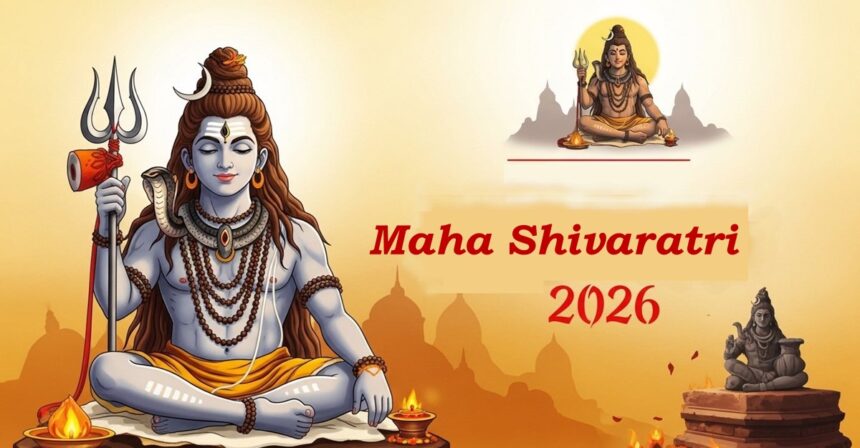
Mahashivratri, one of the most significant festivals in the Hindu calendar, will be observed on Sunday, 15 February 2026, according to traditional Hindu almanacs. The festival is dedicated to Lord Shiva, one of the principal deities in Hinduism, and is marked by fasting, night-long worship and special temple rituals across India.
In Hindu belief, Mahashivratri commemorates the divine marriage of Shiva and Parvati. The sacred night is also associated with Shiva’s manifestation in the form of the Jyotirlinga, symbolising his infinite and radiant nature.
Four Prahar Puja Timings
- Devotees traditionally divide the night of worship into four prahars, or phases:
- First Prahar: 6:01 pm to 9:09 pm (15 February)
- Second Prahar: 9:09 pm (15 February) to 12:17 am (16 February)
- Third Prahar: 12:17 am to 3:25 am (16 February)
- Fourth Prahar: 3:25 am to 6:33 am (16 February)
The most auspicious period for worship, known as Nishith Kaal, will occur between 11:52 pm and 12:42 am on the intervening night of 15 and 16 February.
Rituals and Observances
Mahashivratri is observed through a combination of fasting, temple visits and devotional practices. Many devotees observe a day-long fast, refraining from grains and consuming fruits or light sattvik foods.
Worship typically begins early in the morning, with devotees bathing before visiting Shiva temples. The Shiva Linga is ceremonially decorated with flowers and bael leaves. Offerings commonly include milk, honey, fruits, sweets and ghee. In several traditions, bhaang is also offered, reflecting its symbolic association with Shiva.
Devotees remain awake through the night, lighting lamps and chanting prayers or mantras. Many temples organise special rituals, bhajans and night-long prayer sessions. In various parts of India, religious processions are held, featuring images of Shiva and Parvati carried on decorated palanquins.
The fast is usually concluded the following day with a light sattvik meal, often consisting of fruits and non-cereal foods.
Mahashivratri continues to hold deep spiritual significance for millions of devotees, symbolising devotion, self-discipline and the triumph of divine consciousness.