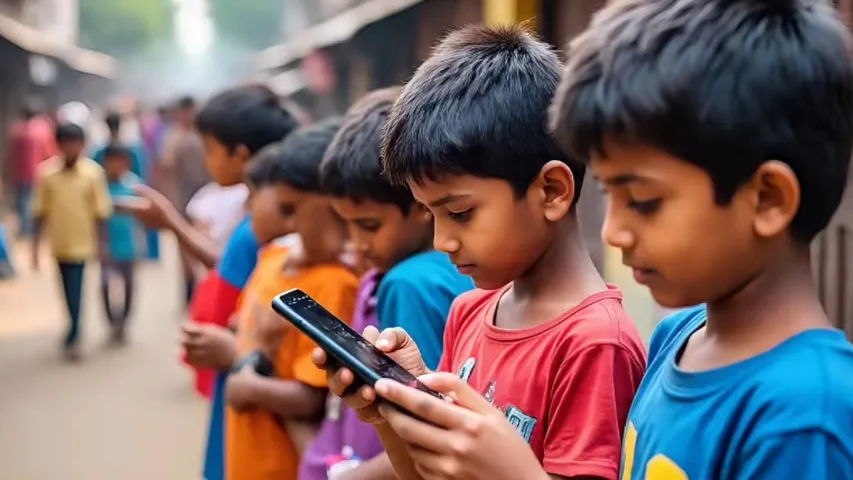
The Madras High Court has suggested that the Union government consider drafting legislation similar to Australia’s law that prohibits children under the age of 16 from accessing social media platforms, citing growing concerns about the vulnerability of minors online. The observation came while a division bench was hearing a public interest litigation related to the easy availability of pornographic content on the internet and the absence of robust parental control mechanisms. While disposing of the case, the court emphasised that child safety in the digital space requires stronger legal frameworks, proactive awareness campaigns, and greater parental responsibility alongside regulatory oversight.
The suggestion reflects a broader global debate on how states should regulate children’s access to social media and harmful online content. The bench acknowledged that while technology offers immense benefits, it also exposes children to serious risks that existing laws and enforcement mechanisms may not be adequately addressing. In this context, the court indicated that a legislative approach, similar to the one recently adopted in Australia, could be examined by the Centre as part of a comprehensive response to the challenges posed by unrestricted internet access for minors.
Court’s observations on child vulnerability, parental responsibility, and the case for new legislation
The observations were made by a division bench of the Madras High Court comprising Justice G Jayachandran and Justice K K Ramakrishnan while passing orders on a PIL that had been pending since 2018. The petition was filed by a resident of Madurai district, who raised concerns about the widespread availability and easy accessibility of pornographic content to young children through the internet. The petitioner sought directions to internet service providers to introduce a parental window or parental control system and to enhance public awareness about the risks faced by children online.
During the hearing, the bench acknowledged that children who use the internet are particularly vulnerable, especially in the absence of effective supervision and technological safeguards. The judges observed that while the state and regulatory authorities have responsibilities under existing child protection laws, the role of parents is equally, if not more, critical. They noted that in an era where smartphones and internet-enabled devices are ubiquitous, children can access harmful content with ease unless there are deliberate controls in place.
In this context, the bench referred to recent legislation enacted by the Australian government that restricts children below the age of 16 from accessing social media platforms. Senior counsel appearing for the petitioner highlighted this development and suggested that India could consider a similar legal framework. The judges responded positively to this submission, stating that the Centre may explore the possibility of passing legislation along the lines of Australia’s approach. They added that until such legislation is enacted, authorities should significantly intensify awareness campaigns and ensure that information about online risks reaches vulnerable groups through all available media.
The court was critical of the responses filed by certain authorities, observing that the counter-affidavits did not inspire confidence that statutory responsibilities were being discharged effectively. In particular, the judges pointed out that child rights commissions, both at the central and state levels, have a clear mandate to spread child rights literacy, promote awareness of safeguards, and educate society about the protection of children’s rights. While acknowledging that some awareness programmes are conducted in schools, the bench remarked that these efforts are insufficient given the scale and seriousness of the problem.
The judges stressed that child safety online cannot be addressed through isolated measures. They underlined the need for a coordinated approach involving legislation, regulatory action, education, and parental engagement. By suggesting an Australia-like law, the court signalled that incremental adjustments may no longer be adequate to deal with the evolving nature of digital threats faced by children.
Role of regulators, ISPs, and user-level controls in protecting children online
The Madras High Court’s order also examined the roles and limitations of various stakeholders involved in internet governance and child protection. The petitioner had urged the National Commission for Protection of Child Rights and the Tamil Nadu Commission for Protection of Child Rights to exercise their statutory powers to direct ISPs to provide parental control systems and to create broader public awareness. The bench reiterated that these commissions are not merely advisory bodies but have a duty to actively promote child safety and rights in both physical and digital environments.
Representing some of the internet service providers, counsel submitted that ISPs operate under separate legal frameworks and that intermediaries periodically review content in compliance with existing regulations. Reference was made to actions taken under the Information Technology (Intermediary Guidelines and Digital Media Ethics Code) Rules, 2021, under which objectionable websites are blocked when brought to the notice of the concerned ISP. The court acknowledged this submission but pointed out that such measures alone do not fully address the problem.
The judges observed that URLs containing online child sexual abuse material continue to be available and active despite regulatory mechanisms. They noted that while blocking content at the intermediary level is important, effective protection must also exist at the user end. According to the bench, meaningful control at the user level can be achieved only if parental control applications and settings are available on devices and if parents are aware of how to use them.
The court emphasised that awareness is a crucial missing link in the current system. Parents and guardians must be educated about the dangers of child pornography and other harmful online content, as well as the tools available to prevent children from accessing such material. The judges remarked that without widespread awareness, even the best technological solutions would remain underutilised. They also noted that while individuals have the right to choose what content they access, children require special protection due to their age and vulnerability.
In disposing of the PIL, the bench expressed hope that both central and state child rights commissions would formulate a concrete action plan to address online child safety and implement it in letter and spirit. The judges made it clear that the issue is not merely about censorship or restriction, but about creating a safer digital environment for children through a combination of law, technology, and education.
By urging consideration of an Australia-style ban on social media access for children under 16, the Madras High Court placed the issue squarely within the policy domain, inviting the Union government to examine whether stronger legislative intervention is necessary. The observations underscore a growing judicial concern that existing frameworks may be inadequate to protect children in an increasingly complex and unregulated digital ecosystem, and that a more comprehensive and forward-looking approach may be required to safeguard young users in the years ahead.