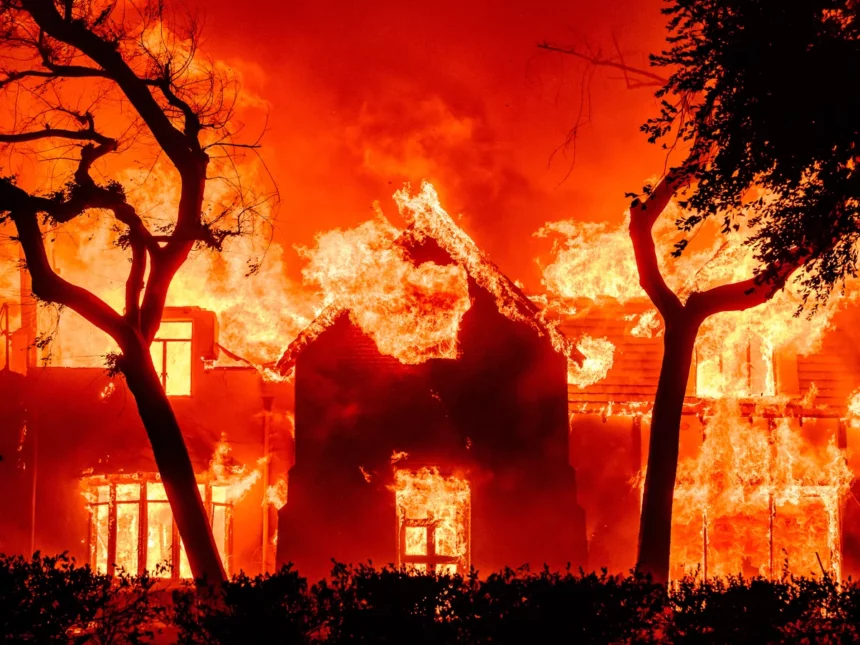
At least 11 lives have been lost, and over 100,000 residents have been evacuated as wildfires continue to wreak havoc in Los Angeles, California. The fires, which have scorched more than 20,000 acres in areas like the upscale Pacific Palisades neighborhood, have sparked intense debates about their causes and how they spread. While scientists point to climate change as a significant factor, a section of conservatives, led by prominent figures like Elon Musk and Donald Trump, have offered controversial explanations, shifting blame to diversity initiatives and environmental policies.
Billionaire Elon Musk, the owner of X (formerly Twitter), has fueled a debate on social media by linking the Los Angeles Fire Department’s (LAFD) diversity, equity, and inclusion (DEI) initiatives to the wildfire crisis. Musk reposted videos and comments criticizing the LAFD’s efforts to combat systemic racism, claiming that such policies have undermined the department’s efficiency. In one post, Musk declared, “DEI means people DIE,” echoing sentiments from right-wing accounts that have targeted the department’s leadership.
Criticism intensified after Musk shared a video from Libs of TikTok, a right-wing social media account, which accused the LAFD of prioritizing a “racial equity plan” over saving lives and property. Musk further pointed out that Kristin Crowley, who became the LAFD’s first woman and LGBTQ chief in 2022, symbolized what he described as misplaced priorities within the department. “They prioritized DEI over saving lives and homes,” Musk stated, adding to the online backlash.
Adding another layer to the controversy, former President Donald Trump took to his Truth Social platform to criticize California Governor Gavin Newsom, blaming the state’s environmental policies for exacerbating the wildfires. In particular, Trump accused Newsom of prioritizing the protection of the Delta smelt, a small fish native to California, over the safety of residents. “He [Newsom] wanted to protect an essentially worthless fish called a smelt, by giving it less water (it didn’t work!), but didn’t care about the people of California,” Trump wrote.
Trump further alleged that Newsom’s policies had deprived the state of adequate water supplies, affecting firefighting efforts. “Now the ultimate price is being paid. I will demand that this incompetent governor allow beautiful, clean, fresh water to FLOW INTO CALIFORNIA! He is the blame for this. On top of it all, no water for fire hydrants, not firefighting planes. A true disaster!” Trump added.
While wildfires are a natural phenomenon, scientists have repeatedly warned that human-caused climate change is intensifying their frequency and severity. The cycle of wet and dry years in Southern California has created an abundance of dry vegetation, providing fuel for fires. Experts argue that these changing weather patterns, influenced by global warming, are fundamentally altering how wildfires behave.
As firefighters work to contain the Los Angeles blazes, questions about resource allocation and preparedness persist. The Pacific Palisades area, known for its affluent residents and multimillion-dollar homes, has been one of the hardest-hit regions. Firefighters report progress in controlling the fires, but the situation remains precarious, with thousands of residents still displaced and property losses mounting.
The blame game surrounding the wildfires reflects deeper political and ideological divisions in the United States. Conservatives have seized on the crisis to critique progressive policies, while environmentalists emphasize the urgent need to address climate change. Governor Newsom has not directly responded to the allegations, but his office has reiterated California’s commitment to sustainable environmental practices and wildfire prevention.
As the flames continue to rage, the debate over their causes is likely to persist, highlighting the complex interplay between environmental science, public policy, and political rhetoric. For now, the immediate focus remains on containing the fires, aiding affected communities, and preventing further loss of life and property.