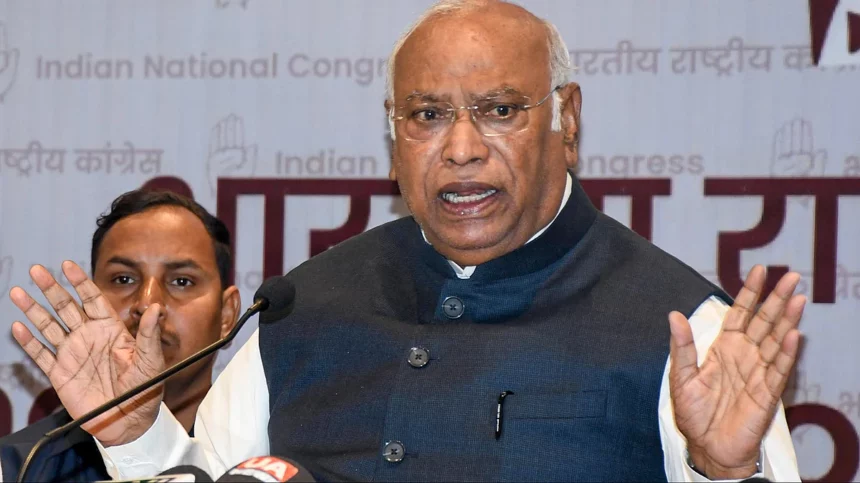
A significant political development is unfolding in India as Mallikarjun Kharge announced an all-party meeting to discuss the implementation of the Women’s Reservation law. The move comes ahead of a special parliamentary session, where amendments and execution frameworks related to the law are expected to be debated. The meeting reflects growing concerns among opposition parties about the lack of wider consultation by the central government on such a major structural reform.
Push for Wider Consultation on Women’s Reservation
Kharge emphasized that while the Congress supports the Women’s Reservation law—formally known as Nari Shakti Vandan Adhiniyam—there is a need for comprehensive discussions involving all political stakeholders.
He argued that decisions of national importance, especially those impacting electoral representation and democratic structures, must be taken collectively rather than unilaterally. The Congress has maintained that the law itself is not controversial, but the process and timeline of implementation require clarity and consensus.
The proposed all-party meeting aims to build a common position among opposition parties and present a unified approach during parliamentary deliberations.
Concerns Over Delimitation and Implementation Timeline
A key issue in the debate is the linkage between women’s reservation and delimitation. The law mandates that 33% reservation for women in Parliament and state assemblies will be implemented after a fresh census and delimitation exercise.
Opposition leaders have raised concerns over the lack of transparency regarding these processes. Kharge has questioned the government’s approach, stating that without clear details, meaningful discussions cannot take place.
There are also apprehensions that proposed amendments could alter the original framework of the law, potentially advancing or modifying its implementation timeline without adequate debate. This has made the issue politically sensitive, especially with elections approaching in several states.
Political Context and Rising Tensions
The meeting is being held in a politically charged environment, where issues like delimitation, representation, and electoral reforms are gaining prominence. Kharge has also written to the central leadership, expressing dissatisfaction over the absence of prior consultation with opposition parties.
While the government has indicated its commitment to implementing women’s reservation, opposition parties are questioning the timing and intent of recent moves. They argue that such significant reforms should be discussed transparently and inclusively.
The all-party meeting is expected to serve as a platform to align opposition strategies and articulate concerns before the upcoming parliamentary session.
Implications for India’s Political Landscape
The outcome of the April 15 meeting could shape the broader political discourse around women’s representation and electoral reforms in India. If consensus emerges, it may facilitate smoother legislative progress. However, continued disagreement could lead to intensified political confrontation.
The debate underscores the importance of balancing reform with consensus in a diverse democracy. Women’s reservation remains a widely supported idea, but its implementation has now become a focal point of political negotiation.