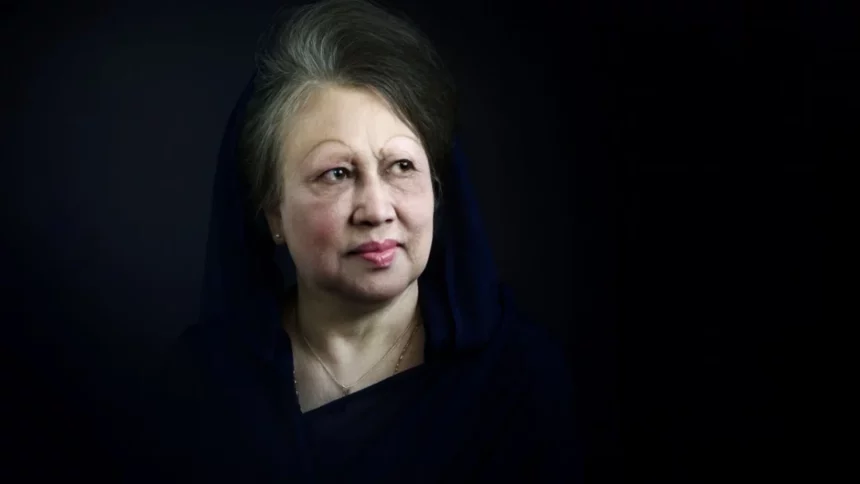
Bangladesh is preparing for a moment of profound national reflection as it bids farewell to Khaleda Zia, whose death at the age of 80 has brought the country’s political past, present, and future into sharp focus amid state mourning and global attention.
The final journey and funeral arrangements in dhaka
Khaleda Zia passed away at around 6 am on Tuesday, December 30, at Evercare Hospital, where she had been receiving medical treatment for more than a month following prolonged illness. The news of her death spread swiftly across Bangladesh, triggering an outpouring of reactions from political leaders, party workers, supporters, critics, and ordinary citizens who had lived through the many chapters of her long and eventful public life. Her elder son, Tarique Rahman, acting chairman of the Bangladesh Nationalist Party, confirmed the death with a brief statement that resonated deeply with millions who associated her name with decades of political struggle and leadership.
Soon after her passing, the interim government announced detailed funeral arrangements, reflecting her status as a former prime minister and one of the most influential political figures in the country’s history. According to law adviser Asif Nazrul, Khaleda Zia’s Namaz-e-Janaza will be held on Wednesday after Zohr prayers at the South Plaza of the national parliament complex, extending into the adjoining Manik Mia Avenue in Dhaka. Local media reports indicated that the funeral prayers are scheduled for around 2 pm, with authorities anticipating a massive turnout of mourners from across the capital and beyond.
Overnight, her body has been kept at the Evercare Hospital mortuary. On Wednesday morning, it will be taken to her residence, Feroza, located in the Gulshan area of Dhaka. The residence has long been associated with her political life and personal identity, serving as a symbolic space for supporters who gathered there during both triumphant and difficult moments in her career. From Feroza, the funeral cortege will proceed to the parliament complex, allowing party leaders, foreign dignitaries, and members of the public to pay their respects.
After the funeral prayers, Khaleda Zia will be laid to rest next to her husband, former president and BNP founder Ziaur Rahman, at Zia Udyan in Sher-e-Bangla Nagar. The burial will be conducted with full state honours, underlining her position as a twice-elected prime minister and a central figure in the political narrative of post-independence Bangladesh. For many supporters, her burial beside Ziaur Rahman carries emotional and symbolic significance, representing the reunion of two leaders whose lives and legacies were deeply intertwined with the rise and endurance of the BNP.
The authorities have been preparing extensively for crowd management and security, as thousands of mourners are expected to line the routes and gather at the funeral venue. Security agencies, city administrators, and volunteers are coordinating to ensure that the event proceeds smoothly amid heightened emotions and national attention. The scale of the arrangements reflects both the respect accorded to Khaleda Zia and the recognition of her enduring influence on the country’s political consciousness.
national mourning, political legacy, and international presence
Following Khaleda Zia’s death, the interim government announced three days of state mourning across Bangladesh, along with a one-day general holiday on the day of her funeral prayers. Interim government chief Muhammad Yunus declared the measures, stating that the nation would collectively honour the memory of a former prime minister who played a defining role in Bangladesh’s political journey. During the mourning period, the national flag will be flown at half-mast on government buildings and public institutions.
To preserve the solemn nature of the mourning period, several restrictions have been imposed in the Dhaka metropolitan area. Fireworks and firecrackers have been banned, along with the release of sky lanterns and gas balloons. Cultural programmes in open spaces have also been prohibited. These measures are intended to ensure that the atmosphere remains one of quiet remembrance and respect, rather than celebration or spectacle.
Khaleda Zia’s funeral is expected to draw dignitaries from across the world, highlighting her international stature and the regional significance of Bangladesh. From India, external affairs minister S Jaishankar will attend the funeral in Dhaka, reflecting New Delhi’s acknowledgement of her role in shaping bilateral relations during her time in office. The presence of foreign representatives underscores how her political life extended beyond domestic politics and intersected with broader regional dynamics.
As Bangladesh observes the mourning period, public discourse has inevitably turned toward Khaleda Zia’s political legacy. She served as prime minister during two non-consecutive terms and remained at the centre of national politics for decades, often amid intense rivalry and polarisation. To her supporters, she was a symbol of resilience, having endured imprisonment, political setbacks, and prolonged illness while remaining a defining presence in opposition politics. To her critics, her tenure was marked by contentious governance and deep political divisions. Yet even critics acknowledge that her role in shaping Bangladesh’s political landscape was significant and lasting.
Her death has revived memories of the long-running rivalry that dominated the country’s political scene for years, influencing elections, governance, and public debate. For many citizens, attending her funeral or watching the proceedings unfold is not only an act of respect but also a moment to reflect on an era that shaped their own lives and experiences. Streets around the parliament complex and Zia Udyan are expected to fill with people from different backgrounds, united by the shared experience of witnessing a historic farewell.
The procession from her residence to the Jatiya Sangsad complex is expected to be one of the largest public gatherings Dhaka has seen in recent years. Party workers, supporters, and ordinary citizens have been travelling to the capital since news of her death broke, underscoring the depth of her connection with sections of the population. For the BNP, the funeral is also a moment of transition, marking the end of a leadership era while raising questions about the party’s future direction.
As the nation pauses to honour Khaleda Zia, the focus remains on her final journey and the collective act of remembrance. The combination of state honours, national mourning, and international attendance reflects the complexity of her legacy and the central place she occupied in Bangladesh’s political history. The funeral ceremonies in Dhaka are set to become a defining moment, not only as a farewell to a former prime minister but also as a reflection of the country’s evolving political story.