The Russia-Ukraine conflict reached a critical point on Day 1,066, with several key developments on both the battlefield and in international politics. The Russian Defence Ministry announced that its forces had successfully infiltrated the strategically vital Ukrainian town of Velyka Novosilka, marking a significant gain after a prolonged battle. This victory came after months of intense fighting, signaling Moscow’s continued attempts to consolidate its hold over eastern Ukraine.
In a parallel military development, Russia reported that its air defences had intercepted a total of 121 Ukrainian drones, with 37 downed over the Bryansk region, 20 in Ryazan, and 17 in the Kursk and Saratov regions. This reflects the ongoing use of drones by Ukraine as part of its broader strategy to resist Russian advances. Ukrainian military officials, however, remained optimistic, stating that Russian forces had been unsuccessful in outflanking their troops in the strategically important town of Pokrovsk, located in the Donetsk region. As Russia sought to cut off supply lines to Ukrainian defenders in the area, the town, serving as a critical logistics hub, continued to be a focal point of resistance.
A recent analysis by the Oryx Project highlighted the devastating toll the war has taken on Russian military equipment, with Russia losing approximately 20,000 units of military hardware since the conflict began in February 2022. This includes over 15,000 units destroyed in direct combat and nearly 900 units damaged. On the human cost, the BBC and independent outlet Mediazona reported the names of 90,019 Russian soldiers who have died in Ukraine, with 1,964 additional names added to the list since the last update in mid-January.
In response to the escalating needs of its military, Ukraine is finalizing plans for a significant recruitment reform, which will draft young adults aged 18 to 25 into the armed forces. Currently, this age group is exempt from compulsory military service, but the new reforms are designed to bolster Ukraine’s fighting capacity as the country continues to face a war of attrition. Ukrainian officials noted that these reforms are essential as the country’s recruitment system is still rooted in Soviet-era structures.
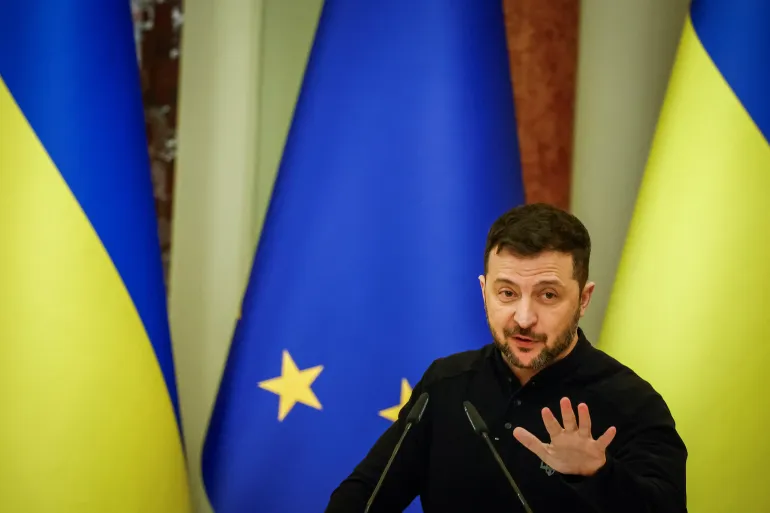
On the international front, Russian President Vladimir Putin made headlines by suggesting a potential meeting with US President Donald Trump to discuss a resolution to the ongoing conflict. Putin remarked that he had always enjoyed a “pragmatic and trusting” relationship with Trump, even expressing his belief that Trump was the legitimate winner of the 2020 US presidential election. In contrast, Ukrainian President Volodymyr Zelenskyy accused Putin of attempting to manipulate Trump into negotiating an end to the war on Russia’s terms, further complicating the diplomatic dynamics surrounding the conflict.
Meanwhile, tensions between the US and Ukraine appeared to rise, as the US government froze all foreign aid for 90 days, including military and development assistance to Ukraine. This move also affected billions of dollars in weapons shipments, signaling a shift in US policy regarding its support for Ukraine. While this was seen as a significant blow to Ukraine, there was a notable surge in US military equipment sales to foreign governments, with sales in 2024 reaching a record $318.7 billion, a 29% increase. Many countries, particularly those in Europe, were reported to be restocking their military supplies, which had been sent to Ukraine to support its defense efforts.
Regionally, political shifts in Central and Eastern Europe also drew attention. In Slovakia, tens of thousands of protesters gathered in the capital city to express their discontent with Prime Minister Robert Fico’s policy shift towards Russia. The protests, which spanned over 20 cities, were reminiscent of the 2018 protests that led to Fico’s resignation, and they underscored the growing unease with Russia’s actions in the region. In Belarus, President Alexander Lukashenko, a long-time ally of Putin, pardoned 15 prisoners just days before an election that is expected to extend his more than three-decade-long rule. Meanwhile, Hungarian Prime Minister Viktor Orban warned that Hungary would block the renewal of European Union sanctions against Russia, highlighting growing divisions within the EU regarding its approach to the war.
In the Arctic, Denmark agreed to discuss regional security concerns with the United States, despite a recent heated exchange between US President Donald Trump and Danish Prime Minister Mette Frederiksen. The disagreement, which arose over Trump’s earlier comments about Greenland, has not deterred the two countries from collaborating on Arctic security, underscoring the importance of strategic partnerships in the region.
Economically, the war’s global impact continued to be felt. Trump once again called for the Organization of the Petroleum Exporting Countries (OPEC) to reduce oil prices, aiming to weaken Russia’s economy and expedite the end of the war. The price of oil and its potential impact on Russia’s financial stability remain a key factor in the conflict’s dynamics. In Moldova, the leader of the separatist region of Transdniestria warned that the country’s remaining gas reserves would run out within days, after Moscow’s Gazprom halted gas shipments. This development further strained Moldova’s already fragile energy situation, with Transdniestria facing cuts in both gas and heating supplies.
The ongoing conflict continues to shape the geopolitical landscape in profound ways, with military, diplomatic, and economic developments unfolding daily. As the war enters its second year, both sides are bracing for continued challenges, while the international community watches closely, with a mix of support, sanctions, and strategic maneuvering shaping the global response to the crisis.