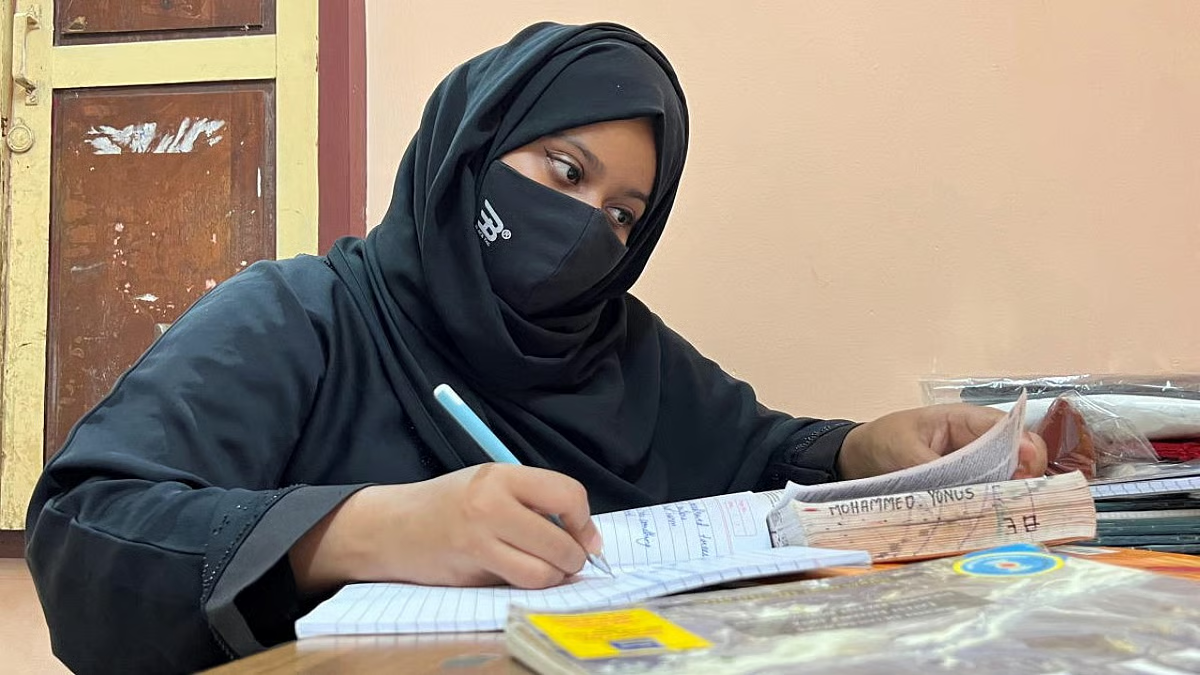
The controversy over a hijab-wearing student at St Rita’s Public School in Palluruthy, Kerala, has taken a dramatic turn as the school management publicly refuted allegations from the state education department, maintaining that they have adhered to rules regarding school uniforms and students’ rights, while hinting at pursuing legal remedies. The dispute, which has attracted widespread attention across the state, comes after the student’s absence from classes and conflicting statements from the government, highlighting the complexities of balancing institutional regulations, religious rights, and education policies.
School Management’s Stand and Legal Preparedness
On Wednesday, St Rita’s Public School, administered by the Catholic Church, reopened its classrooms after a two-day closure that followed the student’s absence, which the school said was due to health issues. The principal, Sr Heleena Alby, unequivocally rejected the charges levied by the state education department through its inquiry report, labeling them as false and misleading. She emphasized that the school has meticulously documented evidence proving compliance with its policies and the law. According to Sr Heleena, the management had previously submitted reports and supporting documents to the authorities, which establish that the school never obstructed the student’s right to education.
The principal referred to the 2018 High Court ruling, which granted school managements the authority to determine their own uniform codes. Drawing on this precedent, Sr Heleena asserted that the school would continue enforcing its established uniform policies while respecting students’ rights under the law. She stressed that the student had not been expelled and remains an enrolled member of the school, underlining the institution’s stance that it has neither denied education nor acted unlawfully in managing the situation.
Sr Heleena further stated that any claims suggesting the school hindered the student’s educational participation are incorrect. She indicated that the school is prepared to pursue court proceedings if necessary, highlighting a readiness to defend institutional autonomy and the right to set uniform standards. Her statements come at a time when public and political discourse around the incident remains intense, demonstrating how education policies, religious expression, and administrative oversight intersect in high-stakes, socially sensitive situations.
Government Response and Shifting Positions
In parallel, Kerala’s General Education Minister V Sivankutty appeared to retract his earlier stance supporting the student’s right to wear the hijab, following discussions and mediation involving the student’s family. On Tuesday, Sivankutty had criticized the school’s management for allegedly preventing the student from attending classes, citing serious lapses in the inquiry report by the Deputy Director of Education (DDE). His initial comments suggested a strong position in favor of religious freedom and student rights, implying that the management’s actions were inconsistent with the principles of education access.
However, by Wednesday, Sivankutty moderated his comments, indicating that he understood the student’s parents had reached an agreement during mediation sessions, reportedly facilitated by Congress MP Hibi Eden, to send the student to school without wearing the headscarf. In a press briefing at Thiruvananthapuram, the minister emphasized that if the family has agreed to comply with the school’s uniform policy, the matter should be considered resolved at the local level. His shift in position highlighted the sensitive nature of negotiations between school authorities, parents, and government representatives, reflecting the balance policymakers attempt to maintain between institutional regulations and religious accommodation.
The father of the student, PM Anas, had earlier stated that he would adhere to the school’s uniform guidelines following the mediation process, aiming to avoid the escalation of the matter into a larger communal controversy. He conveyed that his primary concern was ensuring his daughter’s education while minimizing public or political tensions. The family’s willingness to comply with the school’s rules underscores the broader challenges faced by educational institutions in managing uniform policies and religious expression, particularly when societal and political factors amplify local disputes.
The controversy surrounding St Rita’s Public School also shines a spotlight on the procedural aspects of educational governance in Kerala. Allegations of lapses by the school were based on the DDE inquiry, which the management claims was inaccurate and not reflective of actual circumstances. Sr Heleena criticized the manner in which the minister made public statements without thorough verification, pointing to potential gaps in communication and assessment processes between the education department and individual institutions. This aspect has contributed to heightened tensions, fueling media coverage and public debates over administrative fairness, policy interpretation, and accountability.
Broader Implications and Social Sensitivity
The hijab dispute at St Rita’s Public School has captured the attention of various stakeholders, including political leaders, educational authorities, religious groups, and media outlets, revealing the complex intersection of school governance, personal freedoms, and societal expectations. It illustrates the broader challenge of managing religious expression within institutional frameworks, where school policies must be enforced while remaining sensitive to the diverse beliefs of students. Kerala’s schools, like those in other states, often navigate such conflicts delicately, balancing legal mandates, cultural norms, and the interests of families and communities.
The case also exemplifies how mediation efforts can influence outcomes in sensitive disputes. The intervention of a Member of Parliament and the willingness of the student’s family to engage in dialogue underscore the importance of negotiation and compromise in addressing conflicts that could otherwise escalate into legal, political, or communal controversies. At the same time, the school’s insistence on following its established uniform code highlights institutional priorities and the necessity of maintaining consistency in policy enforcement to ensure operational clarity and fairness.
Amid the unfolding situation, Kerala’s education ecosystem faces a test of coordination between government oversight and school autonomy. The tensions revealed by this incident suggest that policy clarity, effective communication, and evidence-based decision-making are critical in resolving disputes while maintaining public confidence in the education system. Both the school management and the government must navigate the fine line between enforcing rules and respecting individual rights, demonstrating the challenges inherent in applying regulations in culturally diverse contexts.
The St Rita’s Public School hijab controversy has broader symbolic resonance, raising questions about the interpretation of religious rights, the limits of institutional authority, and the role of state intervention in private educational institutions. It has also prompted discussions on the adequacy of existing guidelines governing uniforms, student rights, and religious expression in schools, indicating the need for ongoing dialogue and policy refinement to prevent similar disputes in the future.
The incident illustrates the complex dynamics between legal frameworks, administrative discretion, and societal sensitivities. By publicly challenging the education department’s report and signaling a willingness to pursue court action, the school management has emphasized the importance of protecting institutional autonomy, while the government’s revised position reflects the delicate balancing act required when addressing issues with political, cultural, and social ramifications.
This case continues to draw attention from policymakers, education experts, and the public, highlighting the intricate interplay between law, policy, and community expectations in contemporary educational governance. As the situation develops, it remains a significant example of how schools, government authorities, families, and students navigate contentious issues that intersect with religion, education, and legal rights.