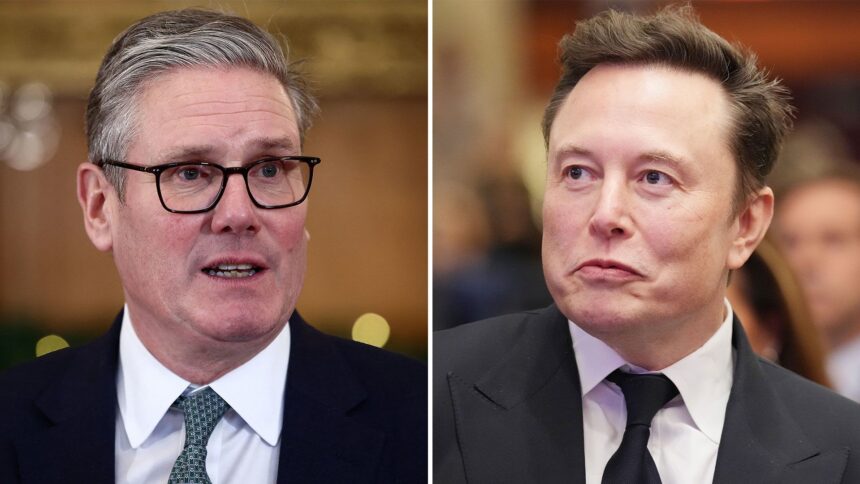
Keir Starmer, the United Kingdom Prime Minister, faced a challenging week dominated by global market turmoil and Elon Musk’s contentious interventions in British politics. While Musk’s inflammatory remarks and social media attacks captured headlines, Keir Starmer’s aides were more concerned about the impact of a sharp bond selloff that threatens to derail the government’s economic plans. The financial turbulence has raised borrowing costs, narrowing Chancellor of the Exchequer Rachel Reeves’ budgetary flexibility and creating the possibility of unpopular spending cuts ahead of the Office for Budget Responsibility’s updated forecasts in March.
Elon Musk’s campaign against centrist leaders, particularly Keir Starmer, intensified as the billionaire accused the United Kingdom Prime Minister of failing to order a national inquiry into child sexual exploitation by gangs of predominantly Pakistani heritage. Musk’s remarks escalated further when he endorsed far-right activist Tommy Robinson, leading to a fallout with Reform UK leader Nigel Farage, who had previously received Musk’s support. The endorsement drew widespread criticism and offered Keir Starmer an opportunity to distance himself from the divisive rhetoric.
The controversy extended to the opposition Conservative Party, with party leader Kemi Badenoch pressing Keir Starmer on the issue during Prime Minister’s Questions. Keir Starmer countered by emphasizing his government’s commitment to implementing recommendations from previous investigations, which the Conservatives had failed to address while in office. Despite this, Labour lawmakers were directed to oppose a Tory-backed motion for a fresh inquiry, a decision that left some uncomfortable, especially given the sensitivities surrounding demands from sex abuse victims.
Labour strategists believe the week highlighted Keir Starmer’s steady leadership amid political turbulence. By focusing on substantive issues such as economic stability, Keir Starmer contrasted himself with what his allies described as an opportunistic Conservative opposition and the chaos associated with figures like Elon Musk, Nigel Farage, and incoming United States President Donald Trump. This strategy, they argue, appeals to businesses and middle-ground voters concerned with stability and jobs.
Economic challenges remain Keir Starmer’s primary concern, as the bond selloff risks derailing Rachel Reeves’ fiscal strategy. With Rachel Reeves in China seeking stronger economic ties, Labour remains optimistic about potential interest rate cuts by the Bank of England and the opportunity to implement growth-boosting measures. However, aides acknowledge limited room for maneuver, with deeper spending cuts or further tax hikes viewed as politically unviable.
Keir Starmer’s allies believe his calm and measured responses this week reflect his ability to lead in uncertain times. Despite the noise created by Elon Musk’s provocations, Keir Starmer’s focus on policy and governance offers a stark contrast to the hard-right narratives attempting to dominate the political landscape.