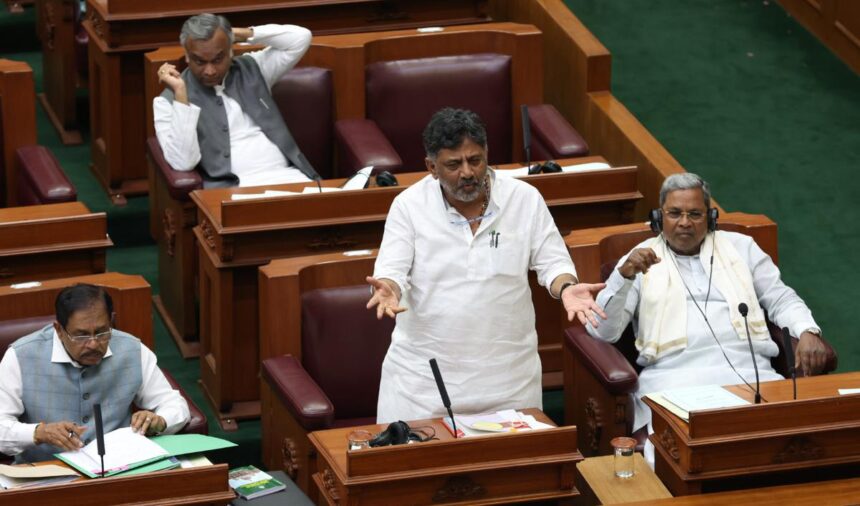
The Siddaramaiah-led Karnataka government has stirred controversy by approving the withdrawal of numerous criminal cases across the state, despite strong objections from police officials, the prosecution, and multiple state departments. This move has sparked widespread criticism and concerns over political motives, legal propriety, and public interest, particularly because several of the withdrawn cases involve supporters of Deputy Chief Minister DK Shivakumar and other Congress party workers. The cabinet’s decision, formally endorsed by a sub-committee on August 4, underscores the tension between political expediency and adherence to the principles of law, raising questions about accountability and impartiality in governance. Activists, legal experts, and opposition figures have expressed their intent to challenge the decision in the Karnataka High Court, claiming that the withdrawals undermine legal norms, public safety, and democratic accountability.
Withdrawal of High-Profile Cases Involving Political Figures and Supporters
Among the 60 cases slated for withdrawal, 11 are directly linked to supporters of Deputy Chief Minister DK Shivakumar, including Congress workers involved in significant unrest in 2019. These cases encompass charges such as rioting, assault on police officers, and public property damage. The incidents in question occurred when Shivakumar’s supporters clashed with law enforcement across Bengaluru and other regions, protesting his arrest by the Enforcement Directorate in connection with a money laundering investigation. Reports from that period detail widespread chaos, including rioting, arson, and stone-pelting during protests, reflecting the intensity of public disorder.
In addition to these politically sensitive cases, the cabinet has decided to withdraw matters related to mob violence over cattle transport in Kalaburagi, 2019. This decision followed a request by state minister Priyank Kharge and pertains to incidents in which a mob attacked a police station following the seizure of cattle and a vehicle. The charges in these cases included rioting, assault on police officers, and property damage. By approving the withdrawal of such cases, the government has raised concerns among legal experts about whether public interest and the rule of law are being compromised in favor of political considerations.
Furthermore, certain cases linked to farmer agitations have also been included in the withdrawal list. These cases involved protests that, while largely organized as demonstrations for agrarian issues, reportedly included incidents of violence and obstruction of law enforcement activities. The decision to include these matters in the withdrawal list has intensified criticism from legal observers, who argue that such withdrawals may set a precedent where public protests resulting in violence are effectively excused if politically convenient.
Additionally, cases related to violence during the 2018 Ramdurga Assembly election victory celebrations are also targeted for withdrawal. These cases involve communal clashes and alleged violations of prohibitory orders, and include accusations against supporters of a BJP leader. The inclusion of these cases has further fueled the debate around selective political appeasement, with opponents highlighting the inconsistent application of law depending on party affiliation and political influence. Critics argue that by withdrawing cases that implicate specific individuals while ignoring broader legal and societal concerns, the government risks undermining the impartiality and credibility of the judicial and enforcement systems.
Legal and Public Backlash Against Cabinet’s Decision
The cabinet’s decision to approve the withdrawal of these cases came despite clear opposition from the police, prosecution, and law department, all of whom advised that the move was against public interest and not aligned with established legal procedures. Officials argued that withdrawing criminal cases, particularly those involving rioting, assault on officers, and public disorder, could compromise the rule of law and potentially embolden political actors and groups to act with impunity. The objections also emphasized that such decisions, if politically motivated, could undermine public confidence in the legal system and set a dangerous precedent for future governance decisions.
Activist and advocate Girish Bhardwaj has publicly vowed to challenge the cabinet’s decision in the Karnataka High Court. In a video message, Bhardwaj highlighted the legal risks and potential violations involved, stating that the withdrawal of politically sensitive cases reflects an agenda of political appeasement. He pointed to previous Karnataka High Court rulings, which clarified that orders of case withdrawal that contravene established rules and criminal jurisprudence are legally unsustainable. Bhardwaj emphasized his commitment to ensuring that the court examines the cabinet’s decision and quashes any orders that fail to uphold legal standards and public accountability.
The political implications of the cabinet’s decision have also drawn sharp reactions from opposition parties and civil society groups. Critics argue that by withdrawing cases linked to prominent political figures and supporters, the government appears to be prioritizing party loyalty and political expediency over justice and fairness. Such actions, according to observers, risk eroding trust in governance and law enforcement institutions, potentially encouraging selective enforcement of laws based on political affiliation rather than merit.
Legal experts warn that the withdrawal of cases involving public unrest, rioting, and attacks on police officers may weaken deterrent mechanisms designed to maintain law and order. The perception that politically connected individuals can escape accountability could, they argue, encourage further lawless behavior and undermine citizen faith in justice. Moreover, the cabinet’s decision could complicate the work of prosecutors and law enforcement agencies, who may find their authority and procedural recommendations overridden by political directives.
The broader societal response has included public debates about the role of the judiciary, administrative discretion, and the need for political neutrality in decisions involving criminal cases. Analysts suggest that while the government may justify withdrawals as a means to reduce case backlog or address minor grievances, the selection of high-profile, politically charged cases has transformed the exercise into a focal point of controversy. Observers stress that the optics of such actions are critical, as perceptions of partiality can significantly influence public trust in both government institutions and the judicial process.
Additionally, the timing of these withdrawals, in close proximity to ongoing political developments and upcoming elections, has raised questions about the motives behind the cabinet’s decisions. By clearing cases linked to a particular set of supporters, the government may be perceived as attempting to secure political loyalty or goodwill, rather than adhering strictly to legal principles. This intersection of legal authority, administrative discretion, and political strategy illustrates the complex challenges faced by state governments in balancing governance, public accountability, and electoral considerations.
The Siddaramaiah cabinet’s case withdrawal decisions also have implications for democratic governance, as the selective application of law can create unequal access to justice. When cases involving politically connected individuals are withdrawn while others continue through the legal system, it risks creating a dual standard that undermines the principle of equality before the law. Civil society advocates emphasize that maintaining consistent legal standards is essential for safeguarding democratic norms and preventing the politicization of law enforcement.
Finally, the unfolding legal battle in the Karnataka High Court, spearheaded by advocates like Girish Bhardwaj, will test the boundaries of administrative authority, legal compliance, and public interest. The High Court’s intervention may not only clarify the legality of these withdrawals but also establish precedent regarding the scope and limits of political discretion in approving case withdrawals. The case is likely to attract significant attention from legal scholars, political analysts, and citizens concerned with governance, accountability, and the impartial application of justice in India.
By examining the implications of these withdrawals, the controversy surrounding the Siddaramaiah cabinet’s decisions illustrates the ongoing tension between political strategy, legal adherence, and public interest in a democratic society. The events underscore the need for transparency, adherence to legal norms, and careful consideration of the long-term effects of politically motivated administrative actions.