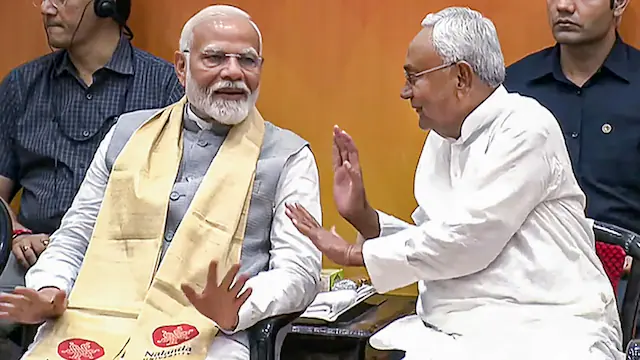
In a notable shift in its political approach, Nitish Kumar’s Janata Dal (United) party has recalibrated its stance on the proposed University Grants Commission (UGC) draft rules, signaling its intent to position itself as a ‘constructive ally’ rather than a vocal critic. While the party has yet to examine the draft in detail, its senior leaders have indicated that JD(U) is now more inclined to align with the government on the issue, moving away from earlier reservations.
The change in tone has taken political observers by surprise, especially after the party had previously voiced concerns over the draft and its potential implications. JD(U) leadership, however, seems to be taking a more cautious and pragmatic route now, aiming to avoid direct confrontation with the central government. As one of the major allies in the ruling National Democratic Alliance (NDA), Nitish Kumar’s party has been walking a fine line between maintaining its political relevance at the national level and managing its alliance dynamics, which has been delicate for some time.
Although JD(U) has not yet fully reviewed the draft, a senior leader mentioned in an interaction with News 18 that the party would give its input once the draft has been properly discussed and deliberated within the party. “We are yet to go through the draft. We will declare our stand once we see the draft, discuss and deliberate in the party,” said the senior leader, stressing the party’s commitment to maintaining an informed and reasoned approach before making any final decisions.
Initially, JD(U) had raised concerns about the proposed rules, which reflected its hesitation and caution. The draft had sparked discussions within the party, with some leaders expressing reservations about its impact on the educational landscape. However, the shift towards a more conciliatory position suggests that Nitish Kumar is now recalibrating his party’s strategy, seeking to avoid direct confrontation with the central government, which could have political repercussions. The party’s current position indicates a preference for being a constructive partner, rather than one that disrupts the political discourse.
Sources within the party suggest that this move is part of a broader strategy to maintain JD(U)’s relevance on the national political stage, especially with elections looming in Bihar later this year. The party’s recalibrated stance is seen as an attempt to strengthen its position while ensuring it retains its alliance with the BJP-led government. By focusing on offering ‘suggestions’ rather than direct opposition, JD(U) aims to project itself as a party that is willing to contribute positively to the policy-making process, rather than one that simply criticizes without offering alternatives.
In a further indication of this shift, another senior JD(U) leader emphasized the party’s desire to be a constructive force in Indian politics. “We are here to be constructive, to bring change, not chaos,” he said, pointing out that the JD(U) has always been open to providing suggestions to the government. This statement reflects the party’s recognition of the political realities of being part of the NDA coalition and its understanding of the importance of maintaining good relations with the central government.
Despite not having fully reviewed the draft, JD(U)’s openness to aligning with the government reflects an awareness of the potential political cost of opposition. In the past, the party has expressed concerns about various policy issues, including the caste census, but this time, its focus appears to be on preserving its relationship with the BJP-led government. The party’s willingness to soften its stance signals a move towards pragmatism, prioritizing alliance stability and political practicality over ideological rigidity.
This recalibration of JD(U)’s stance could have significant implications for the party’s future role in national politics. As the party navigates a complex political landscape, it is clear that Nitish Kumar and his leadership are making calculated moves to ensure JD(U)’s continued influence. By positioning itself as a partner in change and a constructive force, JD(U) hopes to avoid the risks associated with opposition while still maintaining its distinct identity within the ruling coalition. In the coming months, it will be interesting to see how this shift in strategy plays out, particularly as Bihar gears up for elections, and how JD(U) manages its delicate balancing act within the NDA.