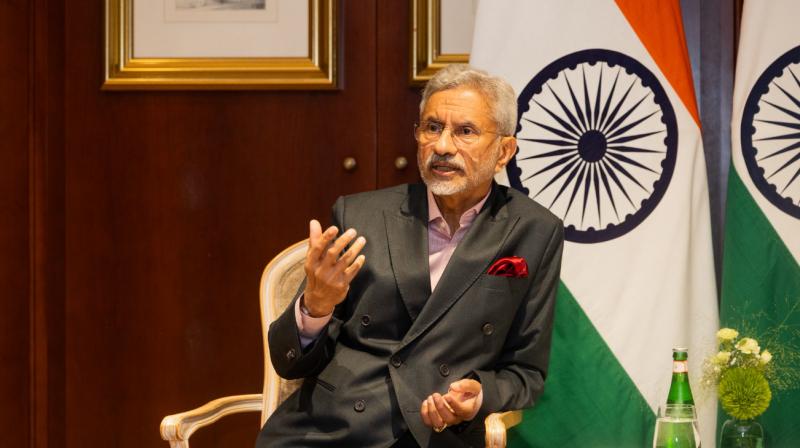
India has firmly ruled out playing the role of a mediator in the ongoing geopolitical tensions involving Iran, the United States, and Israel, with External Affairs Minister S Jaishankar making it clear that the country will not act as a “go-between” nation like Pakistan. The remarks, made during an all-party meeting in New Delhi, underline India’s long-standing diplomatic approach of strategic autonomy and balanced engagement rather than direct mediation in international conflicts.
The statement comes at a time when Pakistan has reportedly offered to mediate between Washington and Tehran amid escalating tensions, drawing attention to contrasting diplomatic approaches in the region. According to sources present at the meeting, Jaishankar emphasised that India’s global positioning and foreign policy priorities differ fundamentally from those of Pakistan, particularly in the context of conflict mediation.
India’s Strategic Position: No Role as Conflict Mediator
India’s refusal to act as an intermediary reflects a deliberate and consistent foreign policy stance. Rather than positioning itself as a mediator, India prefers to maintain constructive bilateral relationships with all major stakeholders while safeguarding its own strategic and economic interests.
During the meeting, Jaishankar reportedly pointed out that mediation efforts often stem from specific bilateral dynamics between countries, as seen in the case of Pakistan’s engagement with the United States and Iran. Such roles are not aligned with India’s diplomatic priorities, which focus on maintaining independence in decision-making and avoiding entanglement in external conflicts.
India’s approach is rooted in its broader philosophy of non-alignment and multi-alignment, where it engages with multiple global powers without being tied to any single bloc. This allows the country to maintain flexibility in foreign policy and respond to evolving geopolitical situations based on national interests.
The remarks also highlight India’s cautious approach towards involvement in complex international disputes. Acting as a mediator requires significant political capital and carries risks, including potential diplomatic fallout if negotiations fail. By choosing not to assume such a role, India avoids unnecessary exposure while continuing to engage diplomatically with all parties.
Pakistan’s Mediation Efforts and Historical Context
Pakistan’s offer to mediate between the United States and Iran has revived discussions about its historical role in facilitating communication between conflicting nations. Over the decades, Islamabad has engaged in several mediation efforts, often driven by its bilateral relationships and strategic interests.
Sources indicated that Pakistan has been involved in similar roles since the early 1980s, including facilitating communication between Washington and Tehran through diplomatic channels. More recently, it played a role in negotiations involving the United States and the Taliban, as well as in discussions between Saudi Arabia and Iran.
These efforts are often shaped by Pakistan’s geopolitical positioning and its relationships with key global players. In contrast, India’s diplomatic strategy focuses on maintaining balanced ties without directly intervening in conflicts.
The current situation, where Pakistan has expressed willingness to mediate in the Iran conflict, reflects its continued interest in positioning itself as a diplomatic facilitator. However, India’s leadership has made it clear that such a role does not align with its own foreign policy framework.
India’s Engagement in the Middle East Crisis
While rejecting the role of a mediator, India has remained actively engaged in the evolving situation in the Middle East. The government has maintained communication with all relevant stakeholders, issued official statements, and taken steps to protect its national interests.
Officials highlighted that India has been closely monitoring developments and ensuring the safety of its citizens in the region. A large number of Indians have already been brought back from affected areas, reflecting the government’s focus on citizen welfare.
India’s engagement extends beyond immediate crisis management. The country maintains strong diplomatic and economic ties with multiple nations in the region, including Iran, Israel, and the United States. Balancing these relationships requires careful navigation, especially during periods of heightened tension.
The government has emphasised that its approach is guided by pragmatism and a commitment to stability. By maintaining open channels of communication with all sides, India seeks to contribute to regional stability without assuming a direct mediation role.
Energy Security and Economic Considerations
One of the key factors influencing India’s position is energy security. The Middle East plays a crucial role in global energy supply, and disruptions in the region can have significant implications for India’s economy.
Officials have reassured that there is no immediate concern regarding energy supplies. India’s diversified sourcing strategy, which includes imports from Russia, West Africa, and other regions, helps mitigate risks associated with geopolitical disruptions.
The government also highlighted that sanctions on Iran have been in place for several years, and India has successfully navigated these challenges in the past. By maintaining a flexible and diversified approach, the country ensures stability in its energy supply.
In addition, efforts are being made to stabilise LPG supplies and manage potential disruptions. These measures reflect a broader strategy to safeguard economic interests while adapting to changing global conditions.
Diplomatic Balance and Global Partnerships
India’s foreign policy is characterised by its ability to maintain balanced relationships with multiple global powers. The United States remains a key economic partner, while Israel is an important ally in technology and defence.
At the same time, India continues to engage with Iran, recognising its strategic importance in the region. This balanced approach allows India to navigate complex geopolitical landscapes without compromising its interests.
The government also highlighted its continued association with international groupings such as the Non-Aligned Movement. This reflects India’s commitment to maintaining independence in foreign policy and avoiding alignment with any single power bloc.
However, differences among member countries in forums like BRICS have made it challenging to adopt unified positions on certain issues. Despite these challenges, India continues to advocate for dialogue and cooperation.
Domestic Political Consensus and National Unity
The all-party meeting where Jaishankar made his remarks was aimed at building consensus on India’s approach to the ongoing crisis. Government representatives briefed political leaders on the situation and addressed concerns related to foreign policy and national security.
Following the meeting, Union Minister Kiren Rijiju stated that the government had answered all questions and that there was a sense of unity among participants. This reflects a broader effort to ensure that India’s response to international developments is supported across the political spectrum.
Such consensus is crucial in maintaining a coherent and consistent foreign policy. It also strengthens India’s position on the global stage, as unified domestic support enhances credibility in international engagements.
India’s decision to reject a mediation role in the Iran conflict underscores its commitment to strategic autonomy and balanced diplomacy. By maintaining strong relationships with multiple stakeholders while avoiding direct involvement in conflicts, the country continues to prioritise its national interests.
The contrast with Pakistan’s approach highlights differing foreign policy strategies in the region. As global tensions evolve, India’s focus remains on stability, economic security, and the protection of its citizens.
The government’s stance reflects a careful balance between engagement and restraint, ensuring that India remains an influential yet independent player in international affairs.