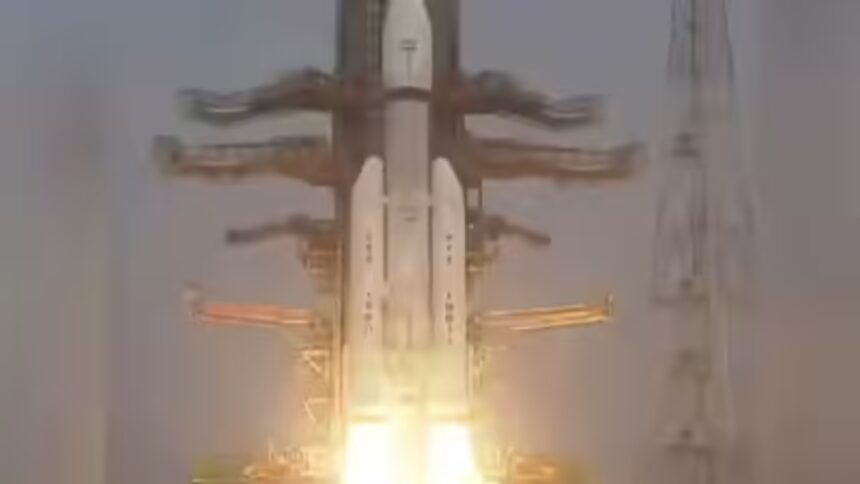
India’s space programme enters 2026 with a defining moment as the Indian Space Research Organisation prepares to launch the PSLV-C62 mission from Sriharikota, carrying a complex constellation of sixteen satellites that reflect the country’s growing technological maturity and strategic ambitions in space.
The launch, scheduled for 10:17 am IST from the First Launch Pad at Satish Dhawan Space Centre, marks the first major orbital mission of the year for Indian Space Research Organisation. Far from being a routine exercise, PSLV-C62 represents a carefully choreographed mission combining defence-focused Earth observation, experimental in-orbit technologies, artificial intelligence-driven imaging, and commercial small satellite deployment. Together, these elements underline how India’s space agenda is increasingly multi-dimensional, blending national security needs, scientific advancement, and global market competitiveness.
The Polar Satellite Launch Vehicle, often described as Isro’s workhorse, stands fully assembled on the launch pad after weeks of meticulous preparation. Engineers and scientists have completed a series of integrated checks, simulations, and countdown rehearsals to ensure that every subsystem performs flawlessly. The mission assumes particular importance as it follows a challenging phase in 2025, when Isro encountered setbacks in one of its launch campaigns. By placing renewed trust in the PSLV platform, the agency signals its confidence in a rocket that has formed the backbone of India’s space launches for decades.
A complex mission led by Anvesha and advanced observation technology
At the heart of the PSLV-C62 mission is EOS-N1, an advanced Earth observation satellite developed by the Defence Research and Development Organisation. Named Anvesha, meaning exploration, the satellite represents a new generation of high-performance imaging platforms designed to deliver precise, data-rich insights for a wide range of applications. Equipped with sophisticated hyperspectral imaging sensors, Anvesha can capture information across numerous spectral bands, enabling analysts to detect subtle variations on the Earth’s surface that are invisible to conventional optical systems.
This hyperspectral capability significantly enhances India’s ability to monitor terrain, vegetation, water bodies, and urban infrastructure with exceptional detail. From a strategic perspective, such technology strengthens situational awareness and supports defence planning, border monitoring, and disaster response. From a civilian standpoint, it offers valuable data for agriculture, environmental conservation, mineral exploration, and climate studies. By integrating these capabilities into a single satellite, Anvesha embodies the dual-use nature of modern space assets, serving both security and developmental objectives.
The satellite’s placement into a Sun-synchronous polar orbit ensures consistent lighting conditions for imaging, allowing repeat observations of the same location at fixed local times. This orbital choice is critical for comparative analysis, enabling scientists and analysts to track changes over time with a high degree of accuracy. The deployment of Anvesha also reflects closer institutional coordination between Isro and DRDO, highlighting how India’s civilian and defence research establishments increasingly collaborate on advanced space technologies.
Alongside Anvesha, the PSLV-C62 mission carries fifteen additional satellites, each contributing to the broader objectives of technology demonstration, scientific research, and commercial utilisation. Among the most notable payloads is India’s first orbital artificial intelligence image laboratory. This experimental platform is designed to process imagery directly in space, reducing dependence on ground-based data handling and enabling faster decision-making. By embedding AI algorithms onboard, Isro aims to demonstrate how satellites can autonomously filter, analyse, and prioritise data before transmitting it to Earth.
Such in-orbit processing represents a significant shift in satellite operations. Traditionally, satellites act primarily as data collectors, relaying raw information to ground stations for analysis. The introduction of onboard intelligence allows for more efficient use of bandwidth, quicker response times during emergencies, and enhanced resilience in scenarios where ground communication may be limited. For India, success in this domain could open new avenues in responsive Earth observation and next-generation satellite services.
Another important payload aboard PSLV-C62 is an experimental on-orbit refuelling model. While still at a demonstrator stage, this technology addresses one of the most critical challenges in space operations: extending satellite lifespans. By validating concepts related to refuelling and servicing in orbit, Isro is laying the groundwork for future missions where satellites can be maintained, upgraded, or repositioned rather than replaced. Such capabilities are increasingly seen as essential for sustainable and cost-effective space operations, particularly as orbital congestion grows.
The remaining satellites on the mission include a mix of technology demonstrators and small payloads developed by academic institutions and private entities. Their inclusion reflects Isro’s continued commitment to nurturing a vibrant space ecosystem in India, where startups, universities, and research organisations gain access to space through shared launch opportunities. For many of these participants, PSLV-C62 provides a rare chance to validate hardware and software in the harsh environment of space, an essential step toward commercialisation and innovation.
Why the pslv remains central to india’s space strategy
The decision to rely on the PSLV for this critical mission underscores its enduring importance within India’s launch vehicle fleet. Since its first successful flight in the 1990s, the PSLV has built a reputation for reliability and versatility, completing numerous missions with high success rates. Its ability to deploy multiple satellites into precise orbits has made it a preferred choice not only for Indian payloads but also for international customers seeking dependable access to space.
PSLV-C62 exemplifies this versatility through its complex mission profile. The rocket must execute a sequence of burns, coast phases, and precise separations to place sixteen satellites into their designated orbits without interference. Each separation event is timed and oriented with extreme accuracy, ensuring that the satellites drift apart safely and assume stable trajectories. Mission planners often describe such operations as a celestial ballet, where even minor deviations can have significant consequences.
Confidence in the PSLV is rooted not only in its engineering design but also in the institutional experience accumulated by Isro over decades. Teams responsible for propulsion, avionics, structures, and mission integration have refined their processes through continuous learning and incremental improvements. Even when setbacks occur, as they did in 2025, the organisation’s ability to conduct thorough investigations and implement corrective measures has reinforced trust in its systems.
The launch also highlights the strategic role of the First Launch Pad, which has supported a wide range of missions, from Earth observation to interplanetary exploration. Infrastructure upgrades at Sriharikota in recent years have enhanced safety, efficiency, and flexibility, enabling Isro to manage an increasingly demanding launch schedule. With additional missions planned for 2026, including scientific probes and human spaceflight-related tests, the centre remains a focal point of India’s space ambitions.
From a commercial perspective, PSLV-C62 reinforces India’s standing in the global small satellite launch market. As demand for small and medium satellites grows, driven by Earth observation, communication, and technology demonstration needs, reliable launch services have become highly sought after. Isro’s ability to bundle multiple payloads into a single mission offers cost advantages that appeal to international customers, even as competition intensifies from private launch providers worldwide.
The mission also reflects broader policy shifts encouraging private sector participation in India’s space activities. While Isro continues to lead in launch vehicle development and mission execution, a growing number of payloads originate from non-governmental entities. This collaborative model aims to accelerate innovation, reduce costs, and position India as a comprehensive space service provider rather than solely a government-driven programme.
As the countdown progresses, activity inside Isro’s mission control rooms intensifies. Engineers monitor telemetry streams, weather conditions, and range safety parameters, ensuring that every criterion for launch is met. The final hours before lift-off are marked by a combination of routine checks and heightened anticipation, as years of design, testing, and preparation converge into a matter of minutes.
When PSLV-C62 lifts off, it will not only place satellites into orbit but also signal the direction of India’s space journey in 2026. By integrating defence capabilities, experimental technologies, and commercial opportunities into a single mission, Isro demonstrates a holistic approach to space exploration and utilisation. The outcomes of this launch are expected to influence future mission designs, partnerships, and policy decisions as India continues to expand its footprint beyond Earth.