An Israeli airstrike in central Gaza on Tuesday resulted in the deaths of four Palestinians, according to Gaza’s civil emergency service. The attack occurred as ongoing ceasefire negotiations between Israel and Hamas, mediated by Arab nations and the United States, continued to face roadblocks. The strike, which Israel described as targeting “terrorists engaged in suspicious activity,” has further heightened tensions in the volatile region.
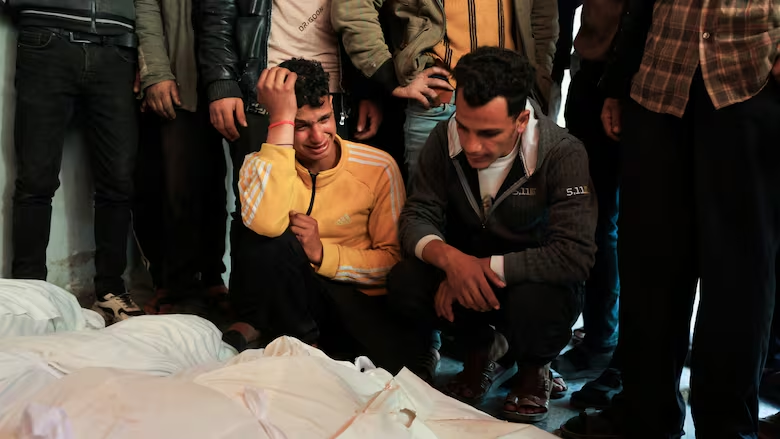
At the Al-Ahli Arab Baptist Hospital, grieving relatives gathered around the shrouded bodies of the deceased, who included two brothers. Medics and family members have insisted that all four victims were civilians. “Did we end the war or what happened? We don’t know,” said Arafat Al-Hana, the father of one of the victims, echoing the uncertainty and frustration felt by many Palestinians.
The latest ceasefire efforts have seen Israeli officials travel to Doha for discussions, while Hamas leaders have been engaged in talks in Cairo. However, progress has stalled due to disagreements over key terms of the truce. The ceasefire, which began on January 19, had temporarily halted hostilities, leading to an exchange of 33 Israeli and five Thai hostages for approximately 2,000 Palestinian prisoners. Hamas is demanding further negotiations on a second phase, which it claims was supposed to include Israel’s full withdrawal from Gaza. Israel, on the other hand, insists that all remaining hostages be released before such talks can proceed.
Adding to the tensions, Hamas accused Israel of deliberately worsening Gaza’s humanitarian crisis by cutting off the territory’s last working electricity supply line. The move has severely impacted water desalination and sewage treatment facilities, exacerbating the already dire living conditions. “We call on mediators to pressure the occupation to abide by its commitments and ensure the immediate entry of humanitarian aid,” Hamas said in a statement, condemning what it described as Israel’s “collective punishment” tactics.
Israel has continued to restrict aid deliveries, blocking food, medicine, and fuel supplies in an attempt to pressure Hamas into compliance. Aid agencies, including the United Nations Relief and Works Agency (UNRWA), have warned that Gaza is at risk of another severe hunger crisis if these blockages persist. UNRWA Commissioner-General Philippe Lazzarini stated that the impact of the restrictions is escalating, warning that the region could soon see a return to the deep hunger crisis experienced in recent months.
The conflict in Gaza escalated following the October 7, 2023, cross-border attack by Hamas-led militants, which resulted in the deaths of 1,200 people in Israel and the abduction of 251 hostages, according to Israeli authorities. In response, Israel launched a military campaign that, according to Gaza health officials, has since killed more than 48,000 Palestinians. As ceasefire talks continue without a clear resolution, the situation in Gaza remains precarious, with civilians caught in the crossfire of a protracted and devastating conflict.