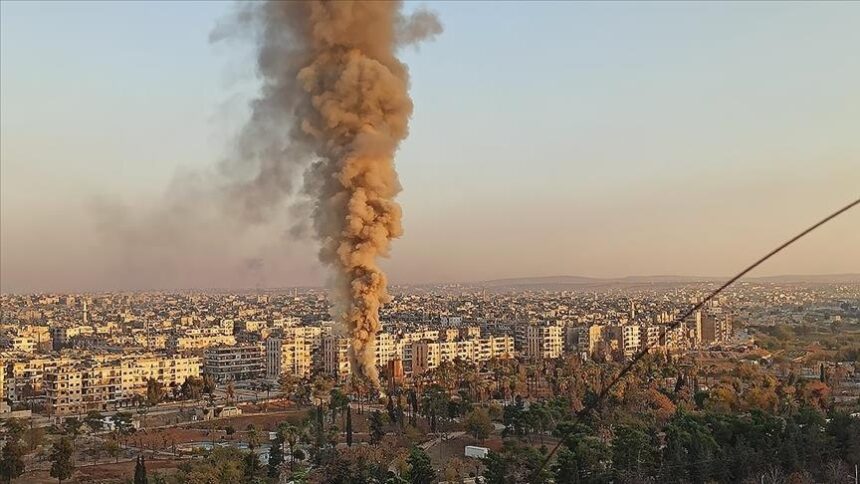
Israeli warplanes launched a series of airstrikes on military sites in Syria’s southern province of Deraa, targeting key installations previously controlled by the former Bashar al-Assad regime. The strikes, reported late Monday, mark another escalation in the region as Israel continues its operations against military assets in Syria.
According to Syria’s state-run media outlet, the Syrian Arab News Agency (SANA), the attacks struck two towns—Jbab and Izraa—north of Deraa, a province located 103 kilometers (64 miles) south of the capital, Damascus. SANA stated that Israeli aircraft carried out multiple strikes around these areas, but provided no details on casualties or material damage.
The UK-based monitoring group, the Syrian Observatory for Human Rights, reported that Israeli fighter jets executed 17 strikes on two key military positions in the region: Artillery Regiment 89 and the 12th Brigade, both formerly operated by Assad’s forces. The Observatory confirmed that no casualties had been reported as of now, but the extent of the damage remains unclear.
Israeli media outlet Channel 14 provided additional details, indicating that the airstrikes targeted army outposts, weapons depots, radars, tanks, and artillery installations. According to the report, these facilities were at risk of being taken over by rebel groups operating in Syria. The strikes were reportedly part of an effort to prevent military assets from falling into the hands of forces considered hostile to Israel.
Since the overthrow of Syrian President Bashar al-Assad in December, Israel has significantly intensified its air campaign within Syria. Between December 8 and December 31, 2024, Israeli forces carried out more than 500 airstrikes on various military targets across the country. So far this year, 21 documented attacks have been launched, according to the Syrian Observatory for Human Rights.
Israeli Prime Minister Benjamin Netanyahu recently reiterated his stance on the evolving security situation in Syria. He emphasized that southern Syria must be completely demilitarized and warned that his government would not tolerate the presence of forces from the new administration in Damascus, led by interim President Ahmed al-Sharaa, near Israeli territory.
Following Assad’s removal, Israel’s military has expanded its operations inside a United Nations-patrolled buffer zone, a demilitarized area that has separated Israeli and Syrian territories in the occupied Golan Heights since 1974. Reports suggest that Israeli forces have gained control of strategic areas within this zone, further shifting the balance of power in the region.
With tensions continuing to escalate, the latest airstrikes underscore Israel’s ongoing efforts to prevent military assets in Syria from being acquired by hostile groups. The situation remains fluid, with further developments expected as both regional and international actors monitor the unfolding conflict closely.