Nearly a decade after world powers brokered a landmark agreement to limit Iran’s nuclear program, tensions are once again at a breaking point. With the agreement set to expire later this year and Iran inching closer to nuclear weapons capability, the international community faces a crucial decision on how to address the escalating crisis.
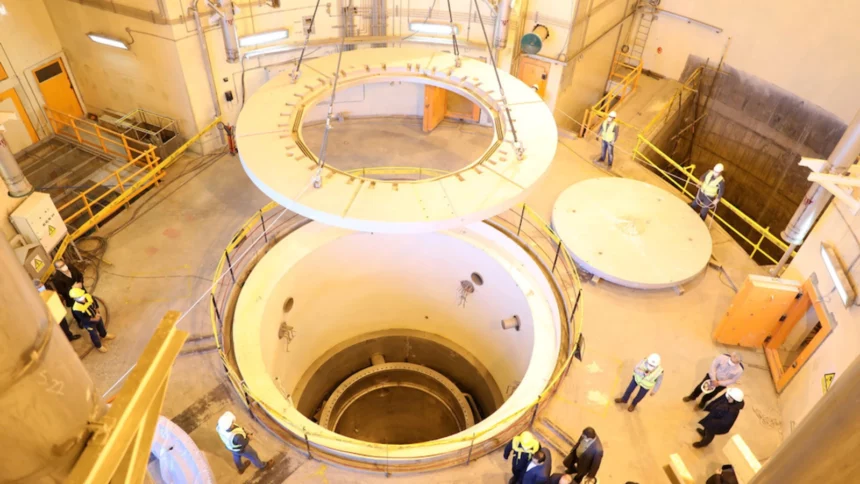
Iran has significantly advanced its uranium enrichment program, bringing it dangerously close to producing a nuclear bomb. Experts warn that the country could accumulate enough weapons-grade uranium in less than a week if it chooses to do so. This alarming development has triggered a flurry of diplomatic efforts by key players, including the United States, the United Kingdom, China, France, Germany, and Russia.
The nuclear deal, originally negotiated under former U.S. President Barack Obama, placed strict limits on Iran’s nuclear activities in exchange for relief from crippling economic sanctions. However, the agreement began to unravel in 2018 when then-President Donald Trump withdrew the United States and reinstated severe sanctions. In response, Iran gradually ceased compliance, accelerating its uranium enrichment to levels nearing weapons-grade.
The urgency of the situation has prompted closed-door discussions at the UN Security Council and diplomatic meetings in Beijing, where China hosted talks with Iranian and Russian officials in search of a political resolution. Chinese Foreign Minister Wang Yi underscored the need for diplomacy, warning against the use of force or unilateral sanctions that could further destabilize the region.
Adding to the complexity, a senior diplomat from the United Arab Emirates recently delivered a letter from Trump to Tehran. While the contents remain undisclosed, Trump has publicly issued an ultimatum, stating that if Iran refuses to negotiate, military action could be on the table. Iran’s Supreme Leader, Ayatollah Ali Khamenei, and President Masoud Pezeshkian have both rejected negotiations under pressure, denouncing what they perceive as Washington’s “bullying” tactics.
Despite official resistance, internal divisions persist within Iran. Some factions advocate for diplomatic talks to lift sanctions, while others view nuclear weaponization as a strategic move to safeguard national security. Trust in U.S. leadership remains low, with Iranian officials citing Trump’s aggressive foreign policy stance as a key deterrent to negotiations.
Meanwhile, Israel has long viewed Iran’s nuclear ambitions as an existential threat, and reports suggest its airstrikes have already weakened key Iranian military defenses. Iran insists its nuclear program is solely for peaceful purposes, yet the International Atomic Energy Agency (IAEA) has expressed growing concerns. According to IAEA Director General Rafael Grossi, Iran’s stockpile of uranium enriched to 60% purity is increasing at an alarming rate, bringing it dangerously close to the 90% threshold needed for a weapon.
The IAEA also faces significant monitoring challenges after Iranian authorities removed surveillance equipment from nuclear sites, making verification efforts increasingly difficult. Diplomatic engagement, according to Grossi, is now essential to preventing further escalation.
As a critical deadline approaches on October 18, European nations, including the UK, France, and Germany, are considering triggering “snap-back” UN sanctions to exert maximum pressure on Iran before their ability to do so expires. UK Deputy UN Ambassador James Kariuki emphasized that diplomatic measures will be taken to prevent Iran from acquiring nuclear weapons, signaling a willingness to reimpose sanctions if necessary.
With tensions at an all-time high, experts caution that if Iran decides to pursue nuclear weapons, it could produce enough material for multiple warheads within weeks. However, the process of assembling a deliverable nuclear weapon would take several months to over a year. The global community remains on edge, uncertain whether Iran’s current trajectory is aimed at acquiring a nuclear arsenal or merely strengthening its negotiating position in future diplomatic talks.