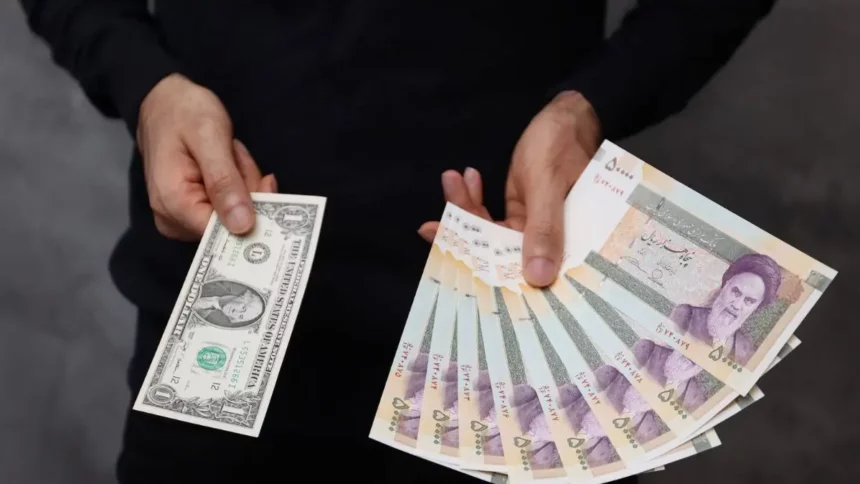
Iran’s currency has plunged to historic lows as the ongoing US naval blockade tightens economic pressure, disrupting trade, oil exports, and access to foreign currency reserves.
The Iranian rial has hit a record low against the US dollar, reflecting the severe strain on Iran’s economy amid escalating geopolitical tensions. The sharp depreciation comes as the United States continues its naval blockade targeting Iranian ports, significantly disrupting trade flows and government revenues.
According to market tracking platforms such as Bonbast, the rial weakened to approximately 1.8 million per US dollar, marking one of the steepest declines in recent history. Just weeks earlier, the exchange rate hovered around 1.70 million per dollar, indicating a rapid deterioration of nearly 12 percent in a short span.
This dramatic fall underscores the vulnerability of Iran’s financial system under sustained external pressure. While Iran maintains multiple official exchange rates, the black market rate is widely regarded as the most accurate reflection of real economic conditions. The widening gap between official and market rates highlights the depth of the crisis and the growing lack of confidence in the domestic currency.
A major factor behind the depreciation is the disruption of oil exports, which form the backbone of Iran’s economy. The blockade has restricted access to key export routes, particularly through the strategically vital Strait of Hormuz. This narrow passage is one of the world’s most critical energy corridors, through which a significant portion of global oil and gas supplies typically passes.
By limiting Iran’s ability to export crude oil, the blockade has sharply reduced the inflow of foreign currency. This has created a shortage of dollars in the domestic market, driving up demand and pushing the rial further downward. The resulting imbalance has intensified inflationary pressures, as the cost of imported goods rises in tandem with the weakening currency.
Essential imports such as food, medicine, and industrial materials have become significantly more expensive. For ordinary citizens, this translates into higher living costs and reduced purchasing power. Inflation, already a persistent issue in Iran, is expected to accelerate further if the currency continues to weaken.
The economic impact extends beyond consumers to businesses and industries. Companies that rely on imported raw materials are facing increased costs, which may lead to reduced production and job losses. The overall economic slowdown could deepen if the current conditions persist.
Despite these challenges, Iranian authorities have signaled confidence in the country’s ability to withstand the pressure. Officials point to Iran’s long history of operating under sanctions and its efforts to build economic resilience. Over the years, the country has developed alternative trade mechanisms and domestic production capabilities to mitigate the impact of external restrictions.
However, analysts caution that the scale and intensity of the current blockade present a unique challenge. Unlike previous sanctions, the naval blockade directly targets physical trade routes, making it more difficult to circumvent. The disruption of maritime logistics has compounded the economic strain and limited the effectiveness of traditional coping strategies.
The situation is further complicated by ongoing tensions between Iran and the United States. Although a ceasefire has reduced active military conflict, underlying disagreements remain unresolved. Negotiations over issues such as nuclear capabilities, regional influence, and maritime access continue to shape the broader geopolitical landscape.
US President Donald Trump has defended the blockade as an effective strategy, suggesting that economic pressure could achieve objectives without prolonged military engagement. In public statements, he emphasized that preventing Iran from acquiring nuclear weapons remains a key priority.
The US administration has also highlighted the broader scope of its economic measures, which include sanctions targeting financial networks, shipping operations, and energy infrastructure. These actions are designed to limit Iran’s ability to generate revenue and sustain its economic activities.
According to US officials, the combined effect of sanctions and the blockade has already disrupted significant revenue streams. Key facilities such as Kharg Island, Iran’s primary oil export terminal, are reportedly facing storage constraints due to reduced export capacity. This could force a slowdown in production, leading to further financial losses.
On the other hand, Iranian leaders have strongly criticized the US strategy, dismissing its effectiveness and questioning its long term sustainability. Officials argue that the country’s resilience and adaptability will enable it to endure the pressure and eventually overcome the challenges.
The standoff has also had broader implications for global markets. Disruptions in the Strait of Hormuz have affected the flow of energy supplies, contributing to volatility in oil prices. Higher fuel costs have a cascading effect on transportation, manufacturing, and food prices worldwide, highlighting the interconnected nature of global economies.
Several countries have called for the reopening of the strait to stabilize markets and ensure the smooth flow of trade. However, achieving a resolution will require diplomatic efforts and mutual concessions, which remain uncertain at this stage.
From an economic perspective, the depreciation of the rial illustrates the impact of external shocks on currency stability. Exchange rates are influenced by a complex interplay of factors, including trade balances, capital flows, and investor confidence. In Iran’s case, the blockade has disrupted these dynamics, leading to a rapid decline in the value of the currency.
For investors and policymakers, the situation serves as a reminder of the importance of diversification and risk management. Economies heavily dependent on a single sector, such as oil, are particularly vulnerable to external disruptions. Building a more diversified economic base can enhance resilience and reduce exposure to such shocks.
Looking ahead, the trajectory of the rial will depend on several factors, including the duration of the blockade, the outcome of diplomatic negotiations, and the effectiveness of domestic policy measures. Stabilizing the currency will require a combination of increased foreign exchange inflows, controlled inflation, and restored confidence in the financial system.
In the short term, volatility is likely to persist. Market participants will continue to monitor developments closely, as even minor changes in the geopolitical environment can have significant effects on currency movements.
For the global community, the situation underscores the far reaching consequences of economic conflicts. Actions taken in one region can ripple across markets, affecting prices, trade, and economic stability worldwide. The challenge lies in balancing strategic objectives with the need to maintain global economic equilibrium.
In conclusion, the record low of the Iranian rial reflects the severe economic pressure resulting from the US naval blockade and broader geopolitical tensions. While Iran’s resilience may provide some buffer, the ongoing disruption to trade and revenue poses significant challenges. The coming weeks will be critical in determining whether the situation stabilizes or escalates further, with implications not only for Iran but for the global economy as a whole.