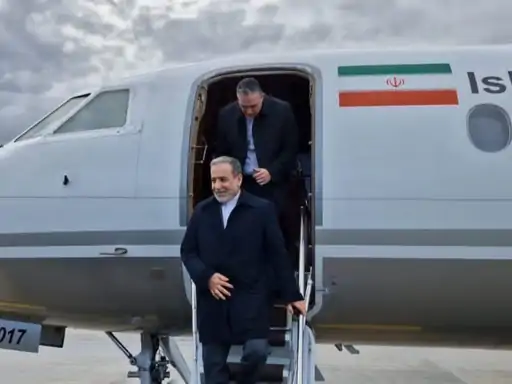
Abbas Araghchi arrived in Islamabad late on Friday evening, marking a significant development in ongoing diplomatic efforts surrounding tensions between Iran and the United States. The visit comes at a time when regional and global stakeholders are closely monitoring the evolving geopolitical situation, particularly in the context of ceasefire discussions and broader negotiations.
According to official statements, US President Donald Trump’s special envoy Steve Witkoff and senior advisor Jared Kushner are expected to arrive in Pakistan on Saturday morning. Their visit is aimed at engaging in talks related to Iran, with the possibility of indirect negotiations being facilitated through Pakistani officials. White House Press Secretary Karoline Leavitt confirmed the development during an interview, indicating that diplomatic engagement remains ongoing.
Diplomatic Engagements and Mediation Efforts
During his stay in Islamabad, Abbas Araghchi is scheduled to hold meetings with senior Pakistani leadership. These discussions are being viewed as preparatory steps for potential peace talks involving the United States and Iran. Pakistan’s role as a mediator has gained attention in recent weeks, with officials facilitating communication between both sides amid heightened tensions.
Prior to his arrival, Araghchi held separate discussions with Pakistan Army Chief Asim Munir and Deputy Prime Minister and Foreign Minister Ishaq Dar. These meetings reportedly focused on regional developments and issues related to maintaining a ceasefire between the United States and Iran. The conversations highlighted the importance of dialogue and diplomatic channels in preventing further escalation.
However, Iranian officials have clarified that there will be no direct talks between Iran and the United States during this visit. Iranian Foreign Ministry spokesperson Ismail Bakai stated that Pakistan would act as a conduit for communication, relaying messages between the two sides rather than hosting face-to-face negotiations. This position underscores the complexities and sensitivities involved in the diplomatic process.
Expanding Regional and Global Dimensions
Following his engagements in Pakistan, Abbas Araghchi is expected to continue his regional tour with visits to Muscat and later to Russia. These visits are intended to facilitate broader consultations on regional developments and to coordinate positions with key international partners.
Despite the ongoing diplomatic activity, neither the United States nor Iran has issued a formal joint statement regarding the talks. This absence of official confirmation reflects the tentative nature of the discussions and the cautious approach being adopted by both sides.
Meanwhile, the United States has reiterated its stance on Iran’s nuclear ambitions. US Defence Secretary Pete Hegseth stated that Iran would not be allowed to develop nuclear weapons, emphasizing that the current phase of engagement presents an opportunity for Tehran to make what he described as a “good” and “wise” deal. His remarks signal Washington’s continued focus on security concerns alongside diplomatic outreach.
Strategic Tensions Around Strait of Hormuz
Amid the diplomatic efforts, tensions remain high in critical maritime regions, particularly around the Strait of Hormuz. The US Central Command has reported that 34 vessels have been redirected since patrol operations began on April 13. The situation reflects ongoing enforcement measures and the strategic importance of the waterway for global energy supplies.
Reports indicate that US military officials are also developing contingency plans targeting Iran’s capabilities in the region, should the ceasefire collapse. These plans include potential strikes focused on key operational assets in the Strait of Hormuz and surrounding areas such as the southern Arabian Gulf and the Gulf of Oman. Such developments highlight the fragile nature of the current ceasefire and the risks of renewed conflict.
In parallel, diplomatic developments in the wider region continue to unfold. The ceasefire between Israel and Lebanon has been extended by three weeks, a move announced by US President Donald Trump. The extension is seen as an effort to stabilize another front of regional tensions while broader negotiations continue.
Conflicting Signals and Ongoing Uncertainty
The situation remains marked by a combination of diplomatic engagement and strategic posturing. While backchannel discussions and mediated talks suggest a willingness to explore peaceful resolutions, ongoing military preparedness and enforcement actions indicate that underlying tensions have not been fully resolved.
The United States has maintained pressure through naval operations and economic measures, while Iran continues to engage with regional partners to strengthen its diplomatic position. European leaders have also indicated that sanctions relief could be considered if a comprehensive agreement is reached, though officials have emphasized that it is too early to make such decisions.
At the same time, reports of continued violence in conflict zones such as Gaza and southern Lebanon underscore the broader instability in the region. Incidents involving cross-border strikes and casualties highlight the challenges facing efforts to achieve a lasting ceasefire.
Pakistan’s role as a mediator places it at the center of these developments, with its leadership facilitating dialogue between key stakeholders. The coming days are expected to be crucial in determining whether these efforts can lead to tangible progress or whether tensions will persist.