Iranian Foreign Minister Abbas Araghchi met Chinese Foreign Minister Wang Yi in Beijing amid rising geopolitical tensions and ahead of the high-stakes Trump-Xi summit scheduled later this month.
A significant diplomatic meeting between Iran and China unfolded in Beijing as Iranian Foreign Minister Abbas Araghchi held talks with Chinese Foreign Minister Wang Yi at a time of increasing instability across global strategic corridors. The meeting, confirmed by Chinese state media, comes during a period of heightened tensions involving Iran, the United States, and key global powers, making the discussions particularly important for regional and international diplomacy.
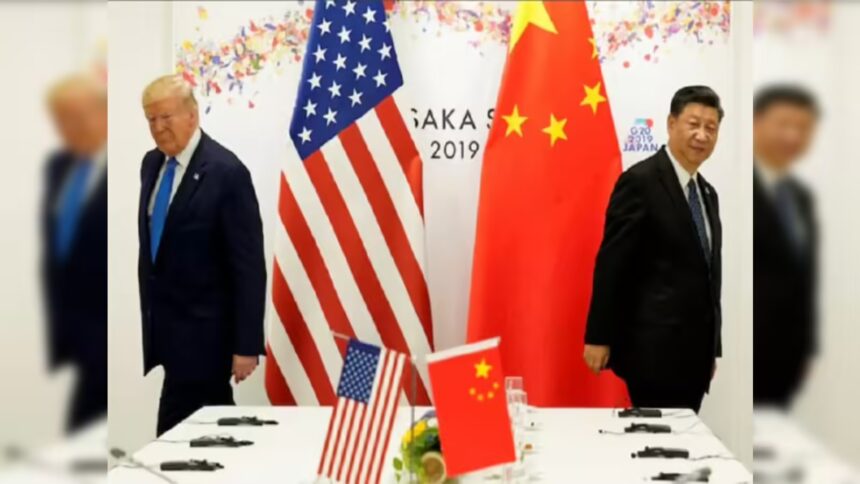
The one-day visit by Araghchi to Beijing is being viewed by international observers as more than a routine diplomatic exchange. The timing of the visit has drawn significant attention because it takes place just days before the scheduled summit between U.S. President Donald Trump and Chinese President Xi Jinping on May 14 and 15 in Beijing. The upcoming Trump-Xi summit is expected to address several critical geopolitical flashpoints, including the ongoing Iran crisis, global trade disruptions, energy security, and tensions in strategic maritime routes.
The meeting between Araghchi and Wang Yi therefore carries implications extending far beyond bilateral Iran-China relations. Analysts believe the discussions likely focused on the evolving security situation in the Middle East, the ongoing economic pressure campaign against Tehran, energy cooperation, and diplomatic coordination ahead of major global negotiations involving Washington and Beijing.
China has consistently positioned itself as a significant diplomatic and economic partner for Iran, particularly during periods of Western sanctions and geopolitical isolation. Over recent years, Beijing and Tehran have deepened strategic cooperation across energy, trade, infrastructure, and regional security matters. China remains one of the most important economic lifelines for Iran, especially as Tehran faces increasing restrictions from the United States and its allies.
The backdrop to the latest diplomatic engagement is an increasingly volatile geopolitical environment shaped by economic pressure, maritime tensions, and competing global power strategies. Iran’s economy has been under substantial strain following intensified sanctions, disruptions to oil exports, and ongoing disputes involving the Strait of Hormuz, one of the world’s most critical energy transit routes.
Iranian Foreign Minister Abbas Araghchi recently stated that recent attacks and escalatory actions demonstrated there was no military solution to the ongoing crisis. His remarks came after Tehran indicated it was evaluating a request from President Donald Trump regarding possible negotiations. The comments suggested that despite growing tensions, diplomatic channels remain active between multiple stakeholders seeking to prevent a broader regional conflict.
China’s role in this evolving situation has become increasingly important. Beijing has attempted to position itself as a stabilising force capable of maintaining dialogue with all sides, including Iran, Gulf states, and the United States. China’s strategic interest in Middle Eastern stability is closely tied to energy security because the region remains one of the most important suppliers of crude oil for the Chinese economy.
Any disruption in Gulf shipping routes or escalation involving Iran has direct consequences for global oil markets and China’s energy imports. This explains why Beijing has repeatedly advocated diplomatic solutions, restraint, and dialogue while opposing measures that threaten maritime stability or disrupt global supply chains.
The upcoming summit between Donald Trump and Xi Jinping is expected to become one of the most closely watched diplomatic events of the year. International analysts believe the Iran issue may emerge as one of the key subjects during discussions between Washington and Beijing. The timing of Araghchi’s visit therefore appears strategically significant as Iran seeks to strengthen coordination with China before the major bilateral summit.
Relations between Iran and China have evolved considerably over the past decade. In response to Western sanctions and shifting geopolitical alignments, Tehran has increasingly turned toward Asian powers including China and Russia for economic partnerships, strategic cooperation, and diplomatic support at international forums.
China has simultaneously expanded its influence across the Middle East through investment initiatives, infrastructure projects, energy agreements, and strategic diplomacy. Beijing’s approach has generally emphasised economic engagement and political balancing rather than direct military involvement, allowing China to maintain working relations with rival regional actors simultaneously.
The current geopolitical environment has further elevated China’s diplomatic importance. As tensions between Iran and the United States continue to fluctuate, Beijing’s ability to communicate with all parties gives it a potentially influential role in de-escalation efforts. Analysts believe China may attempt to encourage restraint while protecting its own economic and strategic interests in the region.
The broader regional environment remains highly fragile. Ongoing disputes surrounding maritime access, sanctions enforcement, energy exports, and military posturing have created uncertainty across global financial and commodity markets. The Strait of Hormuz remains particularly sensitive because nearly one-fifth of global oil and gas shipments typically pass through the corridor.
Any escalation involving Iran has immediate consequences for international oil prices, shipping insurance costs, energy security, and inflation across multiple economies. As a result, diplomatic engagements involving Tehran now attract global attention not only for regional security reasons but also because of their broader economic implications.
Iran’s relationship with China has also become increasingly important from an economic survival perspective. Chinese demand for energy exports provides Tehran with a crucial source of revenue despite sanctions pressure. At the same time, Chinese technological cooperation, infrastructure investment, and financial arrangements have helped Iran partially mitigate the impact of Western restrictions.
The strategic partnership between Beijing and Tehran has expanded through long-term agreements involving energy cooperation, transportation infrastructure, digital connectivity, and industrial investment. These arrangements align with China’s broader Belt and Road Initiative, which seeks to strengthen trade and connectivity routes across Asia, the Middle East, Africa, and Europe.
Observers believe the meeting between Wang Yi and Abbas Araghchi likely included discussions on safeguarding regional trade routes, maintaining energy stability, and coordinating diplomatic messaging ahead of the Trump-Xi summit. While official details of the talks remain limited, the broader geopolitical context suggests that regional security concerns dominated the agenda.
For Iran, maintaining strong ties with China remains strategically essential as economic pressures intensify. For China, preserving stability in the Gulf region is vital for protecting energy security and avoiding major disruptions to global trade flows that could affect the Chinese economy.
The meeting also highlights the shifting dynamics of global diplomacy where emerging multipolar alignments are increasingly influencing international affairs. Countries facing Western sanctions or geopolitical pressure are increasingly deepening ties with alternative global powers such as China and Russia, reshaping traditional diplomatic and economic relationships.
Meanwhile, Washington’s evolving relationship with Beijing adds another layer of complexity to the situation. The Trump-Xi summit is expected to involve difficult discussions on trade disputes, technology restrictions, regional security competition, and global economic stability. Iran’s position within this broader strategic equation may therefore become increasingly significant.
Diplomatic observers note that China’s engagement with Iran reflects Beijing’s growing confidence as a global diplomatic actor capable of influencing major international crises. Unlike earlier periods when China largely avoided direct political involvement in conflict zones, Beijing now appears more willing to actively shape regional outcomes where its economic and strategic interests are directly affected.
The Iran-China talks in Beijing therefore represent not only a bilateral diplomatic engagement but also a reflection of wider geopolitical transformation currently unfolding across the international system. As tensions continue across multiple regions and global power competition intensifies, such meetings are likely to play a critical role in shaping future diplomatic alignments and crisis management efforts.
With the Trump-Xi summit approaching rapidly, the discussions between Abbas Araghchi and Wang Yi are expected to remain under close international scrutiny. The outcome of these diplomatic engagements may significantly influence not only regional stability in the Middle East but also the broader balance of power shaping global geopolitics in the years ahead.