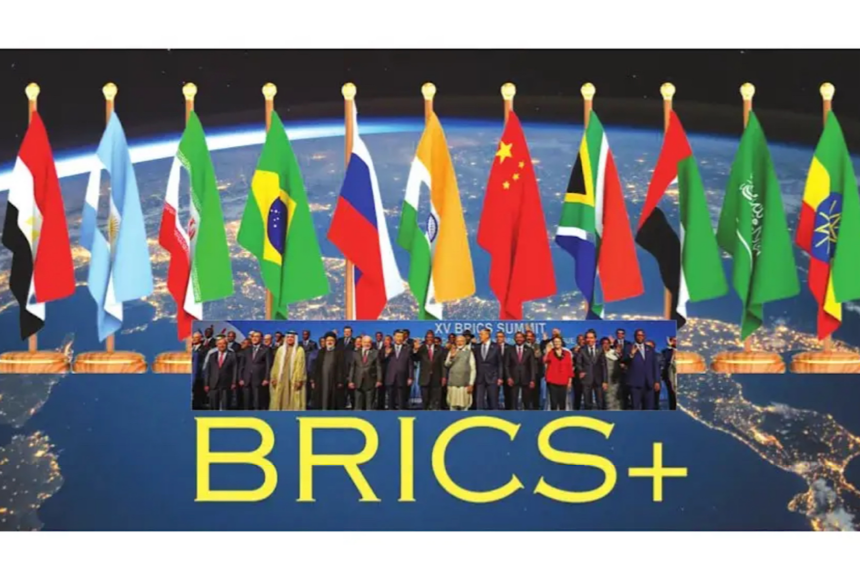
Brazil officially announced on January 6, 2025, that Indonesia has been accepted as a full member of BRICS, marking a significant milestone for the bloc of emerging economies. This expansion of the BRICS grouping underscores the organization’s growing influence and its role as a counterbalance to Western dominance in global affairs.
In a statement issued by Brazil’s Foreign Ministry, it was highlighted that Indonesia, the most populous country in Southeast Asia, shares common aspirations with other BRICS members, particularly in the areas of global governance reforms and enhancing cooperation within the Global South. Indonesia’s entry into BRICS further aligns with the bloc’s ongoing efforts to create a more inclusive global order, where the interests of developing nations are better represented on the world stage.
Brazil, which holds the rotating presidency of BRICS in 2025, revealed that Indonesia’s bid to join the bloc had received formal approval during the BRICS summit held in Johannesburg in 2023. This expansion is part of a broader strategy to increase the group’s relevance and effectiveness in global economic and political affairs.
The BRICS grouping was initially formed in 2009 with Brazil, Russia, India, and China as the founding members. South Africa joined the bloc the following year, making it a more diverse coalition of emerging economies. Over the years, the influence of BRICS has steadily grown, particularly as it represents a significant portion of the world’s population and emerging markets. In 2024, the group welcomed four more countries — Iran, Egypt, Ethiopia, and the United Arab Emirates — as full members, further expanding its global footprint.
Under Brazil’s leadership during its presidency in 2025, one of the key goals is to strengthen the ties between the countries of the “Global South” and reform existing multilateral institutions. This includes developing new mechanisms for trade and cooperation that prioritize the needs and interests of emerging economies. Brazil’s left-wing President Luiz Inácio Lula da Silva has expressed the desire to create new “means of payment” that would make trade between BRICS nations more efficient and less reliant on Western-dominated financial systems.
This year’s BRICS summit, scheduled to take place in Rio de Janeiro in July, is expected to continue discussions on enhancing cooperation in various sectors, including finance, trade, technology, and energy. The focus will also be on increasing the use of local currencies in trade and moving away from reliance on the US dollar, a subject that became more contentious during the previous BRICS summit in Kazan, Russia, in November 2024. During that meeting, members discussed strengthening local currencies and increasing non-dollar transactions, which sparked a reaction from US President-elect Donald Trump. Trump threatened BRICS members with “100 percent tariffs” if they continued efforts to bypass the US dollar, signaling the growing tensions between the BRICS bloc and the West.
BRICS continues to evolve into a more comprehensive and powerful network of nations determined to reshape the global economic landscape. The addition of Indonesia, with its robust economy and strategic importance in Southeast Asia, further strengthens the organization’s influence. As the group looks to its future, the upcoming BRICS summit in Rio de Janeiro will be a crucial moment for reinforcing its role as a voice for developing nations and as a challenger to Western dominance in international affairs.