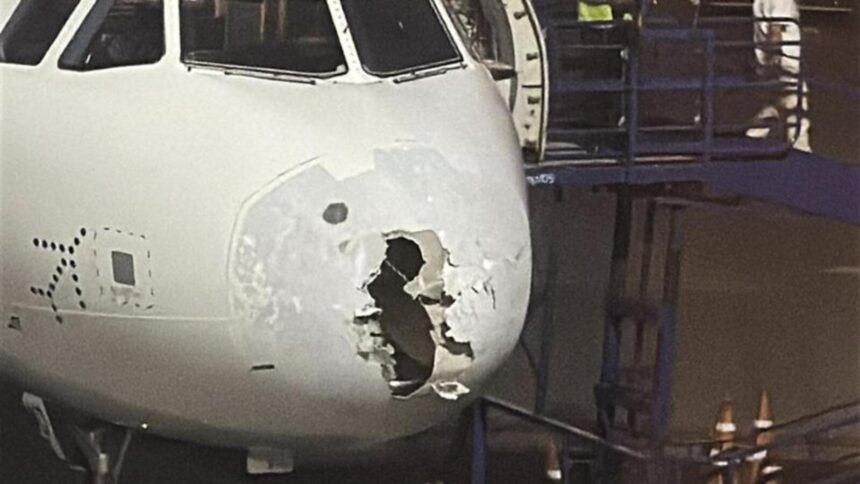
Two IndiGo pilots operating a turbulent Delhi-Srinagar flight on Wednesday evening have been grounded by India’s aviation regulator, the Directorate General of Civil Aviation (DGCA), as an investigation unfolds into the incident that put 227 passengers at risk. The Airbus A321 Neo encountered a severe hailstorm near Pathankot, leading to a sharp, dangerous descent and multiple flight system failures. Despite the chaos and equipment malfunctions, the pilots managed to land safely in Srinagar. The crisis also exposed challenges arising from restricted airspace communication between India and Pakistan during military tensions, complicating the pilots’ attempts to divert the flight to safer routes.
The incident unfolded when the flight, cruising at 36,000 feet, flew into a powerful hailstorm causing intense turbulence. The DGCA reported the plane’s descent rate reached a staggering 8,500 feet per minute—more than four times the usual rate—due to multiple flight control system failures. The pilots received simultaneous warnings of stall and overspeed conditions, forcing them to manually control the aircraft through extremely volatile conditions. In response to the worsening weather, the pilots sought permission to divert westward near the India-Pakistan border but were denied by Indian Air Force northern area control in line with ongoing NOTAM restrictions. The pilots then attempted to communicate directly with Lahore air traffic control to request entry into Pakistani airspace as a weather avoidance measure, but Lahore denied the request.
Challenging Airspace Restrictions Amid Emergency
This denial left the pilots with no viable escape routes to avoid the storm, compelling them to fly into the turbulent weather. Inside the thunderstorm cloud, multiple alerts including angle of attack faults and unreliable backup speed warnings appeared, and the autopilot disengaged due to the intense updrafts and downdrafts. These conditions demanded exceptional skill from the pilots, who managed to stabilize the aircraft and safely navigate it out of the storm. Once control was regained, the crew issued a PAN PAN emergency signal to Srinagar ATC and requested radar assistance for a safe landing.
Crew Commended Despite Investigation
Civil Aviation Minister Ram Mohan Naidu praised the composure and professionalism of the pilots and crew for handling the crisis under such extreme conditions. While no passengers were injured, post-flight inspection revealed damage to the aircraft’s nose radome from hail impact. Aviation experts have applauded the crew’s efforts but have also raised questions about decisions leading up to the incident. Weather experts noted that the thunderstorm activity in northwest India was unusually severe that day, contributing to the intense turbulence faced by the flight. The DGCA’s investigation into the incident is ongoing, and the two pilots remain grounded pending further review.