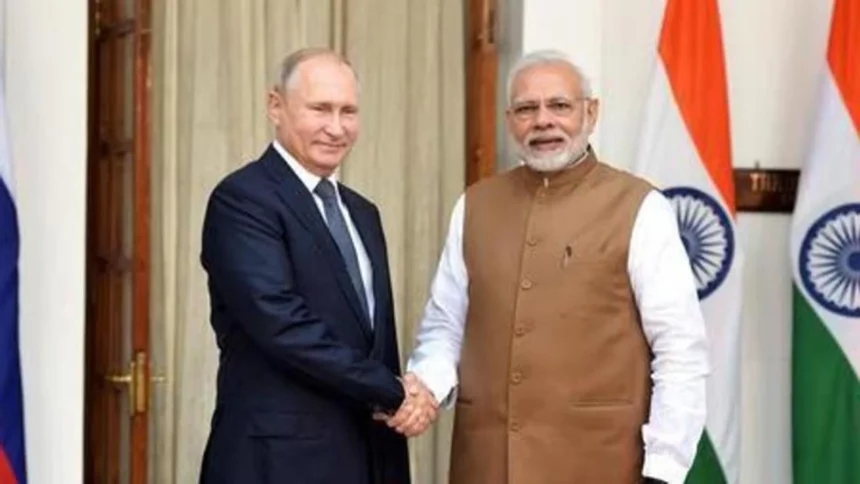
India’s relationship with Russia continues to stand firm despite mounting pressure from the United States. Prime Minister Narendra Modi’s government remains committed to its longstanding partnership with Russia, even as US President Donald Trump openly expresses frustration over India’s refusal to distance itself from Moscow. With India’s key leaders expected to visit Russia soon, and ongoing disputes over trade and defense deals with the US, Delhi is charting a course that prioritizes its national interests and strategic autonomy. This article explores how India balances its global relationships in an increasingly complex geopolitical environment.
India’s steadfast alliance with Russia has once again come under the spotlight as tensions rise with the United States. President Trump has openly criticized India’s continued cooperation with Russia, particularly in energy imports and defense procurements, threatening unspecified penalties if New Delhi fails to alter its course. Despite this, India’s approach remains clear: it will maintain its decades-old friendship with Moscow, viewing it as crucial to its strategic and economic interests. Reports of Indian officials, including National Security Adviser Ajit Doval and External Affairs Minister S Jaishankar, planning visits to Russia have further signaled Delhi’s resolve to deepen bilateral ties, even as it risks irking Washington.
Strong Energy and Defense Bonds
India is one of Russia’s largest energy buyers, alongside China, a fact that remains central to their relationship. While there were recent claims suggesting Indian firms had stopped purchasing Russian oil, the government quickly clarified that these reports were inaccurate. Although Russian oil supplies to India have declined marginally in July, the purchases continue, driven by a range of factors including competitive pricing, crude quality, inventory levels, and logistical considerations.
This pragmatic approach to energy imports reflects India’s need to secure affordable and reliable fuel sources in a volatile global market. In addition to energy, defense cooperation forms a cornerstone of India-Russia relations. India seeks to acquire advanced Russian defense systems, including the S-400 missile shield and possibly the Su-57 fighter jets, to bolster its military capabilities. This stands in contrast to the US’s offer of F-35 fighter jets, which the Indian government has shown no interest in so far. The government has publicly stated that there have been no discussions with the US regarding the purchase of F-35 jets.
The Indian Ministry of External Affairs has emphasized that India’s bilateral relationships stand on their own merit and should not be viewed through the prism of third-country interests. This was an indirect response to US pressure, reaffirming that India will not allow its foreign policy to be dictated by external powers.
Trade Tensions and Diplomatic Standoff
While India remains firm on its ties with Russia, it is also engaged in a protracted trade dispute with the United States. The US has imposed a 25 percent tariff on certain Indian imports, effective from August 7, which has added strain to bilateral economic relations. India, however, is resisting US demands for concessions on key sectors such as agriculture, dairy, and genetically modified crops.
Delhi’s stance is heavily influenced by domestic political considerations, particularly the interests of India’s large farming community. The government is cautious about yielding to American pressure, mindful of the political fallout experienced during the farmers’ protests that led to the repeal of controversial farm laws in 2021. Indian authorities have made it clear that they will not open their dairy sector to American companies or compromise on agricultural policies that protect their farmers.
Despite the tariffs, India views the economic impact as manageable, estimating a marginal 0.2 percent GDP loss. Indian officials are optimistic about eventually reaching a mini trade deal by late 2025 but remain committed to protecting core interests rather than making premature compromises for short-term gains.
India’s balancing act between maintaining a strategic partnership with Russia and managing trade relations with the US exemplifies its pursuit of independent foreign policy objectives. By standing firm on its alliances and trade policies, India seeks to assert itself as a sovereign player on the global stage, unafraid to resist pressure from major powers.
The upcoming visits by India’s top diplomats to Russia and President Putin’s scheduled visit to India later this year further underscore the resilience of the India-Russia bond. At the same time, the ongoing trade disputes with the US highlight the challenges India faces in navigating complex international relationships while safeguarding national priorities.
In an era of shifting geopolitical alignments, India’s approach signals a commitment to pragmatic diplomacy that balances economic needs, defense imperatives, and political realities. The Modi government’s policy choices reflect a broader strategy to maintain strategic autonomy and ensure that India’s interests remain at the forefront of its global engagements.