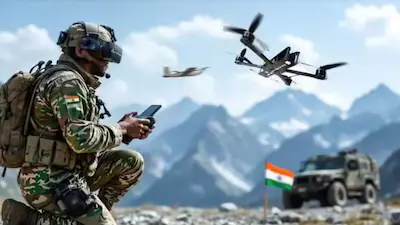
The Indian Army is undergoing one of its most significant structural reforms in recent decades, with plans to embed dedicated drone and counter-drone units across all battalions and raise new elite commando forces. This move follows the lessons drawn from Operation Sindoor, launched in response to the deadly terror attack in Pahalgam earlier this year. The overhaul is aimed at sharpening India’s combat edge in both conventional and hybrid warfare environments by combining technology, specialised manpower, and integrated combat formations.
Dedicated Drone Units Across Battalions
One of the key features of the planned overhaul is the integration of Unmanned Aerial Vehicles (UAVs) and counter-UAV systems at the battalion level. Although drones are currently in use within various units of the Indian Army, they are often managed by personnel as secondary responsibilities, leading to operational limitations. The new structure will ensure that each battalion includes a dedicated drone unit with full-time personnel trained specifically for aerial surveillance and drone-based warfare.
The reform plan includes embedding UAV capabilities into infantry, artillery, and armoured units, with surveillance drones expected to be deployed even at the platoon and company levels within infantry formations. To enable this, around 70 soldiers in each battalion will be reassigned to handle drone operations and related technological tasks. This marks a dramatic shift in how drone warfare will be perceived—no longer as an auxiliary tool, but as a frontline component of battlefield strategy.
This development aligns with the broader global military trend of drone-centric warfare, where real-time surveillance and precise targeting have become indispensable. In artillery regiments, for example, the new plan modifies the traditional structure of three batteries per regiment. Under the overhaul, two batteries will continue with standard artillery guns, while the third will consist entirely of UAV systems. These drones will be employed for both observation and active combat support, giving commanders greater flexibility and situational awareness.
The Army has already instructed different arms to prepare internal frameworks to train and deploy selected personnel for these units. Once implemented, soldiers will no longer need to juggle multiple responsibilities, thus improving the operational efficiency and response time of units engaged in high-stakes missions.
New Bhairav and Rudra Combat Formations
In addition to the technological upgrade, the Indian Army is also forming new elite light commando battalions and integrated combat brigades. Thirty such commando units, to be called ‘Bhairav’ battalions, are being raised with an initial strength of around 250 personnel each. These battalions will be trained for surgical precision missions in specific operational zones, providing rapid-response capabilities to neutralise threats swiftly and efficiently.
These Bhairav units will be spread across various commands and tailored for region-specific challenges. Infantry regimental centres have already received orders to begin assembling these battalions, and the first few units are expected to become operational within a month. The introduction of Bhairav battalions is aimed at bringing agility, specialisation, and mission-oriented flexibility to frontline operations, something that has been highlighted as a need following incidents like the one in Pahalgam.
Another major component of the restructuring is the creation of integrated combat formations known as ‘Rudra’ brigades. These brigades will unify infantry, artillery, armoured, UAV, and logistics units into a single autonomous force capable of operating independently across different theatres of war. Each Rudra brigade will be customised based on operational terrain, threats, and mission requirements.
The goal is to ensure that such brigades can conduct standalone missions without the need for extended logistical chains or external support. Whether it is conventional battlefield warfare or hybrid conflict involving non-state actors, these self-contained combat units will provide swift and sustained responses.
Each Rudra formation will be equipped with a command structure that enables seamless coordination among different arms and ensures rapid decision-making on the ground. These formations are not just tactical assets but also strategic tools for ensuring long-term preparedness and deterrence.
This reorganisation has been accelerated in the wake of the Army’s experience during Operation Sindoor, which was launched after a deadly terrorist attack in Pahalgam in May. That incident exposed key gaps in surveillance, mobility, and rapid deployment, prompting a broader rethink of the Army’s existing structure.
During his address on Kargil Vijay Diwas, Army Chief General Upendra Dwivedi had hinted at such sweeping reforms. He had emphasised the need for modernisation not just in weapon systems but also in the organisational and operational outlook of the force.
By combining dedicated drone warfare units, region-specific commando forces, and autonomous combat brigades, the Indian Army is setting the stage for a new era in military readiness. The changes reflect a proactive shift from reactive countermeasures to anticipatory and tech-enabled defence mechanisms that can respond in real-time.
The operational overhaul also underlines the military leadership’s intent to decentralise capabilities and empower field formations to make independent, strategic decisions without waiting for approvals from distant command centres. This change in philosophy is crucial in modern warfare scenarios where decisions taken within seconds can mean the difference between mission success and failure.
As the geopolitical landscape becomes more volatile and the threats more unpredictable, India’s military establishment is adapting with foresight. The emphasis on technological integration, mission-specific forces, and decentralised command marks a bold and necessary step in redefining the Army’s combat profile for the future battlefield.