India’s retail inflation rose to 3.21% in February 2026, increasing from a revised 2.74% recorded in January, according to the latest data released by the Ministry of Statistics and Programme Implementation. The rise in inflation reflects growing price pressures in certain food commodities and consumer goods, though the overall rate remains well within the Reserve Bank of India’s upper tolerance band. Data released by the National Statistics Office showed that the year-on-year inflation rate based on the All India Consumer Price Index with base year 2024 stood at 3.21% in February compared with February 2025. The increase represents a rise of 47 basis points in inflation, indicating that consumer prices have started to move upward after a relatively moderate start to the year. The CPI index itself recorded a marginal increase from 104.45 in January to 104.57 in February, reflecting continued growth in the cost of goods and services purchased by households across the country. Inflation measured through CPI is one of the most important indicators of economic stability because it captures the price movement of essential items such as food, fuel, clothing, housing, and services that directly affect consumers. Economists note that although the rise in inflation is noticeable, the current level remains manageable and below the central bank’s tolerance ceiling of 6%, suggesting that the overall inflation environment is still under control. However, the rise in food prices and certain commodity groups indicates that price pressures may continue in the coming months depending on supply conditions and global market developments.
Rural Inflation Higher Than Urban Areas
The data released by the government showed that inflation remained higher in rural areas than in urban regions during February. Rural CPI inflation stood at 3.37%, while urban inflation was recorded at 3.02%. The higher inflation in rural areas reflects the greater impact of food prices and agricultural commodities on rural households. In villages and semi-urban areas, a larger share of household spending goes toward food items and essential commodities, which means that any change in food prices quickly affects overall inflation levels. The Consumer Price Index is calculated by tracking price changes across a wide basket of goods and services consumed by households. The data is collected through an extensive nationwide network covering urban markets and rural villages. According to the National Statistics Office, price data for February was collected from 1,407 urban markets and 1,465 villages across the country. Officials confirmed that price collection was completed successfully from all designated markets and rural locations through weekly field visits. This wide data collection ensures that the CPI accurately reflects price movements across different regions and consumption categories. The CPI basket includes a broad range of products and services including cereals, vegetables, fruits, milk, edible oils, clothing, housing rent, transport, education, and health services. Changes in these components collectively determine the inflation rate reported each month. The difference between rural and urban inflation also reflects varying consumption patterns and supply chains across regions. Rural markets tend to be more sensitive to fluctuations in agricultural output and local food supply, while urban inflation is influenced by services, transportation costs, and housing expenses.
Food Prices Drive Inflation Increase
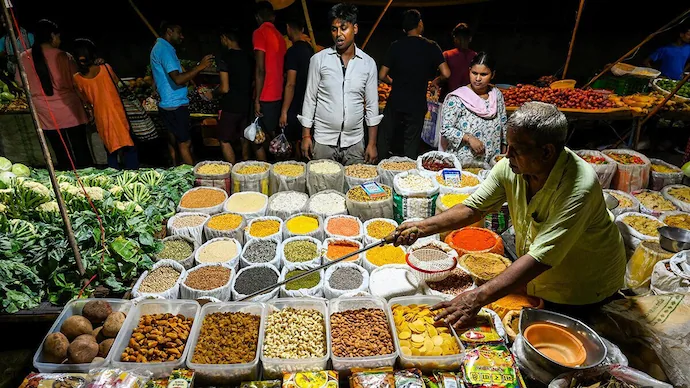
Food inflation played a key role in pushing overall inflation higher during February. The Consumer Food Price Index recorded inflation of 3.47% during the month compared with 2.13% in January, indicating a noticeable rise in food-related price pressures. The increase suggests that the prices of several food items experienced upward movement during the month, contributing to the overall rise in retail inflation. However, government data also indicated that the prices of certain vegetables declined on a month-to-month basis. Tomatoes, peas and cauliflower recorded more than a 10% decline in their index values in February compared with January, suggesting that seasonal supply improvements helped bring down prices temporarily. Despite these declines, several commodities recorded sharp increases in inflation. Among the items that experienced the highest inflation was silver jewellery, which recorded a price increase of 160.84%. Gold, diamond and platinum jewellery also saw strong inflation of 48.16%. Agricultural commodities such as coconut copra recorded inflation of 46.16%, while tomato prices rose by 45.29% on a yearly basis. Cauliflower also recorded inflation of 43.77%, reflecting volatility in vegetable prices. At the same time, several essential food items experienced negative inflation, meaning that their prices declined compared with the previous year. Garlic prices fell by 31.09%, onion prices declined by 28.20%, potatoes dropped by 18.46% and arhar (tur) dal prices fell by around 16%. These contrasting trends demonstrate the uneven nature of food inflation, where certain commodities experience sharp price increases while others witness price declines due to improved supply conditions or seasonal factors. Economists say such fluctuations are common in agricultural markets where production cycles, weather patterns, and supply logistics significantly influence prices.
State-Wise Inflation Trends
Inflation trends also varied significantly across states. Among states with populations above 50 lakh, Telangana recorded the highest inflation rate at 5.02%. This was significantly above the national average, indicating stronger price pressures in the state. Rajasthan recorded inflation of 3.53%, followed by Kerala at 3.50%. Andhra Pradesh recorded inflation of 3.45%, while West Bengal reported inflation of 3.44%. These state-level differences are often influenced by regional consumption patterns, agricultural production, transportation costs and local supply chains. States with higher food consumption or higher dependence on imported goods may experience greater inflation volatility. Economists note that regional inflation differences can also arise due to differences in state-level taxation, logistics infrastructure and seasonal agricultural output. Monitoring state-level inflation helps policymakers understand where price pressures are emerging and whether targeted policy measures are needed.
Outlook for Inflation in Coming Months
Despite the increase recorded in February, economists believe that India’s inflation outlook remains relatively stable for the near term. Inflation remains comfortably below the Reserve Bank of India’s upper tolerance band of 6%, which provides some flexibility for monetary policy decisions. However, several factors could influence inflation trends in the coming months. Global commodity prices, energy market disruptions and domestic agricultural output will play a major role in determining future inflation patterns. If global oil prices rise or food supply disruptions occur due to weather conditions, inflation could see further upward movement. At the same time, improved agricultural production and stable global commodity prices could help moderate inflation in the coming months. Policymakers and economists will closely monitor upcoming inflation data to assess whether the February increase represents a temporary fluctuation or the beginning of a broader trend. The Ministry of Statistics and Programme Implementation has confirmed that CPI inflation data for March 2026 will be released on April 13, 2026. The upcoming data will provide further clarity on the direction of inflation and help guide economic policy decisions in the months ahead.
ion and help guide economic policy decisions in the months ahead.