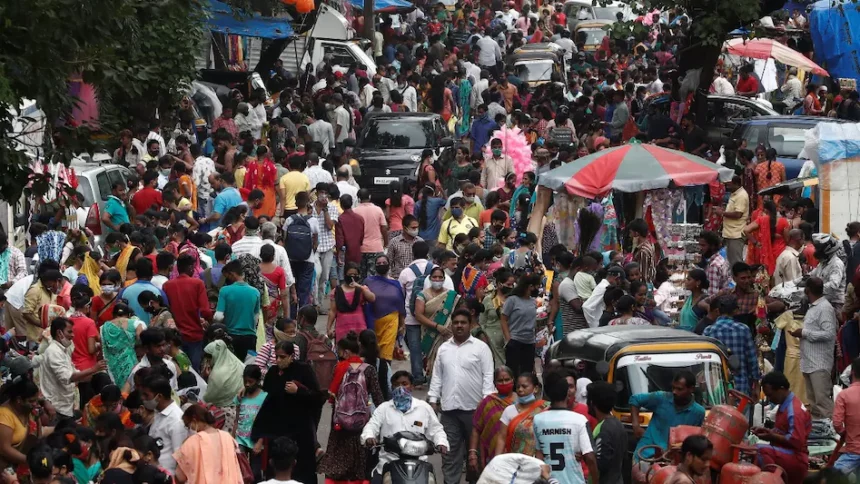
In a major development with long-term political and administrative implications, the Union Home Ministry on Monday announced that India’s next population census — the first since 2011 — will be carried out in two distinct phases between October 2026 and March 2027. Marking a shift in methodology, this will be the country’s first-ever digital census and will also, for the first time since Independence, include caste enumeration. The outcome of this exercise is expected to directly influence the implementation of the long-awaited Women’s Reservation Bill and the pending delimitation process.
Two-Phase Census with Digital Access
According to the government’s schedule, the first phase of the census, called the Houselisting Operation (HLO), will begin on October 1, 2026. This phase will focus on collecting data related to households, including housing conditions, assets, amenities, and family income. In a significant technological advancement, citizens will be able to participate in the census digitally from their homes, reducing logistical pressures and improving data accuracy.
The second phase, known as Population Enumeration (PE), is scheduled to commence on March 1, 2027. This phase will gather in-depth information about every individual, covering aspects such as age, sex, literacy, occupation, religion, language, and other socio-economic and cultural characteristics. Notably, it will also include caste data, a move announced earlier this year by Union Minister Ashwini Vaishnaw. This inclusion marks a historic step, as caste enumeration had not been part of national census data collection since Independence.
Impact on Women’s Reservation and Delimitation
The government’s announcement carries constitutional significance. The Women’s Reservation Bill, which provides for one-third reservation for women in the Lok Sabha and state legislative assemblies, mandates a census and a subsequent delimitation process before being implemented. Delimitation refers to the redrawing of parliamentary and assembly constituency boundaries based on updated population data.
Although delimitation had been frozen in 1976 by the 42nd Constitutional Amendment, it was partially unlocked in 2001 by the 84th Amendment, which allowed internal rationalisation of constituency boundaries without altering the number of seats. However, any full-scale redrawing has been held off until after the first census post-2026 — a condition that this newly announced schedule finally fulfills.
With the 2026-27 Census now officially scheduled, both the women’s quota and fresh delimitation appear poised to move from policy promise to political reality.