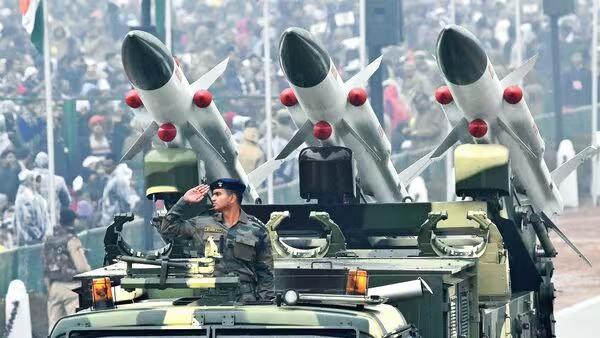
India’s Expanding Defence Strategy: A Game-Changer for South Asia and Beyond
India is taking significant strides in redefining its defence strategy, with a strong emphasis on regional collaboration, domestic manufacturing, and global partnerships. According to a recent report by Financial Times, India’s defence investments and regional assistance are transforming the geopolitical dynamics in South Asia and the Indo-Pacific region.
By providing military aid and training to allies like Bangladesh, Bhutan, and Sri Lanka, India is strengthening its position as a regional power while countering China’s influence. Here’s a closer look at how India’s defence strategy is shaping the regional and global landscape.
Regional Defence Diplomacy: Building Strategic Depth
- Strengthening Neighbourly Ties:
India’s military aid and training programs for neighbouring nations like Bangladesh, Bhutan, and Nepal emphasize strategic autonomy and trust-building.- Example: India’s active involvement in Sri Lanka’s naval modernization projects to enhance maritime security and regional stability.
- Countering China’s Influence:
Proposals such as exporting Tejas fighter jets to Bangladesh demonstrate India’s intent to balance China’s growing dominance in the region through defence diplomacy. - Boosting Strategic Partnerships:
Joint training exercises and border security cooperation, especially with Bhutan, foster stronger ties and enhance mutual defence capabilities.
Economic Impact of India’s Defence Investments
India’s focus on defence manufacturing under the Make in India initiative is creating a robust military-industrial complex, driving economic growth and self-reliance.
- Export Growth:
Defence exports surged to $2 billion in 2023-24, marking a 56% increase over five years. India aims to achieve $5 billion in exports by 2025. - Public-Private Partnerships:
Collaborations with private players like Tata Advanced Systems and Larsen & Toubro have accelerated domestic manufacturing. Notable milestones include the production of military transport aircraft under Tata-Airbus joint ventures. - Landmark Deals:
Agreements such as the BrahMos missile deal with the Philippines underscore India’s growing presence in the global defence market.
Global Partnerships: Expanding Strategic Influence
India is leveraging collaborations with major powers to enhance technological capabilities and operational readiness.
- Technology Transfer Agreements:
The recent GE jet engine technology transfer deal with the US strengthens India’s indigenous manufacturing capabilities. - Joint Military Exercises:
Naval drills like Malabar with QUAD nations enhance maritime security and demonstrate India’s regional influence. - Advanced Technologies:
India’s Defence Research and Development Organisation (DRDO) is investing in AI, drones, and cybersecurity, essential for modern warfare and border surveillance.
Addressing Internal and External Threats
India’s defence strategy also focuses on internal security and countering two-front threats from China and Pakistan.
- Counter-Insurgency Operations:
Significant budget allocations support operations in sensitive regions like Jammu & Kashmir and the North-East. - Military Infrastructure in Ladakh:
Strengthened infrastructure and troop deployment in Ladakh signal India’s preparedness against external aggression.
Challenges and the Road Ahead
- Youth Recruitment:
While the Agnipath Scheme offers short-term military exposure, gaps in long-term retention and operational training need addressing. - Private Sector Participation:
Defence R&D still relies heavily on public institutions, necessitating increased private sector involvement for rapid innovation. - Competitive Global Presence:
Despite progress, India must continue refining its pricing and technology to stay competitive in the global defence market.Watch full video here: https://youtu.be/khR4DvGYFSw