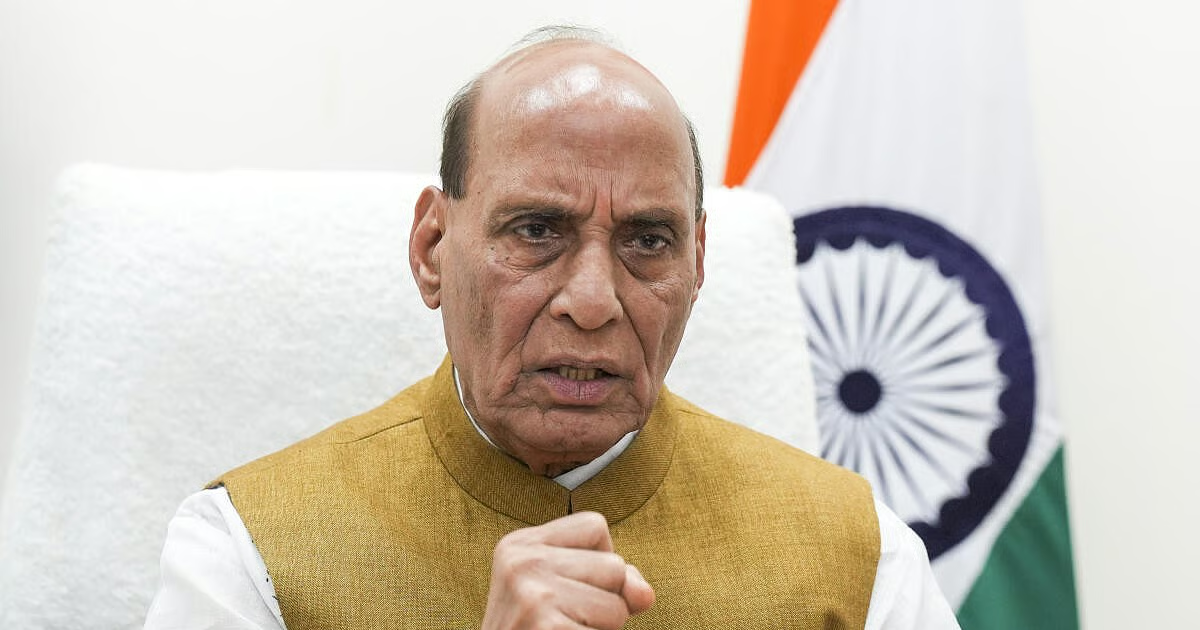
Defence Minister Rajnath Singh, speaking during his historic two-day visit to Morocco, provided rare insights into India’s counter-terrorism operations, emphasizing that recent strikes had targeted terror hideouts deep within enemy territory rather than merely border areas. Addressing the Indian community in Rabat, Rajnath Singh revealed that operations inside Pakistan successfully dismantled key terror networks, with top operatives of the Jaish-e-Mohammed acknowledging that Masood Azhar’s family had been severely impacted. He clarified that Pakistan requested a ceasefire following the strikes, which India agreed to, but underscored that the halt in Operation Sindoor was temporary, emphasizing that India remains prepared to resume action whenever necessary. Rajnath Singh framed the initiative as a part of India’s broader strategy to pursue peace while remaining resolute against terrorism, reflecting a careful balance between diplomacy and defence readiness.
Strategic Strikes Deep Inside Pakistan and the Implications of Operation Sindoor
Rajnath Singh highlighted that India’s counter-terrorism strategy has evolved to focus on precision strikes deep within hostile territory. The defence minister explained that these actions were conducted approximately 100 kilometers inside Pakistan, targeting terror hotbeds rather than border skirmishes. He emphasized that such operations were designed to dismantle the leadership and infrastructure of terrorist organizations while minimizing collateral damage and civilian harm. Rajnath Singh’s statement that “a top terrorist of JeM admitted Masood Azhar’s family was torn apart” underscored the effectiveness and psychological impact of these operations on militant networks. The revelation also highlighted India’s commitment to neutralizing threats at their source, rather than merely responding defensively to cross-border attacks. Rajnath Singh clarified that while Operation Sindoor had been temporarily halted at Pakistan’s request, it could be restarted at any time depending on the security situation and emerging threats.
Rajnath Singh’s comments also framed India’s actions within a diplomatic context. He stressed that while India seeks peaceful relations with its neighbors, it will not compromise on national security. Drawing on former Prime Minister Atal Bihari Vajpayee’s philosophy that “friends can be changed but not neighbours,” Rajnath Singh indicated that India’s approach combines strategic patience with a readiness to respond decisively to terrorism. By targeting terror networks at their origin, India aims to create deterrence, sending a strong message that acts of cross-border terrorism will not go unpunished. The strategic precision of these strikes reflects India’s enhanced operational capabilities, including improved intelligence, surveillance, and aerial strike technologies. Analysts note that such measures also reinforce India’s regional credibility and strengthen its negotiating position in diplomatic engagements with Pakistan and international stakeholders.
Rajnath Singh’s Historic Visit to Morocco and Defence Industry Milestones
Rajnath Singh’s visit to Morocco marks the first official visit by an Indian defence minister to the country, symbolizing growing bilateral defence cooperation. Upon arrival at Casablanca Mohammed V International Airport, Rajnath Singh was received by the Head Wali of the Military Command of Casablanca, India’s Ambassador Sanjay Rana, and senior Moroccan officials. The Indian community in Morocco also turned out in large numbers to welcome the minister, reflecting the strong ties between India and its diaspora. During his visit, Rajnath Singh is scheduled to inaugurate Tata Advanced Systems’ new manufacturing facility for the Wheeled Armoured Platform (WhAP) 8×8 at Berrechid. This state-of-the-art plant, the first Indian defence manufacturing facility in Africa, marks a significant milestone for India’s global defence industry and highlights India’s growing footprint in international defence markets. Rajnath Singh emphasized that the facility will strengthen India-Morocco defence cooperation and provide opportunities for joint research, development, and manufacturing, contributing to technological advancement and regional security.
In addition to inaugurating the manufacturing facility, Rajnath Singh will engage in bilateral talks with Morocco’s Minister Delegate for National Defence, Abdeltif Loudiyi. These discussions are expected to cover strategic defence collaboration, capacity building, and potential joint initiatives in training, intelligence sharing, and counter-terrorism. By fostering strong defence ties, India aims to expand its strategic partnerships in Africa and promote stability across key regions. Rajnath Singh’s visit also underscores the increasing role of India’s defence industry as a global player, capable of exporting advanced military technologies and contributing to regional security solutions. Analysts highlight that India’s proactive engagement with countries like Morocco not only strengthens bilateral relations but also enhances its global influence in defence, security, and technological innovation.
Rajnath Singh’s remarks and engagements during the visit collectively signal India’s dual approach: a strong, decisive posture against terrorism combined with active international collaboration to expand its defence and strategic footprint. The minister’s candid acknowledgment of operational successes inside Pakistan demonstrates transparency and resolve, while his diplomatic initiatives in Morocco highlight India’s commitment to fostering global partnerships in defence and security. Through these coordinated efforts, India aims to enhance both national security and international cooperation, sending a clear message that it will protect its citizens and strategic interests while actively contributing to regional and global stability.
This visit reflects India’s ability to balance assertive counter-terrorism measures with strategic diplomacy, combining operational effectiveness, international engagement, and technological advancement to safeguard national and regional security interests.