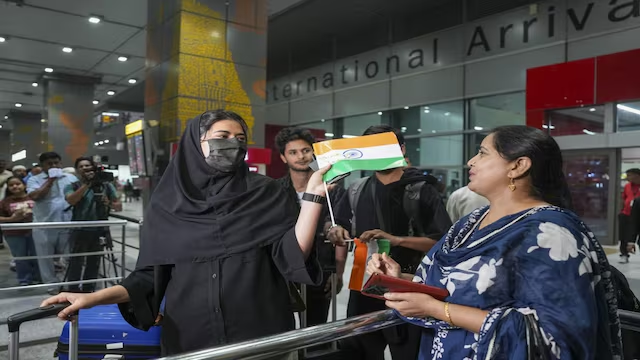
A group of 110 Indian students evacuated from conflict-ridden Iran landed safely in New Delhi early Thursday morning, recounting terrifying experiences of missile strikes and bombings as they fled the worsening conflict. Their return, part of the Indian government’s ongoing ‘Operation Sindhu’, brought relief to anxious families back home, but also revealed gaps in the local administration’s support for their onward journey.
Students recount terror, thank Indian government
The evacuated students were first relocated to Armenia via land routes facilitated by the Indian Embassy, before being flown to India. Minister of State for External Affairs Kirti Vardhan Singh confirmed that the evacuation mission is still active, with more flights scheduled. “We’re sending another plane today. Our missions in Turkmenistan and Armenia are fully active and working round the clock,” he said, extending thanks to both countries for their cooperation.
Among those who returned, medical student Varta from Kashmir said, “We were terrified when missiles struck nearby. But the Indian government and embassy acted very fast. When they came to our doorstep, it felt like home.” Another student, Mir Khalif, shared, “Our neighbourhood was bombed. We saw missiles flying. Tehran looks destroyed. We were really afraid.” Ali Akbar, a student based in Delhi, echoed the sentiment, adding that he personally saw a missile and drone falling while on a bus.
Jammu and Kashmir Chief Minister Omar Abdullah confirmed that 94 students from the state had returned and that transportation arrangements for their journey home were being worked out. The Jammu and Kashmir Students’ Association also issued a statement thanking Prime Minister Narendra Modi and Foreign Minister S. Jaishankar for their swift intervention.
Frustration over poor travel arrangements in India
While students expressed immense gratitude for the evacuation effort, their return to Kashmir was marred by inadequate support from the Jammu and Kashmir administration. Students said they were promised bus services to Srinagar, but only three regular, non-air-conditioned buses from the Jammu and Kashmir State Road Transport Corporation (JKSRTC) were provided. Several of the vehicles were reportedly in poor condition, adding to the exhaustion of already weary students.
“We’ve been travelling for four days now. After everything we’ve been through, we didn’t expect such poor treatment back home,” said one of the students, voicing frustration over the final leg of their journey.