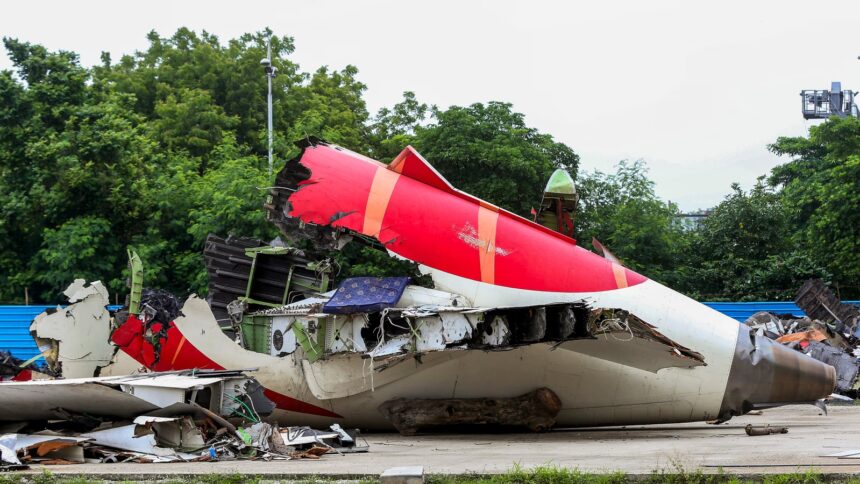
The Federation of Indian Pilots (FIP) has raised concerns over the preliminary report on the Air India crash in Ahmedabad, questioning the rush to assign blame before a transparent, data-backed investigation is completed. The pilots’ body emphasised that any premature conclusions risk undermining the professionalism of the crew involved while causing distress to their families and colleagues.
The Aircraft Accident Investigation Bureau (AAIB) recently released its initial findings into the June 12 Air India crash of flight AI171, which was headed to London and crashed shortly after takeoff. The report highlighted that both fuel control switches on the Boeing 787 aircraft were moved from ‘RUN’ to ‘CUTOFF’ within seconds of takeoff, effectively shutting off the engines. This detail quickly sparked widespread speculation regarding pilot error, further intensified by snippets of cockpit conversations recorded before the incident.
Pilots Object to Exclusion and Speculative Conclusions
In its statement, the FIP criticised the exclusion of pilot representatives from the investigation process, arguing that it compromises the transparency of the inquiry. “Assigning blame before a thorough, transparent, and data-driven investigation is both premature and irresponsible,” the FIP said, adding that such commentary could damage the public perception of the competence of highly trained flight crew.
The AAIB report mentioned a cockpit exchange between pilots Sumeet Sabharwal and Clive Kunder, where one asked, “Why did you cut off?” and the other responded, “I did not do so.” The pilots’ body pointed out that the report selectively paraphrased cockpit voice recordings to suggest pilot error without offering complete data that could give context to these statements.
The FIP urged all stakeholders and the public to avoid forming conclusions based solely on the preliminary findings. It reiterated that a complete, transparent investigation is essential to understand the sequence of events that led to the crash and to prevent similar incidents in the future without unfairly attributing blame.
Focus Shifts to Technical Checks and Safety Culture
Following the AAIB’s initial findings, the Directorate General of Civil Aviation (DGCA) instructed inspections of the locking mechanisms on fuel control switches across Boeing 787 and 737 fleets operated by Indian carriers. The investigation highlighted that the fuel control switches’ operation had become a focal point in determining the cause of the crash.
Air India subsequently conducted inspections of its fleet and reported that no issues were identified with the fuel control switches, suggesting that technical factors may not have directly contributed to the incident. However, the incident has reignited discussions around the safety culture within Indian aviation and the processes followed during technical checks, pilot training, and incident reporting.
The pilots’ body emphasised that reducing complex aviation incidents to simplified narratives can obscure the systemic factors that often contribute to accidents. It stated that without considering operational pressures, technical issues, and human factors holistically, any investigation risks missing key lessons necessary to improve safety.
In the coming weeks, the aviation community will closely watch how the investigation progresses, with calls growing for a detailed, transparent probe that involves all stakeholders, including pilot associations, to ensure accountability and learning without premature conclusions. The FIP’s concerns underline the importance of maintaining due process and data-backed analysis in aviation safety investigations to uphold the trust of both professionals within the sector and the travelling public.