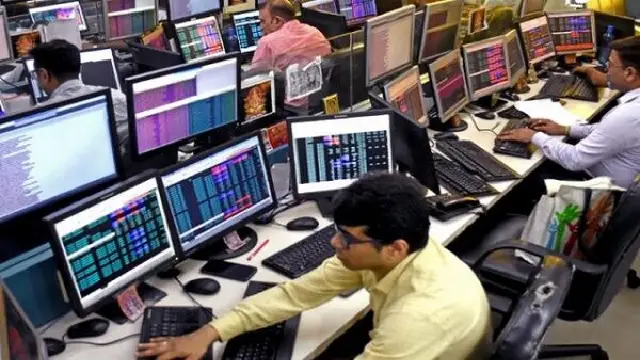
The Indian equity markets witnessed sustained volatility and downward pressure on Wednesday, driven by a confluence of domestic and global developments that turned the week into an event-heavy and sentiment-driven phase for investors. As weakness in the rupee, cautious trading behavior and anticipation surrounding key political and economic events shaped market mood, the benchmark indices displayed mixed momentum before ultimately slipping into the red. While the Sensex closed virtually flat, the Nifty dipped below the crucial 26,000 mark for the first time in over a week, underscoring the fragile nature of investor confidence during periods influenced by policy decisions, overseas developments and fluctuations in global equities.
Domestic monetary policy expectations and geopolitical developments shape market trajectory
The start of the Reserve Bank of India’s Monetary Policy Committee meeting added significant weight to market movements as investors awaited signals regarding policy direction. The meeting, which began on 3 December and is scheduled to conclude on 5 December, has generated considerable speculation. Analysts have been debating the possibility of a 0.25 percent reduction in the benchmark interest rate. With the repo rate currently standing at 5.50 percent, a cut would mark an important shift after a period of cautious monetary tightening and moderate policy stability. Market participants are acutely aware that any deviation from expected policy language or rate stance is likely to influence banking sector valuations, borrowing costs and overall liquidity conditions.
In parallel, global geopolitical developments also added complexity to the week’s market behavior. The scheduled visit of Russian President Vladimir Putin to India on 4–5 December for the India–Russia Annual Summit brought additional attention to bilateral ties and strategic engagements between the two nations, particularly in the backdrop of ongoing global conflicts and a shifting international order. While such diplomatic events do not directly drive equity movement, they contribute to an overarching environment of heightened geopolitical sensitivity. Investors generally react with caution when multiple macroeconomic and political events unfold simultaneously, preferring to adopt a defensive approach until clarity emerges.
By the close of Wednesday’s session, the Sensex’s performance clearly reflected this caution. After fluctuations throughout the day, the index ended modestly lower at 85,106.81 points, unable to generate sufficient upward momentum. The Nifty, meanwhile, broke below the 26,000 level for the first time in eight sessions, signaling renewed selling pressure amid weak investor sentiment. This decline highlights the vulnerability of benchmarks during weeks dominated by uncertainty or heavy data flow. As traders balanced domestic cues with global indicators, a broader tendency toward profit-booking and selective sector rotation could be observed.
Out of the 30 Sensex-listed companies, a significant majority posted losses, further validating the concerns surrounding market breadth. Major laggards included Bharat Electronics Limited, Mahindra and Mahindra, State Bank of India, Titan, NTPC, Hindustan Unilever, Tata Motors Passenger Vehicles, Bajaj Finserv, Maruti Suzuki and Adani Ports. These declines were spread across different sectors, from banking and automobiles to consumer goods and infrastructure, demonstrating a broad-based pullback rather than pressure isolated to a single industry group.
On the international front, Asian equities delivered mixed signals, failing to offer a strong directional cue to Indian markets. Tokyo’s Nikkei 225 registered a sharp gain of 1.6 percent, closing at 50,063.65, supported by renewed confidence in Japan’s economic resilience. South Korea’s Kospi also advanced by 1.2 percent, ending the day at 4,042.40. In contrast, Hong Kong’s Hang Seng index slipped by 1.1 percent to 25,797.24 amid concerns over Chinese demand outlook and the region’s economic slowdown, while the Shanghai Composite registered a mild decline of 0.3 percent to 3,885.36. These varied performances across Asia contributed to an environment in which Indian traders remained hesitant to build aggressive positions.
Across the United States markets, indices had closed firmly in the green in the previous session, extending a streak of stable performances. The Dow Jones Industrial Average rose 0.39 percent to close at 47,474, supported by strong financial and industrial sector gains. The Nasdaq Composite added 0.59 percent, ending at 23,414 amid continued strength in technology stocks. The S&P 500 improved by 0.25 percent to finish at 6,829. While positive U.S. cues typically provide some relief to global markets, the influence of domestic concerns and currency fluctuations limited the extent of spillover optimism for Indian equities.
Currency movements also factored into market mood. The rupee displayed signs of weakness during the week, further weighed down by global dollar strength and ongoing macroeconomic uncertainties. A softer rupee typically increases pressure on sectors dependent on high import volumes, including electronics, infrastructure and certain segments of manufacturing. Such conditions may also accelerate foreign fund outflows, particularly if investors anticipate a period of volatility in emerging markets.
Investor behavior, institutional flows and recent market performance
Beyond headline indices and global cues, institutional investor behavior played a crucial role in shaping the trading session’s outcome. On 2 December, foreign institutional investors recorded net sales of ₹3,642.30 crore in the cash segment, continuing a broader selling trend observed in recent weeks. Their ongoing withdrawal reflects cautious attitudes amid geopolitical shifts, concerns over global inflation cycles and inflation management policies in major economies.
In contrast, domestic institutional investors provided critical support to Indian markets by making net purchases worth ₹4,645.94 crore on the same day. This divergence has become more pronounced over the past several months. For the entire month of November, foreign investors sold shares totaling ₹17,500.31 crore, while domestic institutional investors purchased shares worth ₹77,083.78 crore. This substantial domestic inflow helped cushion the Indian markets against deeper corrections and demonstrates the transformative role played by Indian retail and institutional participants in stabilizing market performance.
Market observers note that the increasing involvement of domestic institutions reflects a structural shift in investor behavior. Indian savers have been steadily moving toward equity participation through mutual funds, systematic investment plans and direct equities, strengthening the resilience of the market during phases when foreign funds remain cautious. This trend has allowed Indian equities to maintain relative stability despite global turbulence and shifting interest-rate expectations worldwide.
However, volatility remains a key characteristic during event-driven weeks. One day prior to Wednesday’s session, the markets had already shown signs of weakness. On Tuesday, 2 December, the Sensex recorded a steep fall of 503 points, closing at 85,138, while the Nifty declined by 143 points to end at 26,032. Those losses had set the tone for continued consolidation and selling pressure as traders sought to manage risk. Importantly, 20 out of the 30 Sensex stocks had already declined during that session, signaling a broad-based negative sentiment ahead of the RBI’s policy deliberations.
Broader market activity across sectors indicated a preference for defensive positioning, with many investors choosing to exit high-valuation stocks and reduce exposure to cyclical names. Global uncertainty, driven by mixed signals from commodity prices, concerns over energy markets and anticipation of diplomatic engagements such as the India–Russia summit, contributed to the subdued sentiment.
Market analysts also highlighted the importance of the RBI’s tone in determining short-term market direction. While a rate cut could boost rate-sensitive sectors such as banking, auto and real estate, much will depend on the central bank’s guidance regarding inflation, liquidity and economic growth projections. Meanwhile, global investors remain attentive to geopolitical alliances, energy agreements and trade discussions expected during the upcoming summit between India and Russia.
The combination of these factors created a complex market environment in which both positive triggers and potential risk factors were simultaneously in play. As the week progresses, investors are expected to closely monitor policy announcements, global market cues, and currency trends to assess the direction of Indian equities in the near term. For now, the market remains cautious, with the Nifty’s dip below 26,000 serving as a reminder of the sensitivity of benchmarks to economic and geopolitical cross-currents.