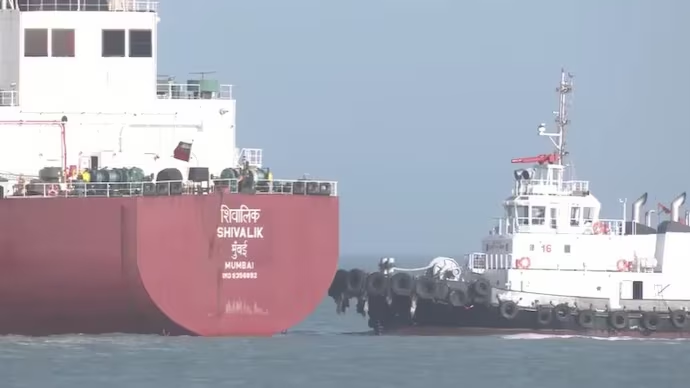
Shivalik LPG Tanker Reaches Mundra Port Safely
The Indian-flagged LPG tanker Shivalik has safely arrived at Mundra Port in Gujarat after successfully crossing the conflict-affected Strait of Hormuz. The vessel’s arrival comes at a time when the strategic waterway has become a focal point of global concern due to ongoing tensions in the Middle East.The tanker carried liquefied petroleum gas (LPG) cargo intended for India and managed to navigate through the sensitive maritime route after receiving transit clearance from Iranian authorities. The Strait of Hormuz is one of the world’s most crucial shipping corridors, handling a significant portion of global oil and gas supplies. Any disruption in this region can have a major impact on international energy markets and supply chains.The safe arrival of the Shivalik tanker is being viewed as a positive development for India’s energy supply chain, especially as geopolitical tensions continue to affect maritime routes in the region. Authorities confirmed that the vessel completed its journey without any incident despite heightened security concerns around the waterway.The ship’s successful transit also highlights the importance of diplomatic coordination and maritime communication in ensuring the uninterrupted movement of energy cargo during periods of regional instability. With the Strait of Hormuz witnessing military tensions and security alerts, every commercial vessel passing through the route is being closely monitored.
Another LPG Carrier Nanda Devi Expected to Reach Kandla
Alongside Shivalik, another Indian-flagged LPG carrier named Nanda Devi was also granted permission to pass through the Strait of Hormuz by Iranian authorities. The vessel is expected to arrive at Kandla Port in Gujarat on March 17 carrying a similar LPG cargo.According to officials from the Shipping Ministry, both vessels were scheduled to reach India within a day of each other. Shivalik arrived at Mundra Port on March 16, while Nanda Devi is expected to dock at Kandla Port the following day.The successful passage of these vessels is considered important because the Strait of Hormuz remains a key maritime route connecting energy-producing countries in the Middle East with major consumer nations including India. The region has recently witnessed rising tensions due to ongoing conflicts, raising concerns about the safety of shipping traffic.For India, which imports a large portion of its energy requirements, ensuring the safe movement of fuel shipments through this route is crucial. The arrival of LPG shipments helps maintain supply stability for domestic consumption, particularly for household cooking gas and industrial use.
Strategic Importance of the Strait of Hormuz for Global Energy
The Strait of Hormuz is one of the most strategically important maritime chokepoints in the world. Located between Iran and Oman, it connects the Persian Gulf to the Arabian Sea and serves as a vital corridor for global oil and gas shipments.A significant share of the world’s crude oil and liquefied petroleum gas exports pass through this narrow waterway each day. Because of this, any disruption or military tension in the region can quickly affect global energy prices and supply chains.In recent weeks, the waterway has drawn global attention due to geopolitical tensions and military developments in the Middle East. Several countries have been closely monitoring shipping activity in the area to ensure that commercial vessels can continue to operate safely.Despite the challenging environment, the successful transit of the Shivalik tanker demonstrates that commercial shipping routes remain operational with necessary security coordination. Maritime authorities and governments continue to work together to ensure that energy supplies can move without interruption.The arrival of LPG shipments in India through this route underscores the importance of maintaining open and secure sea lanes for international trade. For India, which relies heavily on imported energy resources, the uninterrupted flow of fuel supplies is essential for economic stability and energy security.As another LPG carrier, Nanda Devi, prepares to reach Kandla Port, the safe passage of these vessels highlights both the risks and resilience of global energy transportation networks during periods of geopolitical uncertainty.