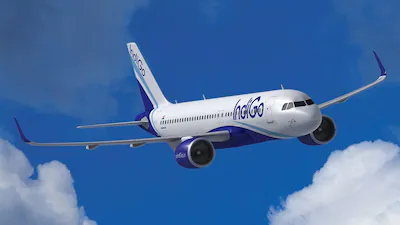
India’s aviation sector is preparing for a major milestone as leading carriers Air India, Air India Express and IndiGo are set to fully resume flight operations to Doha’s Hamad International Airport from May 1 2026. This development represents a significant step toward restoring one of the region’s most important international air corridors after nearly two months of disruption caused by escalating geopolitical tensions in West Asia.
The decision to restart full services comes at a time when international aviation authorities, insurers and regional governments are cautiously working toward stabilizing flight connectivity in a region that has experienced extraordinary operational uncertainty since late February. The resumption follows the February 28 military offensive involving the United States and Israel targeting Iranian leadership and strategic nuclear facilities, which rapidly expanded into a broader regional conflict that severely disrupted aviation networks across West Asia.
For nearly two months, Qatari airspace remained heavily restricted, and Hamad International Airport, one of the world’s leading global aviation hubs, was forced to drastically limit commercial activity. During this period, the airport primarily handled emergency operations, evacuation missions and select essential flights, while regular international commercial schedules were suspended or significantly reduced.
This disruption had substantial consequences for global travel patterns, particularly for India, whose citizens rely extensively on Gulf routes for labor migration, tourism, family reunification, business travel and international transit. Doha serves as a crucial gateway connecting India with Europe, North America, Africa and the broader Middle East, making the restoration of these routes highly significant for millions of passengers.
The Embassy of India in Doha confirmed that the restoration of services beginning May 1 is part of a coordinated effort between airlines, aviation regulators and global security stakeholders aimed at gradually normalizing operations. Air India, Air India Express and IndiGo are expected to lead the return of full scale commercial services between Doha and multiple Indian metropolitan centers and regional airports.
The reopening of these routes is particularly critical because of the large Indian diaspora in Qatar and neighboring Gulf states. Indian workers form one of the largest expatriate communities in the Gulf region, and aviation links between India and Qatar are essential for employment mobility, remittances, business relations and social connectivity.
The return of regular operations is expected to reconnect Doha with several major Indian cities, strengthening access for passengers traveling between the Gulf and India’s urban as well as regional centers. This includes major travel demand from labor intensive states and business hubs alike.
The broader significance of this resumption extends beyond aviation alone. It signals cautious optimism regarding regional security conditions following the fragile ceasefire brokered in Islamabad in mid April. The ceasefire, later extended with diplomatic backing from U.S. President Donald Trump, created a temporary environment of relative stability that allowed insurers and regulators to gradually restore operational approvals for commercial flights.
Aviation insurance providers play a critical role in determining whether airlines can safely and economically operate in conflict affected regions. During the peak of hostilities, commercial insurers imposed severe restrictions due to missile risks, airspace threats and geopolitical uncertainty. Without adequate insurance coverage, airlines faced insurmountable operational and financial barriers.
Therefore, the resumption of Indian airline services to Doha reflects not only improved security coordination but also a restoration of commercial confidence in regional aviation.
Despite this positive progress, the situation remains delicate. Authorities continue to caution that schedules may be adjusted depending on evolving geopolitical conditions. Airlines are advising passengers to remain in close communication regarding departures, arrivals, terminal information and potential operational modifications.
For travelers, especially migrant workers, families and business professionals, the reopening offers critical relief after months of uncertainty. Thousands of passengers had experienced cancellations, rerouting complications and prolonged disruptions due to restricted Gulf airspace. The May 1 restart is expected to significantly improve travel convenience, reduce pressure on alternative routes and restore more predictable travel planning.
Economically, the resumption is also highly important. The Gulf remains one of India’s most strategically significant aviation markets, generating substantial passenger volume, cargo movement and bilateral economic activity. Restoring Doha connectivity supports trade, tourism, labor flows and regional business continuity.
Cargo operations are likely to particularly benefit from the return of normal schedules. Hamad International Airport functions as a key logistics center for goods movement between Asia, Europe and Africa. The reopening will help facilitate smoother transportation of pharmaceuticals, perishables, electronics and industrial products, thereby supporting broader supply chain recovery.
Qatar’s strategic role in global aviation cannot be overstated. Hamad International Airport consistently ranks among the world’s leading international transit hubs due to its advanced infrastructure, expansive route network and operational efficiency. Its temporary commercial restrictions disrupted not only regional traffic but also broader international passenger and freight systems.
For India, reestablishing strong links with Doha also reinforces diplomatic and economic relations with Qatar. The two countries maintain deep ties through trade, labor migration, energy cooperation and strategic regional engagement. Aviation serves as a critical pillar supporting these broader bilateral interests.
While May 1 marks an important reopening milestone, full regional normalization remains dependent on continued political stability. Key challenges remain, including the possibility of renewed military escalation, ceasefire fragility, airspace policy changes, fluctuating insurance costs and ongoing energy market volatility.
Aviation analysts are expected to closely monitor passenger demand recovery, route performance, airline scheduling strategies and broader Gulf market stability over the coming months.
If the current ceasefire holds and regional security gradually improves, additional route expansions and stronger aviation recovery may follow throughout 2026. However, any significant geopolitical deterioration could once again disrupt progress.
The return of Indian carriers to Doha therefore represents both operational recovery and strategic resilience. It highlights the aviation industry’s ability to adapt to crisis conditions while also underscoring the vulnerability of global transportation systems to geopolitical conflict.
For millions of Indian passengers, the restoration of full services offers renewed accessibility, economic opportunity and family reconnection. For airlines, it provides a pathway to reclaim critical market share and restore revenue streams. For the broader region, it symbolizes cautious but meaningful progress toward stability.
Ultimately, the resumption of full Indian airline operations to Doha from May 1 2026 is more than a routine schedule restoration. It represents a major turning point in post conflict regional aviation recovery, reflecting the interconnected relationship between diplomacy, security and global transportation.
As air travel gradually normalizes, the coming months will determine whether this reopening serves as the beginning of sustained regional recovery or remains vulnerable to the ongoing complexities of Middle Eastern geopolitics. For now, however, May 1 offers a significant sign of renewed confidence in one of the world’s most essential international travel corridors.