India and the United States appear closer than ever to finalising the first phase of a long-pending bilateral trade agreement, as recent diplomatic signals and ministerial statements suggest unprecedented progress. The pace and tone of discussions in recent weeks have generated optimism within both nations’ business communities, strengthened further by Commerce Minister Piyush Goyal’s assurance that negotiations are advancing on a fair, balanced and mutually respectful foundation. At a time marked by global economic uncertainty, shifting trade alliances and geopolitical tensions, the deepening economic partnership between India and the United States carries significant long-term implications for both countries and for the international trade landscape.
Steady Progress Toward the First Phase as Trust Deepens and Frameworks Stabilise
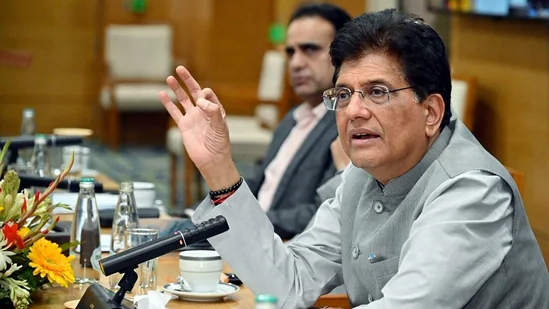
Speaking at the 22nd Indo-US Economic Summit in New Delhi, Piyush Goyal dismissed the notion that the negotiations were hindered by major obstacles. He insisted that discussions were progressing smoothly and framed smaller disagreements as normal features of any meaningful trade dialogue. He likened these moments to minor disputes within a family—incidents that reflect the closeness of the relationship rather than a weakening of it.
Goyal emphasised that an official announcement would be made only when both sides reached a point of genuine balance, where the concerns of each nation were adequately addressed. His confidence echoed the encouraging diplomatic cues exchanged between the two governments over the past several weeks, including remarks from President Donald Trump on 10 November that the United States was moving toward a “very different and better” agreement with India. The comment signalled Washington’s willingness to accommodate Indian priorities and move toward a reciprocal understanding.
Meanwhile, reports suggested that the initial phase of the trade arrangement was nearly complete. Both sides have remained in frequent contact through digital channels, refining a framework expected to include provisions on market access, tariff readjustments, regulatory coordination and the groundwork for a broader future agreement. These conversations reflect a maturing trade relationship, one that has grown more resilient and strategic over the past decade.
Goyal highlighted that India–US cooperation extends far beyond trade alone. Defence collaboration, technological partnerships, energy ties and strategic cooperation have all expanded rapidly. As an example, he referenced a recent ten-year defence agreement concluded between India’s Ministry of Defence and the United States Department of War, describing it as a powerful symbol of trust between the two democracies.
He cautioned, however, that India’s domestic priorities must remain at the core of any international partnership. The interests of farmers, fishers, small industries and home-grown manufacturing must be protected as India continues integrating itself into global economic networks. The government, he reiterated, would not endorse any trade framework that compromised these essential sectors.
Goyal reiterated that the friendship between India and the United States is rooted in shared democratic values, pluralism and a common commitment to development. He added that American investors increasingly see India as a stable, reliable and promising partner. He pointed to the recently finalised long-term liquefied petroleum gas import agreement of 2.2 million tonnes per year as evidence of deepening energy cooperation and long-term mutual confidence.
These expanding partnerships underscore how India and the United States have evolved into indispensable strategic partners. Their trade dialogue is not simply about tariffs or quotas but about building a wider architecture of cooperation that aligns with global shifts in supply chains, manufacturing bases and technological investments.
India’s Accelerating Economic Rise Strengthens Its Bargaining Power in Global Trade Negotiations
The second major theme of Goyal’s address centred on India’s rapid economic transformation. The minister highlighted that over the past decade, India has moved from being labelled part of the “Fragile Five” to becoming one of the world’s top five economies. Such progress, he said, is not merely a statistical shift—it reflects strengthened economic fundamentals, regulatory stability and a decade of structural reforms that have dramatically improved national resilience.
According to Goyal, India’s macroeconomic environment is stronger than at any point in recent memory. Inflation remains under control, the banking sector has stabilised, non-performing assets have reduced significantly and fiscal consolidation has been consistently maintained. He noted that regulatory reforms such as the goods and services tax have simplified business operations, enhanced transparency and improved investor confidence.
He further projected that India could become the world’s third-largest economy by 2027 if current growth trajectories continue. The foundation of this rise lies in a broad set of strengths: robust domestic demand, a young and expanding workforce, the growing scale of India’s manufacturing sector, advances in the pharmaceutical industry and the rapid expansion of renewable energy. Together, these factors position India at the centre of major global economic realignments.
Goyal added that India’s economy is doubling in size every eight years, making a long-term target of a thirty to thirty-five trillion dollar economy by 2047 not only feasible but well within the nation’s developmental path. He stressed that this rise will not only be quantitative but also qualitative, reflecting India’s increasing capabilities in innovation, technology and high-value manufacturing.
He noted that despite worldwide volatility, India has remained a “oasis of stability” in the global system. The stock market has grown four and a half times in the last eleven years, reflecting investor confidence. Foreign investment has surged consistently, and more than two thousand global capability centres—many belonging to major American corporations—now operate in India. These centres have transformed the country into a global hub for research, digital services, engineering and innovation.
Goyal also pointed to the government’s recent initiatives designed to fuel next-generation innovation. These include the launch of a ten-thousand crore rupee startup funding programme and a one-lakh crore rupee research and innovation fund aimed at strengthening India’s leadership in emerging technologies. Such steps, he argued, will play a key role in supporting India’s ambition to become a central player in global technology, defence production and advanced manufacturing.
These developments have significantly strengthened India’s negotiating position in international trade forums. As global supply chains diversify and countries seek reliable economic partners, India has become an essential anchor in the shifting landscape. Its stability, large domestic market, policy predictability and growing technological prowess make it indispensable for nations and corporations restructuring their global strategies.
In this broader geopolitical and economic context, the India–US trade negotiations assume even greater importance. Both nations stand to benefit from a partnership that enhances market access, deepens technological cooperation, boosts strategic resilience and expands opportunities for businesses across sectors. The momentum seen in recent weeks suggests that the long-awaited agreement may soon become a reality—a development that could shape global trade dynamics for years to come